
Hawaii created a 74-acre artificial reef off Oʻahu; within 2–3 years, mean fish biomass was reported to be 20 times higher, and the average number of species had risen fivefold


Imagine a patch of seabed that looks like a desert. It has flat sand, bare limestone, and hardly any fish. Now imagine the same site a few years later, but teeming with life. That's what happened on an artificial reef off the coast of Oʻahu , Hawaii . The amount of fish in the area increased dramatically within two to three years of deployment, according to a NOAA-hosted presentation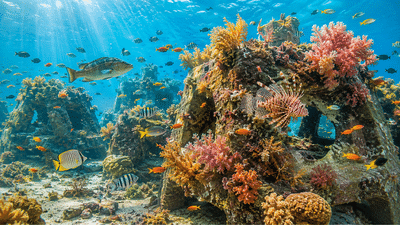 by Paul Murakawa of Hawaii’s Division of Aquatic Resources .
From bare sand to a bustling reef
The reef sits in Maunalua Bay , off Kahala on Oʻahu. It covers about 74 acres, or about 30 hectares, and has been in place for quite some time. According to Hawaii's Division of Aquatic Resources, the first artificial reef in Hawaii was built in 1961, and that reef is the one at Maunalua Bay. That's more than 60 years ago. Before the structures went down, the site was barren, made up only of bare limestone and sand. Murakawa’s presentation puts the average biomass of fish in that area at merely 5.4 grams per square metre. Biomass is basically the weight of the fish in that place. The average number of species identified was just seven.
A big jump in just a few years
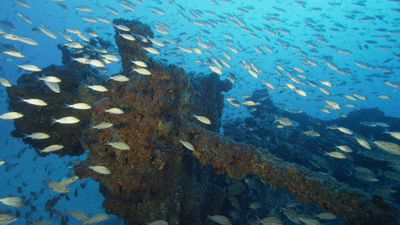
Then came the change. Mean biomass increased 20-fold within two to three years post-deployment. The average number of species rose fivefold. That's a lot of numbers in a short span of time. In plain terms, the area had many more fish by weight and many more kinds of fish. For a spot that started out as bare limestone and sand, that was quite a turnaround. More reefs came in the decades after 1961 on both Oʻahu and Maui, according to the state's reef programme page. So, Maunalua Bay is actually part of a longer story rather than just a one-off experiment.
 Why fish move in
Fish need homes to live. A flat, open seabed without any structures in sight doesn't do the trick. The Hawaii reef programme places structures that help make the habitat better in areas that lack natural structure. More habitat can mean more fish. Murakawa shows that the use of artificial reefs can reduce fishing and diving pressure on the natural reefs. This might allow the natural reefs to have some breathing room. The presentation also mentions fishing opportunities and tourism spots in the overview of Hawaii's artificial reefs. So, the benefits can be enjoyed by people as well as fish.
It's not all good news
The same presentation lists some drawbacks. Artificial reefs can be fish aggregation areas. Researchers and fishers often debate whether the reefs merely attract the existing fish rather than add to the overall fish population. Fish gathered around a structure can also be easier to catch, which can add to fishing pressure. The headline numbers also have a catch. They are averages from a single example, published in a presentation rather than a peer-reviewed paper. They look promising, but that doesn't prove that all artificial reefs will do the same.
The road ahead
Murakawa identifies three main issues and lessons learnt: permit process, type of material and the need for a complete assessment. He wants a better permit process between federal and state agencies down the road. His list of priorities also includes the use of artificial reefs as compensatory mitigation. That's a formal way of saying a reef could be created to compensate for environmental damage elsewhere. The programme also uses donated materials. As stated on the state reef programme website, such donations help the programme use non-state money to match federal Sport Fish Restoration funding.
Why it matters
Artificial reefs aren't a replacement for protecting natural ones, and the presentation doesn't suggest that they are. However, the Maunalua Bay example shows what can happen when a bare patch of seabed gets some structures on it. In a few years, it went from sparse to a much busier and livelier habitat. For a world that often hears bad news about the oceans, this might be something worth knowing.
From bare sand to a bustling reef
The reef sits in Maunalua Bay , off Kahala on Oʻahu. It covers about 74 acres, or about 30 hectares, and has been in place for quite some time. According to Hawaii's Division of Aquatic Resources, the first artificial reef in Hawaii was built in 1961, and that reef is the one at Maunalua Bay. That's more than 60 years ago. Before the structures went down, the site was barren, made up only of bare limestone and sand. Murakawa’s presentation puts the average biomass of fish in that area at merely 5.4 grams per square metre. Biomass is basically the weight of the fish in that place. The average number of species identified was just seven.
A big jump in just a few years
Then came the change. Mean biomass increased 20-fold within two to three years post-deployment. The average number of species rose fivefold. That's a lot of numbers in a short span of time. In plain terms, the area had many more fish by weight and many more kinds of fish. For a spot that started out as bare limestone and sand, that was quite a turnaround. More reefs came in the decades after 1961 on both Oʻahu and Maui, according to the state's reef programme page. So, Maunalua Bay is actually part of a longer story rather than just a one-off experiment.
Fish need homes to live. A flat, open seabed without any structures in sight doesn't do the trick. The Hawaii reef programme places structures that help make the habitat better in areas that lack natural structure. More habitat can mean more fish. Murakawa shows that the use of artificial reefs can reduce fishing and diving pressure on the natural reefs. This might allow the natural reefs to have some breathing room. The presentation also mentions fishing opportunities and tourism spots in the overview of Hawaii's artificial reefs. So, the benefits can be enjoyed by people as well as fish.
It's not all good news
The same presentation lists some drawbacks. Artificial reefs can be fish aggregation areas. Researchers and fishers often debate whether the reefs merely attract the existing fish rather than add to the overall fish population. Fish gathered around a structure can also be easier to catch, which can add to fishing pressure. The headline numbers also have a catch. They are averages from a single example, published in a presentation rather than a peer-reviewed paper. They look promising, but that doesn't prove that all artificial reefs will do the same.
The road ahead
Murakawa identifies three main issues and lessons learnt: permit process, type of material and the need for a complete assessment. He wants a better permit process between federal and state agencies down the road. His list of priorities also includes the use of artificial reefs as compensatory mitigation. That's a formal way of saying a reef could be created to compensate for environmental damage elsewhere. The programme also uses donated materials. As stated on the state reef programme website, such donations help the programme use non-state money to match federal Sport Fish Restoration funding.
Why it matters
Artificial reefs aren't a replacement for protecting natural ones, and the presentation doesn't suggest that they are. However, the Maunalua Bay example shows what can happen when a bare patch of seabed gets some structures on it. In a few years, it went from sparse to a much busier and livelier habitat. For a world that often hears bad news about the oceans, this might be something worth knowing.
Next Story