
Huang back: Donald trumps Nvidia board


TOI correspondent from Washington: There are few job references more powerful than a recommendation from the President of the United States. Nvidia ’s ousted CEO Jensen Huang discovered on Monday that one from Donald Trump can even undo a unanimous boardroom decision.
A single social media post by MAGA supremo on Sunday was all it took for the Board of Nvidia to reverse course and reinstate Huang as CEO on a manic Monday morning, sending the company’s stock rocketing up by a staggering 35 per cent within minutes of the announcement and lifting the broader US market.
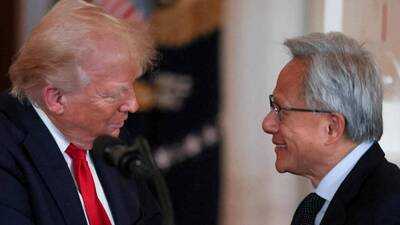
After a transparent intervention by Trump, seemingly in the face of red flags from the US intelligence community, the board said it was satisfied with Huang's candour and ability to lead, and that his return posed no national security risk. “The Board believes Jensen is the right person to lead Nvidia, and that his reinstatement is in the best interests of our stockholders, employees, partners and customers,” Harvey Jones, who was elevated at the time of Huang’s Nov. 12 ouster to board chairman, said in a statement.
It was a remarkable change of heart, particularly after Jones had only recently declared that the board did not intend to bring him back. What happened in between was an extraordinary lobbying campaign, with Trump providing the presidential megaphone on his Truth Social platform and some of the world's most influential tech billionaires, including Elon Musk, supplying the chorus.
In a follow-up post after bringing the Board to heel, Trump said “it has made the correct and proper decision” and the US “needs Jensen’s leadership at Nvidia in order to ensure the Success and Prosperity of not only the Company, but the American Economy.”
“The US Government has no reason to believe that Jensen’s return to Nvidia poses any risk to National Security. The attorney general has confirmed that the US Government does not possess evidence that he has engaged in any unlawful conduct,” the MAGA boss said, adding, "On a personal note, I have gotten to know Jensen, and he is a Great Patriot and National Treasure."
Huang, who co-founded Nvidia in 1993 and transformed it into the dominant force in AI chips powering the current tech boom, expressed gratitude over his reinstatement. “I am honored to return to Nvidia and lead one of the most consequential technology companies in the world at the beginning of a new industrial revolution,” he said, adding, “I take this responsibility with the greatest humility and renewed commitment… I can’t wait to get back to work.”
Drowned out in the rapture among Huang’s fan club over his return after Trump’s intervention were leaks from the American intelligence community that Alice Huang, the Chinese woman Jensen Huang had an affair with, kept in contact with an official of China’s top spy agency for more than a year during her dalliance with the Nvidia boss. US intelligence agencies also gathered evidence that Ms Huang’s business partner, Kang Wei, who was often introduced as her husband, worked with the same Chinese spy agency, according to media reports.
All that hardly seemed to matter as America’s tech elite lined up behind Trump to force Huang’s return. Elon Musk, who had even suggested that hiring Huang at one of his own companies would be an honour, while others had urged him to either start a new company or join a rival, declared after the reinstatement, “The mistake has been corrected.” The White House made no secret of Trump’s intervention, calling the Nvidia board’s reversal “a great decision” and echoing Trump’s words that “we have to protect our geniuses.”
Indeed, Trump himself had to untangle the conflict within the administration after Huang’s exit appeared to have been forced by China hardliners like Marco Rubio, who reportedly strengthened the language suggesting he was honeytrapped in a Chinese spying operation. But pro-business voices like commerce secretary Howard Lutnick and pro-tech spokespersons like former Trump AI advisor David Sacks questioned the allegations against Huang, arguing that he was being forced out before the facts had been established.
Trump, who always seemed to have a sympathetic ear for Huang, went with the latter group. “The US Government has no reason to believe that Jensen’s return to NVIDIA poses any risk to National Security. The Attorney General has confirmed that the US Government does not possess evidence that he has engaged in any unlawful conduct,” he said in a post on Truth Social, adding, “On a personal note, I have gotten to know Jensen, and he is a Great Patriot and National Treasure.”
Not everyone was thrilled by the board turnaround after Trump intervention which takes presidential influence in corporate America to a new level as it bows and scrapes before him. Senator Elizabeth Warren was among the critics, calling the reinstatement reckless while demanding that Nvidia's leadership answer questions about export-control compliance. She also asked the Trump administration to disclose which senior officials had advised the board that Huang's return posed no national security risk even as reports continued to filter out about Alice Huang’s ties to Beijing and Jensen Huang’s own intemperate behavior with his associates and subordinates at Nvidia.
Indeed, as if the intelligence concerns were not damaging enough, separate disclosures painted a decidedly less flattering portrait of Huang's management style. A New York Times investigation drawing on interviews with more than a dozen current and former employees and two decades of documents and court records, described a corporate culture in which humiliation and intimidation were routinely deployed as management tools at Nvidia.
Huang's alleged outbursts were extraordinary even by the standards of Silicon Valley's famously “assoholic bosses.” He reportedly told one executive that his mother should have aborted him, threatened to beat a subordinate with the person's own arms and told another that he would tear off the top of his head and urinate on his brain. In one disturbing account, he reportedly described humiliation as a way of extracting greater performance from employees who had become too wealthy to be motivated by money.
The behaviour had generated workplace complaints and, in at least two cases, confidential settlements with former senior executives, according to the NYT. Yet it also described a company where Huang inspired extraordinary devotion, with employees simultaneously revering and fearing him. The devotion expressed itself in an online campaign, dubbed 'Stand with Jensen', which attracted more than 194,000 signatures at its peak, including employees, former employees, shareholders and technology industry figures.
A single social media post by MAGA supremo on Sunday was all it took for the Board of Nvidia to reverse course and reinstate Huang as CEO on a manic Monday morning, sending the company’s stock rocketing up by a staggering 35 per cent within minutes of the announcement and lifting the broader US market.
After a transparent intervention by Trump, seemingly in the face of red flags from the US intelligence community, the board said it was satisfied with Huang's candour and ability to lead, and that his return posed no national security risk. “The Board believes Jensen is the right person to lead Nvidia, and that his reinstatement is in the best interests of our stockholders, employees, partners and customers,” Harvey Jones, who was elevated at the time of Huang’s Nov. 12 ouster to board chairman, said in a statement.
It was a remarkable change of heart, particularly after Jones had only recently declared that the board did not intend to bring him back. What happened in between was an extraordinary lobbying campaign, with Trump providing the presidential megaphone on his Truth Social platform and some of the world's most influential tech billionaires, including Elon Musk, supplying the chorus.
In a follow-up post after bringing the Board to heel, Trump said “it has made the correct and proper decision” and the US “needs Jensen’s leadership at Nvidia in order to ensure the Success and Prosperity of not only the Company, but the American Economy.”
“The US Government has no reason to believe that Jensen’s return to Nvidia poses any risk to National Security. The attorney general has confirmed that the US Government does not possess evidence that he has engaged in any unlawful conduct,” the MAGA boss said, adding, "On a personal note, I have gotten to know Jensen, and he is a Great Patriot and National Treasure."
Huang, who co-founded Nvidia in 1993 and transformed it into the dominant force in AI chips powering the current tech boom, expressed gratitude over his reinstatement. “I am honored to return to Nvidia and lead one of the most consequential technology companies in the world at the beginning of a new industrial revolution,” he said, adding, “I take this responsibility with the greatest humility and renewed commitment… I can’t wait to get back to work.”
Drowned out in the rapture among Huang’s fan club over his return after Trump’s intervention were leaks from the American intelligence community that Alice Huang, the Chinese woman Jensen Huang had an affair with, kept in contact with an official of China’s top spy agency for more than a year during her dalliance with the Nvidia boss. US intelligence agencies also gathered evidence that Ms Huang’s business partner, Kang Wei, who was often introduced as her husband, worked with the same Chinese spy agency, according to media reports.
All that hardly seemed to matter as America’s tech elite lined up behind Trump to force Huang’s return. Elon Musk, who had even suggested that hiring Huang at one of his own companies would be an honour, while others had urged him to either start a new company or join a rival, declared after the reinstatement, “The mistake has been corrected.” The White House made no secret of Trump’s intervention, calling the Nvidia board’s reversal “a great decision” and echoing Trump’s words that “we have to protect our geniuses.”
Indeed, Trump himself had to untangle the conflict within the administration after Huang’s exit appeared to have been forced by China hardliners like Marco Rubio, who reportedly strengthened the language suggesting he was honeytrapped in a Chinese spying operation. But pro-business voices like commerce secretary Howard Lutnick and pro-tech spokespersons like former Trump AI advisor David Sacks questioned the allegations against Huang, arguing that he was being forced out before the facts had been established.
Trump, who always seemed to have a sympathetic ear for Huang, went with the latter group. “The US Government has no reason to believe that Jensen’s return to NVIDIA poses any risk to National Security. The Attorney General has confirmed that the US Government does not possess evidence that he has engaged in any unlawful conduct,” he said in a post on Truth Social, adding, “On a personal note, I have gotten to know Jensen, and he is a Great Patriot and National Treasure.”
Not everyone was thrilled by the board turnaround after Trump intervention which takes presidential influence in corporate America to a new level as it bows and scrapes before him. Senator Elizabeth Warren was among the critics, calling the reinstatement reckless while demanding that Nvidia's leadership answer questions about export-control compliance. She also asked the Trump administration to disclose which senior officials had advised the board that Huang's return posed no national security risk even as reports continued to filter out about Alice Huang’s ties to Beijing and Jensen Huang’s own intemperate behavior with his associates and subordinates at Nvidia.
Indeed, as if the intelligence concerns were not damaging enough, separate disclosures painted a decidedly less flattering portrait of Huang's management style. A New York Times investigation drawing on interviews with more than a dozen current and former employees and two decades of documents and court records, described a corporate culture in which humiliation and intimidation were routinely deployed as management tools at Nvidia.
Huang's alleged outbursts were extraordinary even by the standards of Silicon Valley's famously “assoholic bosses.” He reportedly told one executive that his mother should have aborted him, threatened to beat a subordinate with the person's own arms and told another that he would tear off the top of his head and urinate on his brain. In one disturbing account, he reportedly described humiliation as a way of extracting greater performance from employees who had become too wealthy to be motivated by money.
The behaviour had generated workplace complaints and, in at least two cases, confidential settlements with former senior executives, according to the NYT. Yet it also described a company where Huang inspired extraordinary devotion, with employees simultaneously revering and fearing him. The devotion expressed itself in an online campaign, dubbed 'Stand with Jensen', which attracted more than 194,000 signatures at its peak, including employees, former employees, shareholders and technology industry figures.
Next Story