
In 1878, single mother Adeline Hornbek built a Colorado homestead with her children; by 1885, she owned up to 100 cattle and employed ranch hands


In 1878, Adeline Hornbek established a homestead in Colorado’s Florissant Valley , bringing with her years of experience in frontier life, cattle work and raising a family through repeated upheaval. She was no stranger to rebuilding. By then, she had already lost husband, raised children through difficult circumstances and watched an earlier ranch destroyed by a devastating flood. The new property, set high in the valley among open meadows, aspen and pine, gave her a different opportunity. With help from her children and neighbours, she built a two-storey log house and began developing the land. Within seven years, the homestead had become a substantial cattle ranch in a community where many families depended on subsistence farming.
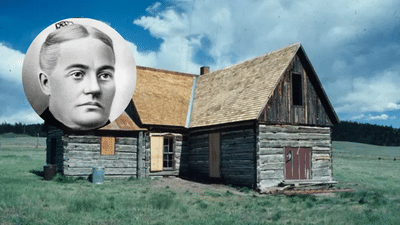
Adeline Warfield’s life changed after the Civil War reached Indian Territory
Adeline Warfield was born in 1833 in Franklin County, Massachusetts, an agricultural part of the state. At 17, she was living close enough to Worcester to be aware of the first National Woman’s Rights Convention, held there in 1850. Speakers encouraged women to develop their own abilities rather than accept the narrow expectations traditionally placed on them.
A few years later, Warfield left Massachusetts with her brother and sister-in-law and travelled west. The move took her into the Creek Nation, in what is now Oklahoma, where her brother worked as an Indian trader. Her life there became closely tied to the trading business. She married Simon Harker, her brother’s business partner, and the couple had two children. Adeline also helped with the operation of at least two trading posts.
The outbreak of the American Civil War changed the situation. Fighting and divisions spread through Indian Territory, making the area increasingly dangerous for families living and working there. Adeline, Simon and their children eventually left and moved towards Colorado, part of a wider movement of settlers heading into the rapidly developing territory.
The 1864 flood that changed Adeline Warfield’s life
The family settled near Denver, where Adeline and Simon established a cattle ranch alongside a route used by stagecoaches travelling towards the growing settlement. Cattle and farm produce provided a market among miners, travellers and new arrivals. Adeline’s third child was born in 1863. The following year brought a disaster that altered the course of the family’s life.
According to the National Park Service (NPS), In the spring of 1864, a major flash flood swept through Denver and surrounding areas. Livestock was lost, ranches were damaged and people died. The Harkers’ property was among those affected. Simon, who was already suffering from tuberculosis, became seriously ill after the flood and died several weeks later.
Adeline was 31. She was left with three young children and a badly damaged ranch.
How Adeline Warfield’s ranch became a family responsibility again
By this stage, Adeline had acquired practical skills that were valuable on a frontier ranch. She could ride and handle horses, understood cattle management and had already spent years working alongside her husband in the family business. She hired Elliot Hornbek, a former gold miner, to provide full-time assistance on the ranch. The two married in 1866, and Adeline later had a fourth child. The marriage eventually broke down. Elliot left, leaving Adeline once again responsible for the household and ranch.
Her circumstances were difficult, but the pattern of her life was becoming clear. Rather than abandoning the property whenever conditions changed, she continued to work the land and provide for her children.
Building a new ranch in Florissant Valley
In 1876, the year Colorado entered the Union as a state, Adeline moved to the Florissant Valley. The area stood roughly 8,500 feet above sea level, with broad natural meadows and stands of aspen and pine. For cattle, the open grassland offered useful grazing. For a family establishing a homestead, however, the high-altitude setting also meant hard work and a relatively isolated way of life.
Adeline began building again. With assistance from her neighbours and her teenage children, she constructed a two-storey log house containing five rooms and a separate parlour. The building became the centre of the new ranch and later survived as an important reminder of the settlement period in the valley.
Hornbek also became one of the early women in the Florissant Valley and Colorado to file a homesteading claim in her own name.
By 1885, the homestead had become a working ranch
The property did not remain a small family holding for long. Over the following years, Adeline expanded the ranch until it was roughly twice its original size. As reported by NPS, she eventually kept as many as 100 cattle and registered her own cattle brand. Several ranch hands were employed to help manage the operation, marking a significant change from the early days when Adeline had relied mainly on her children and neighbours.
The surrounding community was developing at the same time. Many of the settlers around Florissant were practising subsistence farming, producing much of what their households needed while adapting to the conditions of a high-altitude valley.
Adeline’s ranch became part of that emerging network. Her property was larger and more commercially oriented than many of the neighbouring farms, but its development was tied to the same settlement process that was bringing families into the valley.
From cattle ranch to school board: Adeline helped shape Florissant
Adeline’s involvement in Florissant was not limited to cattle and land. As more homesteaders arrived, she took part in efforts to establish the basic institutions needed by the community. She helped organise the local school board, which employed a teacher and oversaw the construction of the area’s first school. Her home was also used for social gatherings, giving residents a place to meet as the settlement developed.
These activities were part of the less visible work of building a frontier community. Roads, schools, farms and ranches did not develop separately. They depended on people taking responsibility for shared needs, often before formal institutions were firmly established. For Hornbek, the ranch remained the centre of that life.
Adeline Warfield’s life changed after the Civil War reached Indian Territory
Adeline Warfield was born in 1833 in Franklin County, Massachusetts, an agricultural part of the state. At 17, she was living close enough to Worcester to be aware of the first National Woman’s Rights Convention, held there in 1850. Speakers encouraged women to develop their own abilities rather than accept the narrow expectations traditionally placed on them.
A few years later, Warfield left Massachusetts with her brother and sister-in-law and travelled west. The move took her into the Creek Nation, in what is now Oklahoma, where her brother worked as an Indian trader. Her life there became closely tied to the trading business. She married Simon Harker, her brother’s business partner, and the couple had two children. Adeline also helped with the operation of at least two trading posts.
The outbreak of the American Civil War changed the situation. Fighting and divisions spread through Indian Territory, making the area increasingly dangerous for families living and working there. Adeline, Simon and their children eventually left and moved towards Colorado, part of a wider movement of settlers heading into the rapidly developing territory.
The 1864 flood that changed Adeline Warfield’s life
The family settled near Denver, where Adeline and Simon established a cattle ranch alongside a route used by stagecoaches travelling towards the growing settlement. Cattle and farm produce provided a market among miners, travellers and new arrivals. Adeline’s third child was born in 1863. The following year brought a disaster that altered the course of the family’s life.
According to the National Park Service (NPS), In the spring of 1864, a major flash flood swept through Denver and surrounding areas. Livestock was lost, ranches were damaged and people died. The Harkers’ property was among those affected. Simon, who was already suffering from tuberculosis, became seriously ill after the flood and died several weeks later.
Adeline was 31. She was left with three young children and a badly damaged ranch.
How Adeline Warfield’s ranch became a family responsibility again
By this stage, Adeline had acquired practical skills that were valuable on a frontier ranch. She could ride and handle horses, understood cattle management and had already spent years working alongside her husband in the family business. She hired Elliot Hornbek, a former gold miner, to provide full-time assistance on the ranch. The two married in 1866, and Adeline later had a fourth child. The marriage eventually broke down. Elliot left, leaving Adeline once again responsible for the household and ranch.
Her circumstances were difficult, but the pattern of her life was becoming clear. Rather than abandoning the property whenever conditions changed, she continued to work the land and provide for her children.
Building a new ranch in Florissant Valley
In 1876, the year Colorado entered the Union as a state, Adeline moved to the Florissant Valley. The area stood roughly 8,500 feet above sea level, with broad natural meadows and stands of aspen and pine. For cattle, the open grassland offered useful grazing. For a family establishing a homestead, however, the high-altitude setting also meant hard work and a relatively isolated way of life.
Adeline began building again. With assistance from her neighbours and her teenage children, she constructed a two-storey log house containing five rooms and a separate parlour. The building became the centre of the new ranch and later survived as an important reminder of the settlement period in the valley.
Hornbek also became one of the early women in the Florissant Valley and Colorado to file a homesteading claim in her own name.
By 1885, the homestead had become a working ranch
The property did not remain a small family holding for long. Over the following years, Adeline expanded the ranch until it was roughly twice its original size. As reported by NPS, she eventually kept as many as 100 cattle and registered her own cattle brand. Several ranch hands were employed to help manage the operation, marking a significant change from the early days when Adeline had relied mainly on her children and neighbours.
The surrounding community was developing at the same time. Many of the settlers around Florissant were practising subsistence farming, producing much of what their households needed while adapting to the conditions of a high-altitude valley.
Adeline’s ranch became part of that emerging network. Her property was larger and more commercially oriented than many of the neighbouring farms, but its development was tied to the same settlement process that was bringing families into the valley.
From cattle ranch to school board: Adeline helped shape Florissant
Adeline’s involvement in Florissant was not limited to cattle and land. As more homesteaders arrived, she took part in efforts to establish the basic institutions needed by the community. She helped organise the local school board, which employed a teacher and oversaw the construction of the area’s first school. Her home was also used for social gatherings, giving residents a place to meet as the settlement developed.
These activities were part of the less visible work of building a frontier community. Roads, schools, farms and ranches did not develop separately. They depended on people taking responsibility for shared needs, often before formal institutions were firmly established. For Hornbek, the ranch remained the centre of that life.
Next Story