
In 1905, William and Elizabeth Kent paid $45,000 for 611 acres of California redwood forest; after a reservoir threat, they donated about 295 acres and the land became Muir Woods National Monument in 1908


A stretch of California redwood forest that could have been logged and turned into a reservoir became one of the country's best-known protected forests after William and Elizabeth Kent chose to give much of their land to the federal government.
The Kents bought 611 acres in Redwood Canyon in 1905 for $45,000, as surrounding forests were being cleared for timber and commercial use. Three years later, they donated about 295 acres to the federal government, and President Theodore Roosevelt proclaimed the land Muir Woods National Monument , according to the National Park Service (NPS).
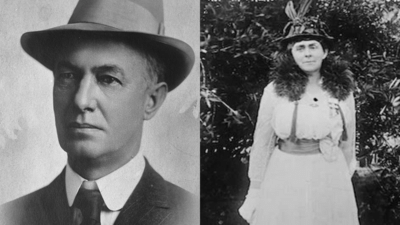
The decision followed a dispute over plans to build a reservoir in the canyon and came after years of efforts by conservationists to protect its redwoods.
A family with roots in CaliforniaWilliam Kent came from a wealthy family with roots in Connecticut. His father, Albert Kent, came from a prosperous farming family, attended Yale, and built his fortune through businesses and real estate investments.
The Kent family moved to Marin County in 1871. William grew up around the landscape near the Golden Gate and developed an appreciation for the area's natural environment.
At Yale, William met Elizabeth Thacher, whose father was a Latin professor at the university. The couple later married and had seven children and 10 grandchildren.
They eventually settled in Chicago, where William took control of his father's businesses and entered local politics. By 1903, however, an economic depression had affected the family's finances.
That year, William and Elizabeth travelled to Marin County to visit relatives. During the trip, a friend took them to Redwood Canyon and encouraged them to buy the grove and protect its redwoods.
The couple initially hesitated but eventually purchased the property for $45,000, a heavily discounted price intended to make preservation possible, as per the NPS.
Reservoir plan puts the forest at riskThe threat to the redwoods became more immediate in 1907.
The North Coast Water Company held water rights in the canyon and sought to develop a reservoir by damming the creek. The proposal put the future of the redwood grove at risk and led to a legal dispute with the Kents.
The conflict came after the 1906 San Francisco earthquake, which destroyed much of the city and left large areas in need of rebuilding. Pressure to use redwood timber increased as reconstruction got underway.
Public interest in the forest had already grown through conservation campaigns and improved access to Mount Tamalpais. The Mount Tamalpais Railroad, in which William Kent was a major shareholder, also opened a branch into the redwood grove in 1907, allowing visitors to reach the forest by railway.
Rather than sell the property or allow the reservoir project to proceed, Kent sought federal protection for the land.
He approached Gifford Pinchot , the head of the newly established US Forest Service, who brought the dispute to President Theodore Roosevelt.
295 acres become a national monumentThe recently enacted Antiquities Act gave the president the authority to establish national monuments through presidential proclamation.
In January 1908, Roosevelt accepted about 295 acres of the Kents' property and proclaimed it Muir Woods National Monument.
It became the seventh national monument and the first created from land donated to the federal government by a private individual.
Kent could have asked for the monument to carry his family's name. Instead, he requested that it be named after his friend and fellow conservationist John Muir.
The donation also brought the dispute over the proposed reservoir to an end.
Elizabeth Kent's role was largely overlookedAlthough William Kent is often associated with the creation of Muir Woods, Elizabeth Thacher Kent was also a co-owner of the property and played a role in the family's business, philanthropic, and civic activities.
Elizabeth came from a politically connected family and was the great-granddaughter of Roger Sherman, one of the Founding Fathers of the United States.
The Kents' political records were more complicated than their conservation legacy. William later served in Congress and supported restrictions aimed at excluding Chinese and Japanese immigrants from the United States. Elizabeth was also active in politics and became involved in causes beyond her husband's public career.
Their conservation work therefore formed only one part of their wider public lives.
A forest protected for more than a centuryMuir Woods has remained a national monument since Roosevelt's 1908 proclamation. The site marked its centennial in 2008, a century after the Kents' donation.
Later conservation projects have focused on protecting the forest's ecosystem, restoring Redwood Creek and improving conditions for species including coho salmon, steelhead trout and the California red-legged frog.
A 2014 BioBlitz brought together more than 320 volunteer scientists, along with thousands of families, teachers and students, to document plants, insects, mammals, birds and other species in Muir Woods and the surrounding Golden Gate National Recreation Area.
The forest has also introduced measures to manage tourism and reduce pressure on its fragile resources, including a parking reservation and shuttle system.
The Kents bought 611 acres in Redwood Canyon in 1905 for $45,000, as surrounding forests were being cleared for timber and commercial use. Three years later, they donated about 295 acres to the federal government, and President Theodore Roosevelt proclaimed the land Muir Woods National Monument , according to the National Park Service (NPS).
The decision followed a dispute over plans to build a reservoir in the canyon and came after years of efforts by conservationists to protect its redwoods.
A family with roots in CaliforniaWilliam Kent came from a wealthy family with roots in Connecticut. His father, Albert Kent, came from a prosperous farming family, attended Yale, and built his fortune through businesses and real estate investments.
The Kent family moved to Marin County in 1871. William grew up around the landscape near the Golden Gate and developed an appreciation for the area's natural environment.
At Yale, William met Elizabeth Thacher, whose father was a Latin professor at the university. The couple later married and had seven children and 10 grandchildren.
They eventually settled in Chicago, where William took control of his father's businesses and entered local politics. By 1903, however, an economic depression had affected the family's finances.
That year, William and Elizabeth travelled to Marin County to visit relatives. During the trip, a friend took them to Redwood Canyon and encouraged them to buy the grove and protect its redwoods.
The couple initially hesitated but eventually purchased the property for $45,000, a heavily discounted price intended to make preservation possible, as per the NPS.
Reservoir plan puts the forest at riskThe threat to the redwoods became more immediate in 1907.
The North Coast Water Company held water rights in the canyon and sought to develop a reservoir by damming the creek. The proposal put the future of the redwood grove at risk and led to a legal dispute with the Kents.
The conflict came after the 1906 San Francisco earthquake, which destroyed much of the city and left large areas in need of rebuilding. Pressure to use redwood timber increased as reconstruction got underway.
Public interest in the forest had already grown through conservation campaigns and improved access to Mount Tamalpais. The Mount Tamalpais Railroad, in which William Kent was a major shareholder, also opened a branch into the redwood grove in 1907, allowing visitors to reach the forest by railway.
Rather than sell the property or allow the reservoir project to proceed, Kent sought federal protection for the land.
He approached Gifford Pinchot , the head of the newly established US Forest Service, who brought the dispute to President Theodore Roosevelt.
295 acres become a national monumentThe recently enacted Antiquities Act gave the president the authority to establish national monuments through presidential proclamation.
In January 1908, Roosevelt accepted about 295 acres of the Kents' property and proclaimed it Muir Woods National Monument.
It became the seventh national monument and the first created from land donated to the federal government by a private individual.
Kent could have asked for the monument to carry his family's name. Instead, he requested that it be named after his friend and fellow conservationist John Muir.
The donation also brought the dispute over the proposed reservoir to an end.
Elizabeth Kent's role was largely overlookedAlthough William Kent is often associated with the creation of Muir Woods, Elizabeth Thacher Kent was also a co-owner of the property and played a role in the family's business, philanthropic, and civic activities.
Elizabeth came from a politically connected family and was the great-granddaughter of Roger Sherman, one of the Founding Fathers of the United States.
The Kents' political records were more complicated than their conservation legacy. William later served in Congress and supported restrictions aimed at excluding Chinese and Japanese immigrants from the United States. Elizabeth was also active in politics and became involved in causes beyond her husband's public career.
Their conservation work therefore formed only one part of their wider public lives.
A forest protected for more than a centuryMuir Woods has remained a national monument since Roosevelt's 1908 proclamation. The site marked its centennial in 2008, a century after the Kents' donation.
Later conservation projects have focused on protecting the forest's ecosystem, restoring Redwood Creek and improving conditions for species including coho salmon, steelhead trout and the California red-legged frog.
A 2014 BioBlitz brought together more than 320 volunteer scientists, along with thousands of families, teachers and students, to document plants, insects, mammals, birds and other species in Muir Woods and the surrounding Golden Gate National Recreation Area.
The forest has also introduced measures to manage tourism and reduce pressure on its fragile resources, including a parking reservation and shuttle system.
Next Story