
In 1948, two pairs of American gray squirrels were brought to Italy and released near Turin; they spread across more than 2,000 sq km, while native red squirrels vanished from a 1,689-sq-km area


Ecologist Piero Genovesi of Italy's National Wildlife Institute dates the introduction to 1948, when four American grey squirrels were brought to Northern Italy and released near Turin . The small introduction eventually developed into a large invasive population across the Piedmont region . By 2010, the squirrels occupied approximately 2,016 square kilometres, according to a 2014 study by Sandro Bertolino and colleagues in Biological Invasions. In the same period, the native red squirrels of Eurasia vanished from about 1,689 square kilometres where they used to be present, the same 2014 Biological Invasions study found. It is often cited as a gift sent to Italy by the American ambassador. An account by ecologist Piero Genovesi identified Italian diplomat Giuseppe Casimiro Simonis Vallario as the person who arranged for two pairs of American grey squirrels to be bought from Washington, DC and released near his villa in Candiolo, close to Turin, in 1948. It was an instance of the influence of a few non-native animals on local fauna.
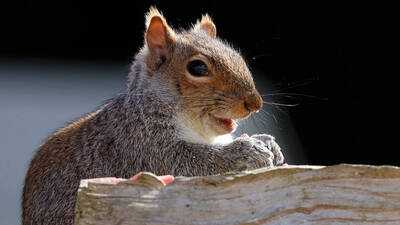
Four squirrels established a population near Turin
The American grey squirrel (Sciurus carolinensis) is native to eastern North America. The two pairs introduced in 1948 were released in Candiolo near the Stupinigi forests in Piedmont. The population expanded slowly over the years. In 1970, the population had not dispersed beyond the initial release site and inhabited an area of about 25 square kilometres. After that, the squirrels began to spread fast across the region. According to a 2003 study by Sandro Bertolino and Piero Genovesi in Biological Conservation, a three-year suspension of eradication work in the late 1990s led to a significant expansion of the squirrels' range. In 1990, the population inhabiting 200 square kilometres expanded to approximately 900 square kilometres by 2000. The population expansion was largely attributed to the fact that squirrels inhabited vast, continuous broadleaf woodlands. The 2003 research paper by Sandro Bertolino and Piero Genovesi examined the spread of the introduced population and consequences for native red squirrels. The paper noted that the first attempt to act came only after the invasion was already well established in 1997; the National Wildlife Institute and the University of Turin drew up an eradication plan because the grey squirrel was already replacing red squirrels through competitive exclusion and damaging trees by de-barking.
Native red squirrels lost much of their range
This expansion put increasing pressure on the Eurasian red squirrel (Sciurus vulgaris), a native animal of Italy. Scientists revealed that the two species competed for food and woodland. The grey squirrels had a more diverse diet and access to more woodland than their rivals, giving them a competitive advantage where the two species overlapped. In a 2014 Biological Invasions study titled "A Grey Future for Europe: Sciurus carolinensis Is Replacing Native Red Squirrels in Italy," scientists studied how the situation changed between 1970 and 2010.
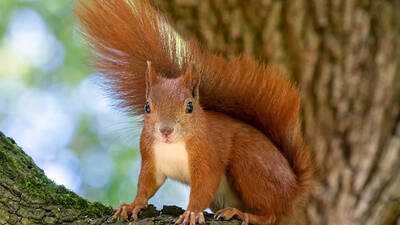 In the same period, red squirrels vanished from 1,689 square kilometres of the territory, which they had used before in the area occupied by grey squirrels. This meant that red squirrels became extinct locally in 62% of the investigated 2-by-2 kilometre squares where the native species were detected before. The findings are available through the University of Turin's research archive.
Disease and damage to trees added to concerns
Grey squirrels may be carriers of squirrel pox , which may prove fatal to the red squirrel. The disease had been one of the key causes of the decline of the native species of red squirrels in Britain. It is not clear, however, what part it has played in the invasion of Italy. Competition and loss of habitat due to occupation remain the better documented issues in Piedmont. In addition, the introduced squirrels may cause harm to the forests through stripping bark from the trees, which may harm the woods and plantations, including poplar plantations. There have been studies conducted about this issue due to the problems it creates for forestry. This study was published in the journal Forestry and can be found in research about bark stripping damage .
Controlling the expanding population
Discussion of control methods began to emerge in Italian research and amongst Italian wildlife organisations around the 1990s. In 1997 there was an attempt at an eradication program in the area of Racconigi, but legal troubles halted the effort. The delay caused the squirrel population to grow further. By the time that its distribution was mapped out by researchers in 2010, the population had grown so extensively that the initial control method was no longer practical. What had begun with the introduction of four squirrels turned into a major conservation problem. Its growth patterns had changed the distribution of the native red squirrel in the Piedmont region.
Four squirrels established a population near Turin
The American grey squirrel (Sciurus carolinensis) is native to eastern North America. The two pairs introduced in 1948 were released in Candiolo near the Stupinigi forests in Piedmont. The population expanded slowly over the years. In 1970, the population had not dispersed beyond the initial release site and inhabited an area of about 25 square kilometres. After that, the squirrels began to spread fast across the region. According to a 2003 study by Sandro Bertolino and Piero Genovesi in Biological Conservation, a three-year suspension of eradication work in the late 1990s led to a significant expansion of the squirrels' range. In 1990, the population inhabiting 200 square kilometres expanded to approximately 900 square kilometres by 2000. The population expansion was largely attributed to the fact that squirrels inhabited vast, continuous broadleaf woodlands. The 2003 research paper
Native red squirrels lost much of their range
This expansion put increasing pressure on the Eurasian red squirrel (Sciurus vulgaris), a native animal of Italy. Scientists revealed that the two species competed for food and woodland. The grey squirrels had a more diverse diet and access to more woodland than their rivals, giving them a competitive advantage where the two species overlapped. In a 2014 Biological Invasions study
Disease and damage to trees added to concerns
Grey squirrels may be carriers of squirrel pox , which may prove fatal to the red squirrel. The disease had been one of the key causes of the decline of the native species of red squirrels in Britain. It is not clear, however, what part it has played in the invasion of Italy. Competition and loss of habitat due to occupation remain the better documented issues in Piedmont. In addition, the introduced squirrels may cause harm to the forests through stripping bark from the trees, which may harm the woods and plantations, including poplar plantations. There have been studies conducted about this issue due to the problems it creates for forestry. This study was published in the journal Forestry and can be found in research about bark stripping damage .
Controlling the expanding population
Discussion of control methods began to emerge in Italian research and amongst Italian wildlife organisations around the 1990s. In 1997 there was an attempt at an eradication program in the area of Racconigi, but legal troubles halted the effort. The delay caused the squirrel population to grow further. By the time that its distribution was mapped out by researchers in 2010, the population had grown so extensively that the initial control method was no longer practical. What had begun with the introduction of four squirrels turned into a major conservation problem. Its growth patterns had changed the distribution of the native red squirrel in the Piedmont region.
Next Story