
In 1964, Oklahoma City endured 1,253 sonic booms in six months; seven years later, Congress ended funding for the U.S. supersonic transport program amid cost, technical and environmental concerns


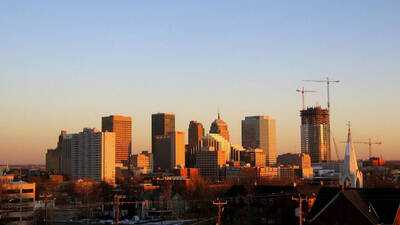
In 1964, Oklahoma City became the centre of an unusual aviation experiment. For six months, U.S. Air Force jets flew over the city at supersonic speeds, producing loud sonic booms to test whether people could tolerate the noise from future passenger aircraft. By the end of the experiment, 1,253 sonic booms had been generated over the area. The experiment, called Operation Bongo II , provided aviation experts with valuable information regarding the impact of sonic booms on houses and people living in them. At the same time, the experiment showed an increased level of public opposition to overland supersonic flights. Congress cut off funding for the American supersonic transport (SST) program in 1971.
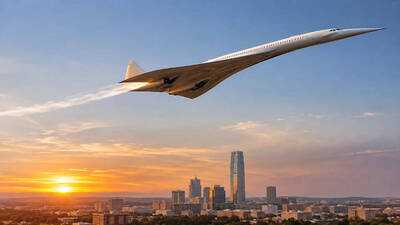
Operation Bongo II brought repeated sonic booms over Oklahoma City
The Federal Aviation Agency (FAA) ran Operation Bongo II, which began on February 3, 1964. Oklahoma City was chosen because the region had been depending economically on the FAA's aeronautical facility and the Tinker Air Force Base. Scientists aimed to study the impact of the sonic booms on structures and also on how people could develop a tolerance to the sound. The aircraft and personnel for this study were provided by the U.S. Air Force. Aircraft such as the F-101, F-104, F-106 and B-58 flew over the city at supersonic speeds. The flights occurred up to eight times a day, seven days a week, for 26 weeks.
This stage ended on July 31, while the observation stage followed for 13 weeks. A federal sonic boom research summary archived by the Defense Technical Information Center says nine control houses were part of the program, spread across different parts of the city. Two of those houses carried heavy instrumentation to track how the structures responded and two more homes outside the boom area were used to compare against natural wear. Other sensors recorded pressure changes and sonic waves. Residents reported sleep and conversation disruptions. Some also experienced cracked plaster and glass.
Others associated the booms with the troubles of farm animals. From the survey results, it became evident that there was split public opinion regarding the issue. Around 73% of respondents claimed they could tolerate the booms in terms of their quality and intensity. However, 27% of the respondents claimed that they could not. Around 40% of the respondents claimed that the booms had caused some structural damage. But no significant structural damage was found in the FAA's instrumented control houses.
Sonic booms became a problem for commercial aviation
The experiment was part of a wider attempt to design a commercial plane that would be able to travel faster than sound. The U.S. aimed to design a supersonic passenger jet that would be competitive with planes under development in Britain, France and the Soviet Union. The U.S. plane was meant to carry about 300 passengers at more than twice the speed of sound, according to the Smithsonian National Air and Space Museum's archive on the program. The development of such an aircraft posed significant technical and economic difficulties. Technical problems included aerodynamics at high speeds, engine efficiency, fuel usage and heat generation by supersonic flight. The noise level posed additional problems.
 The supersonic jet produced shock waves reaching the ground as a sonic boom and their repeated occurrence would affect people's comfort and could cause damage to buildings. The Oklahoma City trial and earlier tests in St. Louis added to public and political opposition. NASA's history of sonic boom research explains that public pressure became a major challenge for the American SST effort. The paper traces how NASA's work moved from early boom measurement flights to a shaped sonic boom demonstrator, a modified F-5E built to test whether altering an aircraft's shape could reduce the pressure signature heard on the ground. It notes that the demonstrator was flown repeatedly over the Mojave Desert and the program helped establish the shape-focused design approach now central to quiet supersonic flight.
Congress ended the U.S. civilian SST program in 1971
The American supersonic transport effort received considerable criticism due to its high cost, delayed production and technical problems. Furthermore, environmental impacts and public acceptance of the sonic boom were concerns that reduced the credibility of the program. Congress cut funding for the U.S. civil SST project in 1971 and Boeing's historical archive lists March 24 as the date the project was cancelled. This move meant the proposed American passenger plane never got built. The termination of the program did not signify the end of supersonic flights in the country, since military jets were still capable of flying faster than the speed of sound.
The cancellation of the American civil SST project did not signify the end of civilian supersonic flights anywhere around the world. Meanwhile, Britain and France pressed ahead with the Concorde, which entered commercial service in 1976. Operation Bongo II alone could not have brought the American SST program to its demise. Nevertheless, the results of the operation and the public response demonstrated how challenging it was to operate supersonic planes over populated areas.
Operation Bongo II brought repeated sonic booms over Oklahoma City
The Federal Aviation Agency (FAA) ran Operation Bongo II, which began on February 3, 1964. Oklahoma City was chosen because the region had been depending economically on the FAA's aeronautical facility and the Tinker Air Force Base. Scientists aimed to study the impact of the sonic booms on structures and also on how people could develop a tolerance to the sound. The aircraft and personnel for this study were provided by the U.S. Air Force. Aircraft such as the F-101, F-104, F-106 and B-58 flew over the city at supersonic speeds. The flights occurred up to eight times a day, seven days a week, for 26 weeks.
This stage ended on July 31, while the observation stage followed for 13 weeks. A federal sonic boom research summary archived by the Defense Technical Information Center says nine control houses were part of the program, spread across different parts of the city. Two of those houses carried heavy instrumentation to track how the structures responded and two more homes outside the boom area were used to compare against natural wear. Other sensors recorded pressure changes and sonic waves. Residents reported sleep and conversation disruptions. Some also experienced cracked plaster and glass.
Others associated the booms with the troubles of farm animals. From the survey results, it became evident that there was split public opinion regarding the issue. Around 73% of respondents claimed they could tolerate the booms in terms of their quality and intensity. However, 27% of the respondents claimed that they could not. Around 40% of the respondents claimed that the booms had caused some structural damage. But no significant structural damage was found in the FAA's instrumented control houses.
Sonic booms became a problem for commercial aviation
The experiment was part of a wider attempt to design a commercial plane that would be able to travel faster than sound. The U.S. aimed to design a supersonic passenger jet that would be competitive with planes under development in Britain, France and the Soviet Union. The U.S. plane was meant to carry about 300 passengers at more than twice the speed of sound, according to the Smithsonian National Air and Space Museum's archive on the program. The development of such an aircraft posed significant technical and economic difficulties. Technical problems included aerodynamics at high speeds, engine efficiency, fuel usage and heat generation by supersonic flight. The noise level posed additional problems.
Congress ended the U.S. civilian SST program in 1971
The American supersonic transport effort received considerable criticism due to its high cost, delayed production and technical problems. Furthermore, environmental impacts and public acceptance of the sonic boom were concerns that reduced the credibility of the program. Congress cut funding for the U.S. civil SST project in 1971 and Boeing's historical archive lists March 24 as the date the project was cancelled. This move meant the proposed American passenger plane never got built. The termination of the program did not signify the end of supersonic flights in the country, since military jets were still capable of flying faster than the speed of sound.
The cancellation of the American civil SST project did not signify the end of civilian supersonic flights anywhere around the world. Meanwhile, Britain and France pressed ahead with the Concorde, which entered commercial service in 1976. Operation Bongo II alone could not have brought the American SST program to its demise. Nevertheless, the results of the operation and the public response demonstrated how challenging it was to operate supersonic planes over populated areas.
Next Story