
In 2004, a retired Royal Navy frigate was sunk off Cornwall to create a reef; five years later, researchers had recorded 263 kinds of marine life on it


It was the end of a naval career when HMS Scylla sank beneath the waters of Whitsand Bay on March 27, 2004. The vessel’s active service lasted more than two decades. The former Royal Navy frigate , however, had not been taken off duty for disposal alone. It was being turned into an artificial reef , with the hope that its steel structure would help provide a new underwater habitat as well as a place for recreational divers to explore.
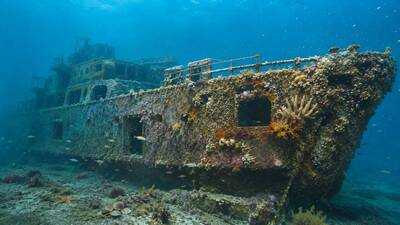
By the end of March 2009, researchers had recorded 263 taxa on the wreck. Published in the Journal of the Marine Biological Association of the United Kingdom in 2010, the research offered an account detailing how marine organisms settled on the ship, which areas of the wreck attracted the most life, and why its developing community differed from those found on natural reefs.
A Navy ship turned into a reef
The vessel was built at Devonport Dockyard and was the last frigate that was constructed there. The Leander-class vessel was launched in 1968, entered Royal Navy service in 1970 and was decommissioned in 1993. Following this, it remained out of service until the National Marine Aquarium took on the proposal to give it a second life underwater. In November 2003, the aquarium purchased the ship for £200,000.
Prior to the planned sinking, the vessel had to be prepared for its new location. A five-month preparation programme began at Devonport in November 2003. The tanks were cleaned; workers removed copper pipework and wiring, salvaged recyclable metals and took out hazardous materials like batteries, antifreeze, and refrigerants. In addition to this, masts and sonar domes were removed, while 58 openings were cut into the vessel to provide access for divers.
Though not everything on the hull was stripped away. Some areas retained tributyltin, or TBT, antifouling paint, which had been used to stop marine organisms attaching to ships. According to the Department for Environment, Food and Rural Affairs, the coating did not need to be removed, as they took into account the time since the vessel had last been painted and the environmental risks of stripping it off. This decision would later prove to be of importance because researchers found that the remaining coating restricted the settlement of marine life on parts of the wreck.
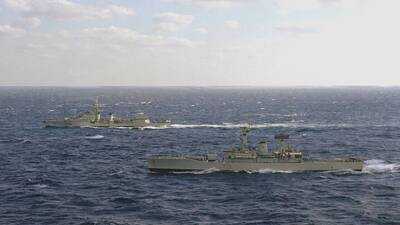 At around 3 pm on March 27, 2004, Scylla was positioned for sinking at its designated site in Whitsand Bay, South Cornwall. Furthermore, forty-six demolition charges had been fitted to the hull and were detonated later. This allowed seawater to enter, and the frigate slowly disappeared beneath the surface.
What settled on the wreck
Barnacles, tubeworms and hydroids were recorded within a month of the sinking. During the wreck’s first year, researchers also noted sea urchins, queen scallops, starfish, solitary sea squirts and temporary algal growth. A soft coral-like animal called dead man’s fingers took longer to arrive and was first observed in spring 2005.
The marine community did not develop at the same pace everywhere. Sea fans were first recorded in August 2007, while wrasse took longer to establish themselves and were present in small numbers by the end of the year. The interior of the wreck, however, remained comparatively poorly colonised even after five years on the seabed, according to the research.
By March 2009, the researchers had documented 263 taxa on Scylla. The figure refers to taxonomic groups recorded during the survey, rather than 263 individual species. Their observations also helped explain why some areas of the vessel remained fairly bare. Parts that were still covered with TBT paint showed little colonisation, and organisms were mainly found where the coating had flaked away or where non-toxic paint markings were present.
Therefore, the 263 taxa recorded on HMS Scylla offered more than a measure of how much life had gathered around a sunken ship. The findings of the study showed how the history and condition of an artificial structure could influence the marine community that developed on it.
By the end of March 2009, researchers had recorded 263 taxa on the wreck. Published in the Journal of the Marine Biological Association of the United Kingdom in 2010, the research offered an account detailing how marine organisms settled on the ship, which areas of the wreck attracted the most life, and why its developing community differed from those found on natural reefs.
A Navy ship turned into a reef
The vessel was built at Devonport Dockyard and was the last frigate that was constructed there. The Leander-class vessel was launched in 1968, entered Royal Navy service in 1970 and was decommissioned in 1993. Following this, it remained out of service until the National Marine Aquarium took on the proposal to give it a second life underwater. In November 2003, the aquarium purchased the ship for £200,000.
Prior to the planned sinking, the vessel had to be prepared for its new location. A five-month preparation programme began at Devonport in November 2003. The tanks were cleaned; workers removed copper pipework and wiring, salvaged recyclable metals and took out hazardous materials like batteries, antifreeze, and refrigerants. In addition to this, masts and sonar domes were removed, while 58 openings were cut into the vessel to provide access for divers.
Though not everything on the hull was stripped away. Some areas retained tributyltin, or TBT, antifouling paint, which had been used to stop marine organisms attaching to ships. According to the Department for Environment, Food and Rural Affairs, the coating did not need to be removed, as they took into account the time since the vessel had last been painted and the environmental risks of stripping it off. This decision would later prove to be of importance because researchers found that the remaining coating restricted the settlement of marine life on parts of the wreck.
What settled on the wreck
Barnacles, tubeworms and hydroids were recorded within a month of the sinking. During the wreck’s first year, researchers also noted sea urchins, queen scallops, starfish, solitary sea squirts and temporary algal growth. A soft coral-like animal called dead man’s fingers took longer to arrive and was first observed in spring 2005.
The marine community did not develop at the same pace everywhere. Sea fans were first recorded in August 2007, while wrasse took longer to establish themselves and were present in small numbers by the end of the year. The interior of the wreck, however, remained comparatively poorly colonised even after five years on the seabed, according to the research.
By March 2009, the researchers had documented 263 taxa on Scylla. The figure refers to taxonomic groups recorded during the survey, rather than 263 individual species. Their observations also helped explain why some areas of the vessel remained fairly bare. Parts that were still covered with TBT paint showed little colonisation, and organisms were mainly found where the coating had flaked away or where non-toxic paint markings were present.
Therefore, the 263 taxa recorded on HMS Scylla offered more than a measure of how much life had gathered around a sunken ship. The findings of the study showed how the history and condition of an artificial structure could influence the marine community that developed on it.
Next Story