
In 2012, a man in Australia used Google Earth to retrace Indian rail lines from childhood; 25 years after vanishing, he found his mother


Stories of family separation seldom have happy endings, and searches for missing family members that are carried out decades after the incident typically come to a standstill due to faded memory and missing documents. However, in 2012, an Australian businessman managed to overcome these challenges by using only fragments of his upbringing and a satellite mapping program to find the precise Indian village from which he had been removed as a five-year-old. This quest resulted in a 25-year reunion with his birth mother.
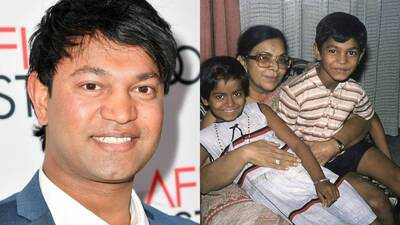
Saroo Brierley , formerly Sheru Munshi Khan, grew up in an impoverished family in central India. He would tag along behind his older brother Guddu on odd jobs around the local train stations. In 1986, the two boys pulled into a station, hunting for loose coin, and Saroo fell asleep waiting on a deserted, motionless train, while his brother went looking elsewhere. When he woke, the train was moving, carrying him alone across roughly 1,500 kilometres of unfamiliar countryside to Calcutta, a city he had never seen and could not name.
Surviving alone on the streets
Saroo lived on the streets of Calcutta for weeks at a time, sleeping under station seats and dodging people who wished him ill. Eventually a teenager took him to the local police, and he was put in a government centre for lost children before being transferred into the care of an orphanage. That’s where Mrs Saroj Sood, founder of the Indian Society for Sponsorship and Adoption, attempted and failed to identify his family with the bits of information he could give as a little child who couldn’t name his hometown precisely. Saroo was officially registered as a lost child and put up for international adoption after authorities were unable to locate his family.
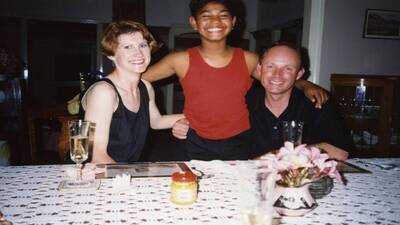
Saroo was adopted by an Australian couple, John and Sue Brierley, who lived in Hobart, Tasmania, in 1987. He was brought up in a nurturing environment, with a second adopted son from India coming along later, and in most ways fashioned a stable, successful existence away from the land of his origin. But his early childhood memories never completely faded, remaining with him in fragments of streets, a fountain and the sound of trains rumbling by his old home.
Satellite photos turned into clues
As an adult, Brierley began to search Google Earth , scanning the panorama of India from above, hoping that pieces of recollection would finally match something on the screen. He determined how far he reasonably could have gone by rail in about 14 hours and created a search radius out from Calcutta on the map, spending countless hours looking over satellite images of locations within that range. Brierley systematically narrowed his search with the mapping tool's built-in ruler, tracing railway lines and canals that matched fragments of memory from his childhood.
The breakthrough occurred when an internet landscape element matched a waterfall he remembered playing near as a youngster. This took him down a line of visible train tracks until a town called Khandwa came onto the screen. A name he didn't know, but when he zoomed in, the streets looked eerily familiar. He pointed to a fountain beside the tracks where he recalled playing and worked out a route through the street around it to what appeared to be his childhood house.
A reunion 26 years on
Convinced he had found his hometown, Brierley flew to Khandwa in early 2012 and started asking people whether they knew of a family that had lost a little boy decades before. Local people quickly directed him to a woman who lived nearby, and within moments he was face-to-face with his birth mother, Kamla, who had taken the name Fatima in the years since his absence. She never ceased believing her son could still be alive.
But their reunion came with tragic news. Not long after Saroo’s disappearance, Guddu, the sibling Saroo had been waiting for on the day he disappeared, had died on the train tracks, a loss his mother had borne silently for 25 years. Brierley later wrote a memoir, A Long Way Home, about the entire odyssey; it was made into an Academy Award nominated film, Lion, drawing worldwide attention to a narrative that began with nothing more than a satellite map and a five-year-old’s broken memory of home.
Saroo Brierley , formerly Sheru Munshi Khan, grew up in an impoverished family in central India. He would tag along behind his older brother Guddu on odd jobs around the local train stations. In 1986, the two boys pulled into a station, hunting for loose coin, and Saroo fell asleep waiting on a deserted, motionless train, while his brother went looking elsewhere. When he woke, the train was moving, carrying him alone across roughly 1,500 kilometres of unfamiliar countryside to Calcutta, a city he had never seen and could not name.
Surviving alone on the streets
Saroo lived on the streets of Calcutta for weeks at a time, sleeping under station seats and dodging people who wished him ill. Eventually a teenager took him to the local police, and he was put in a government centre for lost children before being transferred into the care of an orphanage. That’s where Mrs Saroj Sood, founder of the Indian Society for Sponsorship and Adoption
Saroo was adopted by an Australian couple, John and Sue Brierley, who lived in Hobart, Tasmania, in 1987. He was brought up in a nurturing environment, with a second adopted son from India coming along later, and in most ways fashioned a stable, successful existence away from the land of his origin. But his early childhood memories never completely faded, remaining with him in fragments of streets, a fountain and the sound of trains rumbling by his old home.
Satellite photos turned into clues
As an adult, Brierley began to search Google Earth , scanning the panorama of India from above, hoping that pieces of recollection would finally match something on the screen. He determined how far he reasonably could have gone by rail in about 14 hours and created a search radius out from Calcutta on the map, spending countless hours looking over satellite images of locations within that range. Brierley systematically narrowed his search with the mapping tool's built-in ruler, tracing railway lines and canals
The breakthrough occurred when an internet landscape element matched a waterfall he remembered playing near as a youngster. This took him down a line of visible train tracks until a town called Khandwa came onto the screen. A name he didn't know, but when he zoomed in, the streets looked eerily familiar. He pointed to a fountain beside the tracks where he recalled playing and worked out a route through the street around it to what appeared to be his childhood house.
A reunion 26 years on
Convinced he had found his hometown, Brierley flew to Khandwa in early 2012 and started asking people whether they knew of a family that had lost a little boy decades before. Local people quickly directed him to a woman who lived nearby, and within moments he was face-to-face with his birth mother, Kamla, who had taken the name Fatima in the years since his absence. She never ceased believing her son could still be alive.
But their reunion came with tragic news. Not long after Saroo’s disappearance, Guddu, the sibling Saroo had been waiting for on the day he disappeared, had died on the train tracks, a loss his mother had borne silently for 25 years. Brierley later wrote a memoir, A Long Way Home, about the entire odyssey; it was made into an Academy Award nominated film, Lion, drawing worldwide attention to a narrative that began with nothing more than a satellite map and a five-year-old’s broken memory of home.
Next Story