
In 2012, an Australian man retraced childhood memories on Google Earth; then flew to India and found the mother and siblings he had been separated from as a child


At five years old, Saroo Brierley fell asleep on a train in central India and woke up alone in an unfamiliar place. According to Google’s account of his journey, the train eventually carried him about 1,500 kilometres to Kolkata, where he spent weeks surviving on the streets before being taken to an orphanage and later adopted by an Australian couple, John and Sue Brierley, who raised him in Tasmania. For years, fragments of his childhood stayed with him. More than two decades later, those memories became the starting point for an extraordinary search using Google Earth .
A five-year-old's memories become a map
Saroo had no address, telephone number or clear idea of where his family lived. What he did remember were scattered images: a railway station, a bridge, a large industrial tank, a fountain and a river flowing over a dam. He also remembered travelling by train for what seemed like a long time before he reached Kolkata.
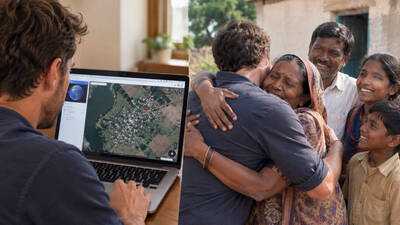
According to Saroo's account, he began using Google Earth around 2009, initially without knowing whether the idea could work. He contacted Indian friends and asked them to find out how fast trains travelled in the 1980s. Using an estimated speed of about 80 kilometres per hour and his recollection that he had travelled overnight, he calculated that the station where he had boarded the train could be roughly 960 kilometres from Kolkata.
Then, he created a rough search area centred on the city of Kolkata and started to look at railway lines and towns located inside it. It took time, as he spent hours poring over satellite maps and sometimes worked into the early hours of the morning. He slowly narrowed his search by evaluating which areas spoke Hindi and discarding those that did not match his memories of the weather and terrain. In effect, he used satellite mapping to search for places he recognised rather than names he could not remember.
The moment Google Earth revealed Khandwa
After months of searching, Saroo noticed a combination of landmarks that triggered a powerful memory. He found a railway station beside a bridge and a large industrial tank, both of which resembled what he remembered from childhood. The town was Burhanpur, the place where he believed he had been separated from his older brother.
He then made his way along the railway line to the next station. At the next station, he noticed a river running beside the tracks and over a dam. It looked like the place which he recalled from his childhood when the water there looked like a waterfall to him. However, Saroo needed more proof. He used Google Earth to trace the route from the dam into the centre of town.
It turned out to be Khandwa, in Madhya Pradesh. After that, he continued searching via YouTube and Facebook until he came across a Facebook group for Khandwa. In 2011, he posted a question on the group seeking help to identify the area he thought he grew up in. The mention of Ganesh Talai confirmed it for Saroo. Later, Google cited Saroo's search as an example of identifying a hometown using vague memories and satellite imagery.
 A reunion after 25 years
As The Guardian reported, finding Khandwa was only the beginning. Saroo did not have any guarantees yet that his mother and siblings were even alive. On February 10, 2012, he went from Australia to India. Upon arriving in Khandwa, he remembered other aspects of his childhood life and located the neighbourhood where his family once lived. What happened next was remarkable. After asking about his family, Saroo was taken to his mother, who was now known as Fatima. She had also spent many years remembering the moment of their parting.
Saroo also got to meet up with his younger sister, Shekila, and his brother, Kullu. While the encounter made him happy, it also revealed a painful chapter in his family’s history. His elder brother, Guddu, had died on the railway tracks within a month of Saroo’s disappearance. Since childhood, Saroo had wondered where he came from and what had happened to his family. He finally got an answer.
He finally got an answer. Google Earth did not recognise his mother or search any database of missing children. It provided Saroo with the opportunity to look at the geography of his memories from above. Railway tracks, a dam, a bridge, and a fountain turned out to be landmarks. With patience and help from people in Khandwa, those landmarks led him back to the place he had left as a small child 25 years earlier.
A five-year-old's memories become a map
Saroo had no address, telephone number or clear idea of where his family lived. What he did remember were scattered images: a railway station, a bridge, a large industrial tank, a fountain and a river flowing over a dam. He also remembered travelling by train for what seemed like a long time before he reached Kolkata.
According to Saroo's account, he began using Google Earth around 2009, initially without knowing whether the idea could work. He contacted Indian friends and asked them to find out how fast trains travelled in the 1980s. Using an estimated speed of about 80 kilometres per hour and his recollection that he had travelled overnight, he calculated that the station where he had boarded the train could be roughly 960 kilometres from Kolkata.
Then, he created a rough search area centred on the city of Kolkata and started to look at railway lines and towns located inside it. It took time, as he spent hours poring over satellite maps and sometimes worked into the early hours of the morning. He slowly narrowed his search by evaluating which areas spoke Hindi and discarding those that did not match his memories of the weather and terrain. In effect, he used satellite mapping to search for places he recognised rather than names he could not remember.
The moment Google Earth revealed Khandwa
After months of searching, Saroo noticed a combination of landmarks that triggered a powerful memory. He found a railway station beside a bridge and a large industrial tank, both of which resembled what he remembered from childhood. The town was Burhanpur, the place where he believed he had been separated from his older brother.
He then made his way along the railway line to the next station. At the next station, he noticed a river running beside the tracks and over a dam. It looked like the place which he recalled from his childhood when the water there looked like a waterfall to him. However, Saroo needed more proof. He used Google Earth to trace the route from the dam into the centre of town.
It turned out to be Khandwa, in Madhya Pradesh. After that, he continued searching via YouTube and Facebook until he came across a Facebook group for Khandwa. In 2011, he posted a question on the group seeking help to identify the area he thought he grew up in. The mention of Ganesh Talai confirmed it for Saroo. Later, Google cited Saroo's search as an example of identifying a hometown using vague memories and satellite imagery.
As The Guardian reported, finding Khandwa was only the beginning. Saroo did not have any guarantees yet that his mother and siblings were even alive. On February 10, 2012, he went from Australia to India. Upon arriving in Khandwa, he remembered other aspects of his childhood life and located the neighbourhood where his family once lived. What happened next was remarkable. After asking about his family, Saroo was taken to his mother, who was now known as Fatima. She had also spent many years remembering the moment of their parting.
Saroo also got to meet up with his younger sister, Shekila, and his brother, Kullu. While the encounter made him happy, it also revealed a painful chapter in his family’s history. His elder brother, Guddu, had died on the railway tracks within a month of Saroo’s disappearance. Since childhood, Saroo had wondered where he came from and what had happened to his family. He finally got an answer.
He finally got an answer. Google Earth did not recognise his mother or search any database of missing children. It provided Saroo with the opportunity to look at the geography of his memories from above. Railway tracks, a dam, a bridge, and a fountain turned out to be landmarks. With patience and help from people in Khandwa, those landmarks led him back to the place he had left as a small child 25 years earlier.
Next Story