
In 2014, a detectorist uncovered 5,248 Anglo-Saxon coins four days before Christmas; the £1.35m reward was shared with the landowner whose field held them


Metal detectorist Paul Coleman discovered a bundle of 5,248 silver pennies from King Cnut 's reign in December 2014, shortly before Christmas, at Lenborough near Buckingham. This became the biggest coin treasure under the Treasure Act 1996 and was shared as a reward between Paul Coleman, who discovered it, and the landowner of Lenborough.
Paul Coleman's find at a Lenborough rally, 21 December 2014
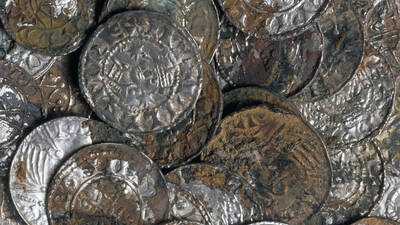
In February 2015, Rory Naismith, a historian, wrote on the Anglo-Saxon, Norse & Celtic blog that the hoard had come to light on 21 December 2014, during a metal-detecting rally at Lenborough, Buckinghamshire . Gareth Williams's preliminary report in Anglo-Saxon England, published by Cambridge University Press, counts 5,248 silver pennies wrapped in a sheet of lead. Country Life later mentioned Coleman's discovery in a 22 November 2019 article by Carla Passino on treasure theft, which held up Lenborough as a find that was correctly handled. Art Fund's acquisition record calls it the largest Saxon coin hoard recorded in Britain in more than 150 years.
The 5,248-penny count and two distinct parcels of coins
The first detailed account is Gareth Williams's A hoard from the reign of Cnut from Buckinghamshire: a preliminary report, printed in volume 44 of Anglo-Saxon England, dated December 2015, a year after the find. The paper describes the find as one of the largest hoards of Anglo-Saxon coins ever discovered. It comprised 5,248 silver pennies, found at Lenborough in December 2014. Williams cannot date the burial precisely, but concludes it took place in the latter part of Cnut's reign, between 1016 and 1035. Since the entire group was enclosed by lead wrappers, the study by Williams states that it is one deposit. Within it, the coins are divided into several groups. One of them belongs to the period of King Æthelred II (978 to 1016), and the other one belongs to the time of King Cnut later in his reign (1016 to 1035).
The significance of this finding comes from the fact that the make-up of the 5,248 silver pennies aids in identifying the exact time period during which the Lenborough hoard was buried. Williams adds that the hoard contains few coins of particular numismatic interest, with the Agnus Dei mule discussed below as one notable exception. Nevertheless, it can shed light on how late Anglo-Saxon coinage was administered during Cnut's reign.
One Agnus Dei mule among almost 1,000 coins of Æthelred II
Simon Keynes and Rory Naismith examined a single coin from the hoard in A new Agnus Dei/Last Small Cross mule, published in the same journal. A mule pairs a die from one coin type with a die from another. Keynes and Naismith report that the Lenborough hoard yielded the twenty-third coin struck from Agnus Dei dies and only the second known mule pairing an Agnus Dei obverse with a Last Small Cross reverse. The paper goes on further to point out the unique nature of the coin: only one coin of that type was found among nearly 1,000 coins of King Æthelred II.
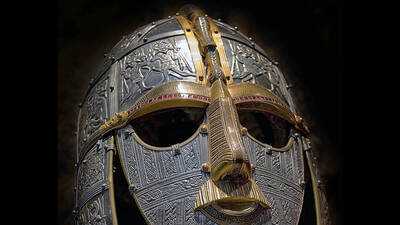
This coin is identified in their research as the twenty-third specimen made using the Agnus Dei dies. This is also the second Agnus Dei mule which bears a reverse design of the Last Small Cross. Before Lenborough, there had been only three finds of Agnus Dei pennies in England, thus making this find the first hoard to include such a specimen. Also, it should be noted that a single specimen of this coin among 985 coins of Æthelred II makes this issue very rare indeed. This is a coin that was struck in Leicester by Æthelwig the moneyer and weighed 1.46 grams, as stated in the Fitzwilliam Museum’s Early Medieval Corpus. It has the same dies as the only known coin of Æthelwig and adds up to four known coins of Leicester. It is shown in Figure 7 in Williams' study cited above.
The £1.35 million valuation and the 50:50 reward rule
Any find that a museum wishes to acquire goes before the Treasure Valuation Committee . The committee's page on GOV.UK explains that it commissions a provisional valuation from experts in the antiquities or coin trades. The finders, the landowner and the museum have their say, after which the committee assesses the items to determine the value. The same GOV.UK page adds that rewards are usually split equally between the finder and the landowner unless other arrangements have been made. Moreover, the committee may decrease a reward in cases where the finder has been found guilty of committing an offence according to the law, or was illegally on the land. In the case of Lenborough, the records of the Art Fund show a total cost of £1,350,000, out of which £250,000 was granted by the charity itself. Country Life notes that Coleman and the landowner shared a reward based on the £1.35 million valuation.
Paul Coleman's find at a Lenborough rally, 21 December 2014
In February 2015, Rory Naismith, a historian, wrote on the Anglo-Saxon, Norse & Celtic blog that the hoard had come to light on 21 December 2014, during a metal-detecting rally at Lenborough, Buckinghamshire . Gareth Williams's preliminary report in Anglo-Saxon England, published by Cambridge University Press, counts 5,248 silver pennies wrapped in a sheet of lead. Country Life later mentioned Coleman's discovery in a 22 November 2019 article by Carla Passino on treasure theft, which held up Lenborough as a find that was correctly handled. Art Fund's acquisition record calls it the largest Saxon coin hoard recorded in Britain in more than 150 years.
The 5,248-penny count and two distinct parcels of coins
The first detailed account is Gareth Williams's A hoard from the reign of Cnut from Buckinghamshire: a preliminary report, printed in volume 44 of Anglo-Saxon England, dated December 2015, a year after the find. The paper describes the find as one of the largest hoards of Anglo-Saxon coins ever discovered. It comprised 5,248 silver pennies, found at Lenborough in December 2014. Williams cannot date the burial precisely, but concludes it took place in the latter part of Cnut's reign, between 1016 and 1035. Since the entire group was enclosed by lead wrappers, the study by Williams states that it is one deposit. Within it, the coins are divided into several groups. One of them belongs to the period of King Æthelred II (978 to 1016), and the other one belongs to the time of King Cnut later in his reign (1016 to 1035).
The significance of this finding comes from the fact that the make-up of the 5,248 silver pennies aids in identifying the exact time period during which the Lenborough hoard was buried. Williams adds that the hoard contains few coins of particular numismatic interest, with the Agnus Dei mule discussed below as one notable exception. Nevertheless, it can shed light on how late Anglo-Saxon coinage was administered during Cnut's reign.
One Agnus Dei mule among almost 1,000 coins of Æthelred II
Simon Keynes and Rory Naismith examined a single coin from the hoard in A new Agnus Dei/Last Small Cross mule, published in the same journal. A mule pairs a die from one coin type with a die from another. Keynes and Naismith report that the Lenborough hoard yielded the twenty-third coin struck from Agnus Dei dies and only the second known mule pairing an Agnus Dei obverse with a Last Small Cross reverse. The paper goes on further to point out the unique nature of the coin: only one coin of that type was found among nearly 1,000 coins of King Æthelred II.
This coin is identified in their research as the twenty-third specimen made using the Agnus Dei dies. This is also the second Agnus Dei mule which bears a reverse design of the Last Small Cross. Before Lenborough, there had been only three finds of Agnus Dei pennies in England, thus making this find the first hoard to include such a specimen. Also, it should be noted that a single specimen of this coin among 985 coins of Æthelred II makes this issue very rare indeed. This is a coin that was struck in Leicester by Æthelwig the moneyer and weighed 1.46 grams, as stated in the Fitzwilliam Museum’s Early Medieval Corpus. It has the same dies as the only known coin of Æthelwig and adds up to four known coins of Leicester. It is shown in Figure 7 in Williams' study cited above.
The £1.35 million valuation and the 50:50 reward rule
Any find that a museum wishes to acquire goes before the Treasure Valuation Committee . The committee's page on GOV.UK explains that it commissions a provisional valuation from experts in the antiquities or coin trades. The finders, the landowner and the museum have their say, after which the committee assesses the items to determine the value. The same GOV.UK page adds that rewards are usually split equally between the finder and the landowner unless other arrangements have been made. Moreover, the committee may decrease a reward in cases where the finder has been found guilty of committing an offence according to the law, or was illegally on the land. In the case of Lenborough, the records of the Art Fund show a total cost of £1,350,000, out of which £250,000 was granted by the charity itself. Country Life notes that Coleman and the landowner shared a reward based on the £1.35 million valuation.
Next Story