
In 2014, a sheriff's sale turned up an Apple-1 whose owner had fled the country; the buyer paid without realising exactly what it was, and Christie's sold it for $365,000


In December 2014, a significant Apple-1 computer was sold by Christie’s in New York for $365,000. The auction took place 10 years after Bob Luther attended a sheriff’s sale in Virginia in 2004 and bought an old computer for $7,600. While he was aware that he was acquiring something that was connected to early computers, he had initially not understood the significance of the machine. Christie’s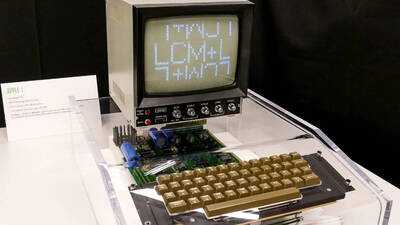 records identify the machine as the “Ricketts Apple-1,” after its original owner, Charles Ricketts. The computer’s history was traced back to its purchase from Jobs in 1976 through later owners and finally to Luther.
Ricketts had retained documents connecting the machine to Apple’s earliest days. Among them was a primarily cancelled $600 check dated 27 July 1976, made payable to Apple Computer. Later on, Ricketts annotated the check to record that he had bought the computer from Steve Jobs at his parents’ garage in Los Altos. Eventually, this document helped turn an old circuit board into a valuable artefact.
The Apple-1 began when Apple was still a small operation
In 1976, Steve Wozniak designed the Apple-1 and Steve Jobs marketed it. The Computer History Museum records that Wozniak finished the Apple-1 that year and that, alongside Jobs, they secured an order for 50 assembled systems from the Byte Shop in Mountain View, California. Around 200 Apple-1 boards were ultimately sold before the company moved on to the Apple II.
The initial machine was very different from the Macintosh and later Apple computers. The Apple-1 was a single-board computer for hobbyists instead of being a complete consumer desktop system; buyers needed additional equipment, including a keyboard and display, to use it as a functioning computer. Though most of these machines were sold via the Byte Shop, Ricketts’ machine had a different story. The auction house described it as the only known surviving Apple-1 with documentation indicating that it was sold directly by Steve Jobs to an individual from his family’s garage.
In 1976, Ricketts reportedly acquired the computer for $600. The surviving cancelled check was made payable to Apple Computer instead of Jobs personally. But Ricketts subsequently wrote on it that the machine was purchased from Jobs himself at the family garage. These documents became crucial because Apple-1’s history is usually difficult to construct for many individual machines. In this case, the computer was accompanied by contemporary paperwork that connected it to a named buyer, a specific date and an early Apple location, including a second cancelled check for $193 dated 5 August 1976, which Ricketts annotated as relating to software programmed by Steve Jobs.
This machine’s journey from Ricketts to a Virginia sheriff
The auction house’s provenance records that the Apple-1 eventually passed from Ricketts to his son, and then lists Neil Brian Goldberg of Computer Jones and Bruce Waldack, founder of DigitalNation, as owners in 1999. Waldack later experienced financial problems. Reports suggest that he lost his fortune, defaulted on payments for his Learjet and fled to Argentina. Subsequently, his property in Virginia was subjected to a sheriff’s sale, with the Apple-1 being one of the properties that was offered at a self-storage facility in 2004.
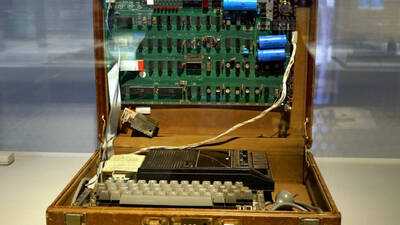 Through an advertisement, Luther encountered the sale and ultimately purchased the Apple-1 for $7,600 on 14 December 2004. Luther’s purchase did not instantly turn the computer into a valuable collectable. What made things more interesting was the history he subsequently investigated. He spent years tracing the machine’s provenance and interviewing people connected to Apple’s early years. Luther’s research eventually became the basis for his 2013 book, The First Apple. The two cancelled checks, alongside Luther’s book that documented his efforts to investigate the machine and the people connected with its past, helped establish Apple-1’s provenance.
Christie’s tested the computer before putting it up for sale
The Apple-1 was not merely an inert historical object. In October 2014, Apple-1 specialist Corey Cohen serviced and successfully started the machine, with reports claiming that Cohen ran the original Apple BASIC program and an original Apple-1 Star Trek game to test it. An original Apple-1 operating manual, a keyboard housed in a wooden case, power equipment and the two 1976 checks were found in the lot.
On 3 November 2014, Christie’s announced the auction, describing the machine as the only known surviving Apple-1 documented as having been sold directly by Jobs to an individual. The auction house estimated that it could sell for $400,000 to $600,000. On 11 December 2014, the auction took place in New York, and it was sold for $365,000, below what was originally estimated.
Ricketts had retained documents connecting the machine to Apple’s earliest days. Among them was a primarily cancelled $600 check dated 27 July 1976, made payable to Apple Computer. Later on, Ricketts annotated the check to record that he had bought the computer from Steve Jobs at his parents’ garage in Los Altos. Eventually, this document helped turn an old circuit board into a valuable artefact.
The Apple-1 began when Apple was still a small operation
In 1976, Steve Wozniak designed the Apple-1 and Steve Jobs marketed it. The Computer History Museum records that Wozniak finished the Apple-1 that year and that, alongside Jobs, they secured an order for 50 assembled systems from the Byte Shop in Mountain View, California. Around 200 Apple-1 boards were ultimately sold before the company moved on to the Apple II.
The initial machine was very different from the Macintosh and later Apple computers. The Apple-1 was a single-board computer for hobbyists instead of being a complete consumer desktop system; buyers needed additional equipment, including a keyboard and display, to use it as a functioning computer. Though most of these machines were sold via the Byte Shop, Ricketts’ machine had a different story. The auction house described it as the only known surviving Apple-1 with documentation indicating that it was sold directly by Steve Jobs to an individual from his family’s garage.
In 1976, Ricketts reportedly acquired the computer for $600. The surviving cancelled check was made payable to Apple Computer instead of Jobs personally. But Ricketts subsequently wrote on it that the machine was purchased from Jobs himself at the family garage. These documents became crucial because Apple-1’s history is usually difficult to construct for many individual machines. In this case, the computer was accompanied by contemporary paperwork that connected it to a named buyer, a specific date and an early Apple location, including a second cancelled check for $193 dated 5 August 1976, which Ricketts annotated as relating to software programmed by Steve Jobs.
This machine’s journey from Ricketts to a Virginia sheriff
The auction house’s provenance records that the Apple-1 eventually passed from Ricketts to his son, and then lists Neil Brian Goldberg of Computer Jones and Bruce Waldack, founder of DigitalNation, as owners in 1999. Waldack later experienced financial problems. Reports suggest that he lost his fortune, defaulted on payments for his Learjet and fled to Argentina. Subsequently, his property in Virginia was subjected to a sheriff’s sale, with the Apple-1 being one of the properties that was offered at a self-storage facility in 2004.
Christie’s tested the computer before putting it up for sale
The Apple-1 was not merely an inert historical object. In October 2014, Apple-1 specialist Corey Cohen serviced and successfully started the machine, with reports claiming that Cohen ran the original Apple BASIC program and an original Apple-1 Star Trek game to test it. An original Apple-1 operating manual, a keyboard housed in a wooden case, power equipment and the two 1976 checks were found in the lot.
On 3 November 2014, Christie’s announced the auction, describing the machine as the only known surviving Apple-1 documented as having been sold directly by Jobs to an individual. The auction house estimated that it could sell for $400,000 to $600,000. On 11 December 2014, the auction took place in New York, and it was sold for $365,000, below what was originally estimated.
Next Story