
In 2019, French runner Marie Leautey left Portugal to run around the world; 825 days and more than 28,000 km later, she set the women's circumnavigation record at the time


Marie Leautey was working as a finance executive in Singapore in 2017 when the idea first appeared on paper. She doodled a figure running around a globe during a conference call, and then looked into whether anyone had actually run around the world and began planning her own attempt. Two years later, on December 6, 2019, the French runner started from Cabo da Roca in Portugal. She would eventually cross four continents, cover 28,249 kilometres and spend 825 days to complete a route that is recognised by the World Runners Association (WRA)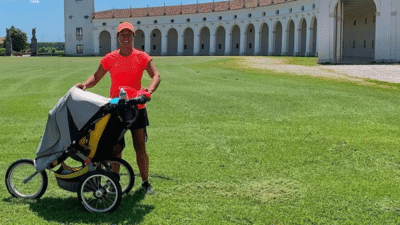 . The association lists her as the holder of the women’s record for the fastest circumnavigation of Earth on foot.
 The idea began as a conference-call doodle
A profile of her journey describes her as a former finance director who had built up her running gradually before deciding to attempt a world run. She spent roughly two years preparing for the journey, which included working out the rules, route, equipment and logistics. The WRA requires a recognised world run to cross four continents from ocean to ocean and to cover at least 26,232 kilometres on foot, and her eventual route exceeded that minimum by more than 2,000 kilometres.
The WRA records 15,420 kilometres across Europe, 5,340 kilometres across North America, 3,002 kilometres across South America and 4,484 kilometres across Australia, which was followed by the final stretch in New Zealand. She started in Portugal and eventually finished at the Sydney Opera House on September 1, 2022. The run took place across the COVID-19 pandemic, which interrupted her original plans and forced changes to the journey.
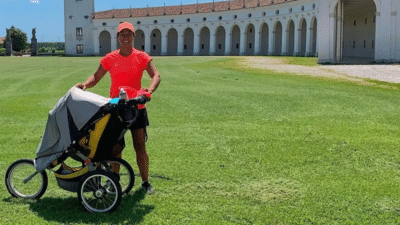
Leautey pushed a stroller that carried her equipment rather than travelling with a large support crew. Her setup was designed around self-sufficiency, and the route required her to manage food, water, camping and other supplies over long distances. The journey included mountains, deserts and long isolated roads rather than a continuous sequence of conventional city marathons.
Nearly 700 marathons across four continents
Leautey had been running for more than two years by the time she returned to Europe after the long Australian leg. A September 2022 report in French newspaper Le Parisien said that her WRA-ratified journey covered about 28,300 kilometres in 825 days and involved the equivalent of hundreds of marathon distances. It also recorded her as the only woman at the time to have crossed four continents from ocean to ocean on foot under the organisation's criteria.
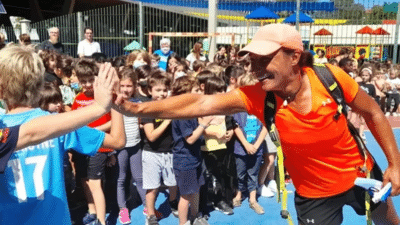
Leautey generally ran six days a week, which covered roughly a marathon each running day. She crossed the Andes in South America, travelled through North America and later faced the huge distances between resupply points in Australia. Her equipment had to remain manageable because she was pushing it herself for much of the route.
Border restrictions and changing travel rules affected her movement between countries, which forced adjustments to the original route. The WRA eventually ratified the completed circumnavigation despite the disruption.
 The record and what happened after
The World Runners Association currently lists Leautey's 825-day, 28,249-kilometre journey as the women's fastest circumnavigation of Earth on foot, and its records page shows her record was established on September 1, 2022. The same page now lists Swiss runner Andrea Prais as the current women's record holder, after a 554-day circumnavigation completed in June 2026. That means Leautey's run remains part of the history of the women's record but is no longer the current record.
A profile of her journey describes her as a former finance director who had built up her running gradually before deciding to attempt a world run. She spent roughly two years preparing for the journey, which included working out the rules, route, equipment and logistics. The WRA requires a recognised world run to cross four continents from ocean to ocean and to cover at least 26,232 kilometres on foot, and her eventual route exceeded that minimum by more than 2,000 kilometres.
The WRA records 15,420 kilometres across Europe, 5,340 kilometres across North America, 3,002 kilometres across South America and 4,484 kilometres across Australia, which was followed by the final stretch in New Zealand. She started in Portugal and eventually finished at the Sydney Opera House on September 1, 2022. The run took place across the COVID-19 pandemic, which interrupted her original plans and forced changes to the journey.
Leautey pushed a stroller that carried her equipment rather than travelling with a large support crew. Her setup was designed around self-sufficiency, and the route required her to manage food, water, camping and other supplies over long distances. The journey included mountains, deserts and long isolated roads rather than a continuous sequence of conventional city marathons.
Nearly 700 marathons across four continents
Leautey had been running for more than two years by the time she returned to Europe after the long Australian leg. A September 2022 report in French newspaper Le Parisien said that her WRA-ratified journey covered about 28,300 kilometres in 825 days and involved the equivalent of hundreds of marathon distances. It also recorded her as the only woman at the time to have crossed four continents from ocean to ocean on foot under the organisation's criteria.
Leautey generally ran six days a week, which covered roughly a marathon each running day. She crossed the Andes in South America, travelled through North America and later faced the huge distances between resupply points in Australia. Her equipment had to remain manageable because she was pushing it herself for much of the route.
Border restrictions and changing travel rules affected her movement between countries, which forced adjustments to the original route. The WRA eventually ratified the completed circumnavigation despite the disruption.
The World Runners Association currently lists Leautey's 825-day, 28,249-kilometre journey as the women's fastest circumnavigation of Earth on foot, and its records page shows her record was established on September 1, 2022. The same page now lists Swiss runner Andrea Prais as the current women's record holder, after a 554-day circumnavigation completed in June 2026. That means Leautey's run remains part of the history of the women's record but is no longer the current record.
Next Story