
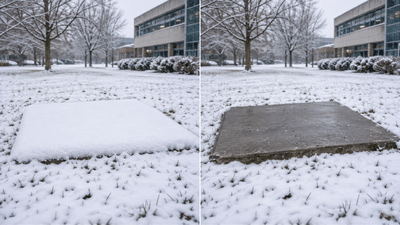
In 2019, German researchers buried water pipes 4 cm beneath a 4 m² road slab; in field tests, the slab stayed above 0°C and remained clear during two roughly 5-cm snowfalls


If you have ever slipped on an icy pavement, you probably already know the feeling. Your heart jumps, your coffee spills, and it feels like your entire morning is ruined. A small German experiment hints at a quieter fix for this problem. According to a 2020 study published in SN Applied Sciences, scientists from the University of Erlangen-Nürnberg and the China University of Geosciences studied concrete slabs heated with mild water at temperatures found in groundwater. The outdoor slab remained above freezing even with all the snowfall.
Why winter roads need a better fix
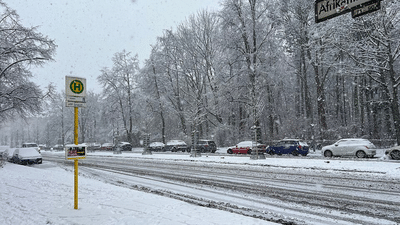
Winter brings too many dangers on the roads. The authors note that accident rates in Germany are usually high in winter compared to other times of the year. The usual fixes have their own drawbacks. Road salt increases levels of chloride in groundwater, while snowploughs can damage roads. A US Geological Survey study published in Science of the Total Environment reveals that mean chloride levels in streams in the northern US analysed in the research roughly doubled from 1990 to 2011. There were also increases in levels of chloride outside the salting period. This means that chloride accumulates in shallow groundwater in winter and is released gradually throughout the year. While they were American streams, they did show how salt can remain in the water system.
 How the team tested it
Pipes were placed about 4 cm below the surface of concrete slabs. The water in them was mild, not hot. In lab tests, it ran between 8°C and 14°C, the range found in groundwater around Nuremberg. The slabs were kept in a cooling chamber that could go as low as -10°C. With a pipe spacing of 10 cm, water at 10°C kept the surface above the freezing point. The water at 8°C failed when the chamber got down to about -9°C. If the pipes were 20 cm apart, the water needed to be at least 12°C to keep the surface reliably ice-free. For the real-world test, researchers built outdoor slabs of 2 m by 2 m, which is 4 m² each, in a university backyard in Erlangen. The pipes were again about 4 cm deep. The test ran from 15 January to 10 March 2019. The lowest air temperature recorded was -9°C, but the heated surface remained above 0°C throughout the whole period. The comparison slab, unheated, was sometimes below freezing.
What happened when it snowed
During this test, there were two snowfalls, each with a snow depth of about 5 cm. During both of them, the heated surface was free of any snow. For one recorded snow event on 26 January 2019, the surface cooled from roughly 3°C to 1°C. However, it remained above freezing point. In that run, the temperature of the water supply was only 8°C. When it was snowing, the slab was extracting more heat from the water, roughly 60 to 180 watts per square metre. After the snow stopped, the heat demand slowly dropped back to around 60 watts per square metre.
Why cities may have an edge and what is still unknown
Cities are usually warmer than rural areas, and the ground beneath them warms up, too. The team suspected an urban heat island effect in Nuremberg. There, the paper reports groundwater temperatures of 14°C to 15°C in the city centre. Nearby rural areas were usually above 9°C. They also say the outdoor test maintained the slab snow-free without supplemental heating.
Before anyone digs up a road, a little caution is necessary. The slabs were small, and it took about two months for the outdoor test. The authors describe the winter as rather mild and call for long-term studies. Only two snowfalls were recorded during the period. The method also tested Nuremberg’s climate and groundwater. The authors believe that supplementary heating, such as a heat pump , would be required in extreme frost below -10°C. The team planned to keep monitoring the Erlangen test field over the long term. The test was only a promising first look for now, not a complete answer. However, if it works on a bigger scale, it could mean safer roads in winter, but with less salt.
Why winter roads need a better fix
Winter brings too many dangers on the roads. The authors note that accident rates in Germany are usually high in winter compared to other times of the year. The usual fixes have their own drawbacks. Road salt increases levels of chloride in groundwater, while snowploughs can damage roads. A US Geological Survey study published in Science of the Total Environment
Pipes were placed about 4 cm below the surface of concrete slabs. The water in them was mild, not hot. In lab tests, it ran between 8°C and 14°C, the range found in groundwater around Nuremberg. The slabs were kept in a cooling chamber that could go as low as -10°C. With a pipe spacing of 10 cm, water at 10°C kept the surface above the freezing point. The water at 8°C failed when the chamber got down to about -9°C. If the pipes were 20 cm apart, the water needed to be at least 12°C to keep the surface reliably ice-free. For the real-world test, researchers built outdoor slabs of 2 m by 2 m, which is 4 m² each, in a university backyard in Erlangen. The pipes were again about 4 cm deep. The test ran from 15 January to 10 March 2019. The lowest air temperature recorded was -9°C, but the heated surface remained above 0°C throughout the whole period. The comparison slab, unheated, was sometimes below freezing.
What happened when it snowed
During this test, there were two snowfalls, each with a snow depth of about 5 cm. During both of them, the heated surface was free of any snow. For one recorded snow event on 26 January 2019, the surface cooled from roughly 3°C to 1°C. However, it remained above freezing point. In that run, the temperature of the water supply was only 8°C. When it was snowing, the slab was extracting more heat from the water, roughly 60 to 180 watts per square metre. After the snow stopped, the heat demand slowly dropped back to around 60 watts per square metre.
Why cities may have an edge and what is still unknown
Cities are usually warmer than rural areas, and the ground beneath them warms up, too. The team suspected an urban heat island effect in Nuremberg. There, the paper reports groundwater temperatures of 14°C to 15°C in the city centre. Nearby rural areas were usually above 9°C. They also say the outdoor test maintained the slab snow-free without supplemental heating.
Before anyone digs up a road, a little caution is necessary. The slabs were small, and it took about two months for the outdoor test. The authors describe the winter as rather mild and call for long-term studies. Only two snowfalls were recorded during the period. The method also tested Nuremberg’s climate and groundwater. The authors believe that supplementary heating, such as a heat pump , would be required in extreme frost below -10°C. The team planned to keep monitoring the Erlangen test field over the long term. The test was only a promising first look for now, not a complete answer. However, if it works on a bigger scale, it could mean safer roads in winter, but with less salt.
Next Story