
In 2023, conservationists laid 750 tonnes of gravel and recycled scallop shells on the northeast coast to rebuild oyster habitat; two years later, monitoring found oysters surviving and establishing despite storms shifting some reef material


Conservationists placed more than 750 tonnes of gravel and weathered scallop shells on the seabed off the coast of northeast England in September 2023. This placement created an artificial reef that was intended to help restore a marine habitat that had largely disappeared from the region. The 7,500-square-metre site was designed to provide a surface that was suitable for European native oysters to settle and grow. At the centre, the team introduced around 10,000 mature oysters, which were sourced from Scottish populations. This development formed part of the Wild Oysters Project: Tyne & Wear, a restoration initiative led by the Zoological Society of London (ZSL) and Groundwork North East and Cumbria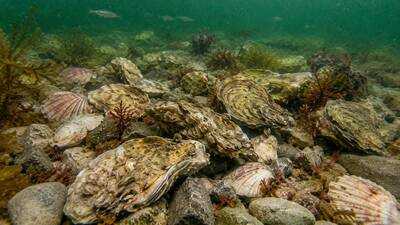 .
The material spread across the seabed is known as cultch and provides a hard surface on which young oysters can attach. This process helps to create the foundation of a reef. The 2023 development combined limestone gravel with weathered scallop shells, hence creating a condition which was suitable for oyster settlement by repurposing the shell.
Why conservationists wanted to bring native oysters back
European native oysters were once widespread in British coastal waters. However, they noted a drastic decline in populations because of historic overharvesting, pollution, disease and the destruction of suitable seabed habitat. According to Groundwork, the native oyster population has fallen by around 95% across Europe since the 1800s. In Tyne & Wear, the species had been considered extinct for decades, prompting active restoration as a necessity.
This loss is concerning because oysters do a lot more than just live on the seabeds. They are filter feeders, removing suspended particles and organic matter from surrounding water. As generations of oysters grow on top of one another, their shells form complex three-dimensional reefs. These structures are treated as shelters, feeding grounds and nursery habitats for other marine species.
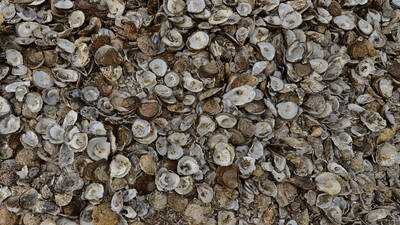 In addition, the project tested whether a restoration method used in more sheltered waters could work under tougher coastal conditions as experienced in an exposed North Sea location. In October 2023, Storm Babet struck the region, generating waves reported to have reached seven to eight metres. Some of the cultch and oysters were displaced from the original reef site because of the force of the storm. Later one, remotely operated vehicle surveys could not confidently establish where most of the displaced material had settled.
Divers looked for oysters after the storm
In June 2024, Project Baseline UK joined Groundwork North East and Cumbria to investigate the seabed and analyse what remained. The crew used drop-camera surveys and data about the prevailing wind direction during the storm to identify the six sites for divers to explore. At each site, divers surveyed an area that extended up to 50 metres from a central point, recording where they found cultch or oysters. In addition, a small number of live oysters were brought to the surface for examination by a marine ecologist, and then the team returned those oysters to the sea.
Of the 11 oysters found in the search, only five remained alive. Those surviving specimens appeared to be in decent condition. Though the quantity varied, the divers found cultch at all six survey locations. It provided a baseline for the remaining material and oyster presence, despite the survey not providing a concrete count of how many of the original 10,000 oysters had survived.
The subsequent observations from Groundwork gave an insight into a broader indication of progress. Despite the storm moving some of the reef material, ongoing monitoring had found oysters surviving and establishing in the area. This could be counted as a sign that parts of the restoration effort had persisted beyond the initial disturbance.
The material spread across the seabed is known as cultch and provides a hard surface on which young oysters can attach. This process helps to create the foundation of a reef. The 2023 development combined limestone gravel with weathered scallop shells, hence creating a condition which was suitable for oyster settlement by repurposing the shell.
Why conservationists wanted to bring native oysters back
European native oysters were once widespread in British coastal waters. However, they noted a drastic decline in populations because of historic overharvesting, pollution, disease and the destruction of suitable seabed habitat. According to Groundwork, the native oyster population has fallen by around 95% across Europe since the 1800s. In Tyne & Wear, the species had been considered extinct for decades, prompting active restoration as a necessity.
This loss is concerning because oysters do a lot more than just live on the seabeds. They are filter feeders, removing suspended particles and organic matter from surrounding water. As generations of oysters grow on top of one another, their shells form complex three-dimensional reefs. These structures are treated as shelters, feeding grounds and nursery habitats for other marine species.
Divers looked for oysters after the storm
In June 2024, Project Baseline UK joined Groundwork North East and Cumbria to investigate the seabed and analyse what remained. The crew used drop-camera surveys and data about the prevailing wind direction during the storm to identify the six sites for divers to explore. At each site, divers surveyed an area that extended up to 50 metres from a central point, recording where they found cultch or oysters. In addition, a small number of live oysters were brought to the surface for examination by a marine ecologist, and then the team returned those oysters to the sea.
Of the 11 oysters found in the search, only five remained alive. Those surviving specimens appeared to be in decent condition. Though the quantity varied, the divers found cultch at all six survey locations. It provided a baseline for the remaining material and oyster presence, despite the survey not providing a concrete count of how many of the original 10,000 oysters had survived.
The subsequent observations from Groundwork gave an insight into a broader indication of progress. Despite the storm moving some of the reef material, ongoing monitoring had found oysters surviving and establishing in the area. This could be counted as a sign that parts of the restoration effort had persisted beyond the initial disturbance.
Next Story