
In Cameroon's black-cotton-soil road experiment, researchers mixed bamboo charcoal, quarry dust and lime into the ground; its bearing score rose from 2.7% with bamboo charcoal alone to 19% with the final mixture


Building durable roads on weak soil is costly, particularly in regions where the ground swells when wet and shrinks as it dries. In Cameroon, researchers tested whether bamboo charcoal, quarry dust and lime could strengthen Black Cotton Soil, an expansive soil that can weaken road foundations.
According to a study published in the International Journal of Civil Engineering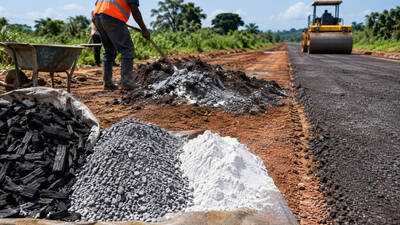 , the researchers examined how combining the three materials affected the soil’s load-bearing capacity. The best-performing mixture, containing 20% bamboo charcoal, 12% quarry dust and 5% lime, increased the soaked California Bearing Ratio (CBR) from 2.7% to 19%. The laboratory results suggested that the combination could improve the suitability of this difficult soil for road construction, although its performance under actual road conditions would require further assessment.
Why Black Cotton Soil creates problems for roads
Black Cotton Soil contains large amounts of clay and changes volume as moisture levels vary. In wet seasons, Black Cotton Soil absorbs moisture and swells. When it dries, it tends to shrink and form cracks. These changes can strain road foundations and deform the road surface. The problem is especially serious when the subgrade, the prepared earth beneath the road, is made of Black Cotton Soil.
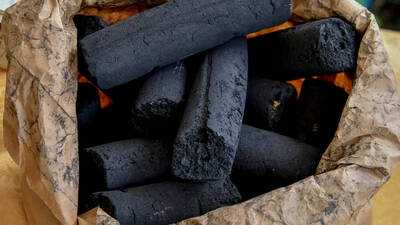
The research explains that bamboo charcoal was first used as a soil amendment to alter the soil’s engineering properties. The researchers tested several charcoal proportions and selected the 20% bamboo charcoal mix for further analysis. The selected mixture achieved only a 2.7% soaked CBR. That led the researchers to test other substances that could improve the mixture. Lime and quarry dust were added in sequence to enable the scientists to observe the impact of each substance on the bearing capacity of the soil. This approach matters because soil stabilisation involves more than simply adding one material to the soil.
How quarry dust and lime improved the mixture
Quarry dust is a fine material produced during rock crushing. When added to the bamboo-charcoal-treated soil, it helped improve the mixture’s bearing capacity. The addition of lime produced a further increase, bringing the soaked CBR to 19%, more than seven times the value recorded for the charcoal-only mixture. The researchers also found that the soil’s Plasticity Index fell to 11.2%, indicating a reduction in its plasticity.
These results are consistent with other studies on stabilising expansive soils. A study published in Construction Materials found that chemically stabilising black cotton soil improved its engineering properties, highlighting the importance of selecting suitable additives. However, the Cameroon experiment’s results came from laboratory tests and do not guarantee the same performance on construction sites, where soil composition, drainage, rainfall and compaction can vary. Further field testing would be needed to establish how reliably the mixture performs under real road conditions.
 Could the mixture be used in road construction?
The Cameroon experiment was notable for combining three materials to improve the strength of difficult soil. Bamboo charcoal offered a potential use for processed bamboo, while quarry dust provided a way to reuse a by-product of stone processing. Lime, already used in soil stabilisation to modify plasticity and improve soil properties, formed the third part of the mixture. The significance lay in testing how these materials worked together, rather than assuming that any one additive could deliver the same results on its own.
For road builders, the approach could be useful in areas where expansive soils are common and conventional ground improvement is expensive. However, its practical value would depend on the cost of producing and transporting bamboo charcoal, the local availability of quarry dust and the amount of lime required. The environmental impact of charcoal production would also need to be considered.
Further field trials would be necessary to establish how the treated soil responded to repeated traffic loads, wet and dry cycles and changing groundwater levels, as well as whether the mixture could be prepared and compacted consistently at construction sites. Although the researchers reported a substantial increase in bearing capacity under the tested conditions, its performance and cost-effectiveness in wider road-building applications would require further assessment.
According to a study published in the International Journal of Civil Engineering
Why Black Cotton Soil creates problems for roads
Black Cotton Soil contains large amounts of clay and changes volume as moisture levels vary. In wet seasons, Black Cotton Soil absorbs moisture and swells. When it dries, it tends to shrink and form cracks. These changes can strain road foundations and deform the road surface. The problem is especially serious when the subgrade, the prepared earth beneath the road, is made of Black Cotton Soil.
The research explains that bamboo charcoal was first used as a soil amendment to alter the soil’s engineering properties. The researchers tested several charcoal proportions and selected the 20% bamboo charcoal mix for further analysis. The selected mixture achieved only a 2.7% soaked CBR. That led the researchers to test other substances that could improve the mixture. Lime and quarry dust were added in sequence to enable the scientists to observe the impact of each substance on the bearing capacity of the soil. This approach matters because soil stabilisation involves more than simply adding one material to the soil.
How quarry dust and lime improved the mixture
Quarry dust is a fine material produced during rock crushing. When added to the bamboo-charcoal-treated soil, it helped improve the mixture’s bearing capacity. The addition of lime produced a further increase, bringing the soaked CBR to 19%, more than seven times the value recorded for the charcoal-only mixture. The researchers also found that the soil’s Plasticity Index fell to 11.2%, indicating a reduction in its plasticity.
These results are consistent with other studies on stabilising expansive soils. A study published in Construction Materials found that chemically stabilising black cotton soil improved its engineering properties, highlighting the importance of selecting suitable additives. However, the Cameroon experiment’s results came from laboratory tests and do not guarantee the same performance on construction sites, where soil composition, drainage, rainfall and compaction can vary. Further field testing would be needed to establish how reliably the mixture performs under real road conditions.
The Cameroon experiment was notable for combining three materials to improve the strength of difficult soil. Bamboo charcoal offered a potential use for processed bamboo, while quarry dust provided a way to reuse a by-product of stone processing. Lime, already used in soil stabilisation to modify plasticity and improve soil properties, formed the third part of the mixture. The significance lay in testing how these materials worked together, rather than assuming that any one additive could deliver the same results on its own.
For road builders, the approach could be useful in areas where expansive soils are common and conventional ground improvement is expensive. However, its practical value would depend on the cost of producing and transporting bamboo charcoal, the local availability of quarry dust and the amount of lime required. The environmental impact of charcoal production would also need to be considered.
Further field trials would be necessary to establish how the treated soil responded to repeated traffic loads, wet and dry cycles and changing groundwater levels, as well as whether the mixture could be prepared and compacted consistently at construction sites. Although the researchers reported a substantial increase in bearing capacity under the tested conditions, its performance and cost-effectiveness in wider road-building applications would require further assessment.
Next Story