
India and ASEAN Strengthen Cooperation for Disaster Management


Manila, November 17 (Daily Kiran) : India and the Association of Southeast Asian Nations (ASEAN) have reached an agreement to bolster their collaboration in managing natural disasters. This includes a focus on earthquakes, tsunamis, floods, cyclones, extreme heat, and landslides. The commitment was made during the 23rd ASEAN-India Summit held in Manila on November 17.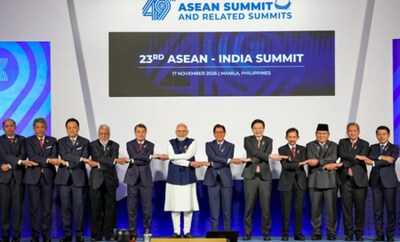 A joint statement emphasized the importance of strengthening early warning systems, modern technology, joint exercises, and rapid relief efforts. It outlined a comprehensive approach to disaster management, highlighting the need for institutional cooperation and coordination throughout the disaster management cycle. Key areas include prevention, preparedness, response, recovery, technology and innovation in disaster management, capacity building, and training.According to the statement, “India and ASEAN member states face shared threats from natural disasters, which disproportionately affect vulnerable segments of society. It is crucial to develop preparedness and risk reduction measures alongside providing relief after a disaster occurs.” A significant aspect of this collaboration is enhancing early warning systems. This will promote the exchange of information related to earthquakes, tsunamis, floods, cyclones, and landslides, utilizing data from satellites, seismic monitoring, and weather forecasts.There is also an agreement to improve disaster risk assessment and monitoring through space-based technology. India and ASEAN will strengthen their readiness by conducting regular training programs, simulation exercises, and personnel exchanges related to disaster management. Humanitarian assistance and disaster relief operations will be expedited based on the needs or consent of the affected member country. The joint statement also noted the importance of coordination between military and civilian security agencies.However, it clarified that civilian administration will play the primary role in disaster management, with military resources being a last resort. The agreement holds strategic significance for India, as it aligns the ASEAN Agreement on Disaster Management and Emergency Response (AADMER) with India’s ‘SAGAR’ (Security and Growth for All in the Region) initiative. This synergy is expected to enhance India’s role in humanitarian assistance and disaster relief in the Indo-Pacific region.Additionally, the agreement emphasizes the use of artificial intelligence, machine learning, and big data analytics for assessing disaster risks, issuing timely warnings, and improving coordination during relief operations. India's National Institute of Disaster Management (NIDM) and relevant ASEAN institutions will also conduct joint training programs. Scholarships and technical exchanges for disaster management professionals will be promoted.The agreement also commits to ensuring that post-disaster reconstruction is environmentally sustainable, investing in resilient infrastructure, and involving women, youth, the elderly, and persons with disabilities in recovery efforts. To implement the joint statement, the ASEAN Committee on Disaster Management (ACDM) and India’s relevant agencies will identify concrete activities. Progress will be reviewed through the existing mechanisms under the ASEAN-India Action Plan for 2026-2030.
Next Story