
India Suspends Indus Waters Treaty to Accelerate Hydroelectric Projects in Jammu and Kashmir

India has escalated non-military actions against Pakistan, the most significant of which has been the suspension of the Indus Waters Treaty (IWT). As part of this broader strategy, New Delhi is expected to push forward with long-delayed hydroelectric projects in Jammu and Kashmir (J&K), sources confirmed.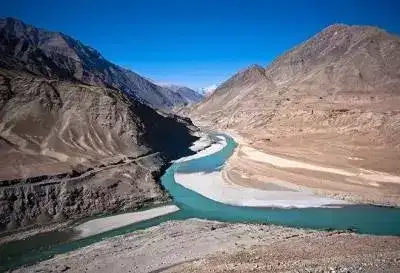
A key meeting is anticipated later this week, led by Union Home Minister Amit Shah, with the attendance of Water Resources Minister CR Patil, Power Minister Manohar Lal Khattar, Agriculture Minister Shivraj Singh Chouhan, and senior officials from various ministries involved.
The decision to suspend the IWT on April 23, following the Pahalgam terror attack that resulted in the deaths of 26 people, has already led to two significant meetings between Amit Shah, CR Patil, and high-ranking officials from relevant departments. The suspension paves the way for the completion of long-pending hydroelectric projects in J&K, which are now expected to gain substantial momentum.
Work on the following six hydroelectric projects in J&K is expected to proceed with greater urgency:
Under the provisions of the Indus Waters Treaty, India was obligated to give Pakistan six months' notice before initiating any new hydroelectric project. With the treaty now suspended, this requirement has been lifted, and data sharing with Pakistan has come to an end. This has cleared the path for India to proceed with projects on the Chenab and Jhelum Rivers and to revive Wular Lake—endeavors that were previously hindered by the treaty’s constraints.
Upon the completion of these hydroelectric projects, Jammu and Kashmir could generate up to 10,000 megawatts of electricity. This could significantly enhance the availability of water for irrigation and drinking, especially for the plains, sources indicated.
J&K Chief Minister Omar Abdullah, who met with Prime Minister Narendra Modi in New Delhi on Saturday, also discussed the issue of hydroelectric development in J&K during their meeting.
Sources within the government revealed that the Centre is currently working on a three-pronged strategy for the Indus Waters Treaty, encompassing short-term, mid-term, and long-term plans. The revival of hydroelectric projects is part of the short-term initiative.
A key meeting is anticipated later this week, led by Union Home Minister Amit Shah, with the attendance of Water Resources Minister CR Patil, Power Minister Manohar Lal Khattar, Agriculture Minister Shivraj Singh Chouhan, and senior officials from various ministries involved.
The decision to suspend the IWT on April 23, following the Pahalgam terror attack that resulted in the deaths of 26 people, has already led to two significant meetings between Amit Shah, CR Patil, and high-ranking officials from relevant departments. The suspension paves the way for the completion of long-pending hydroelectric projects in J&K, which are now expected to gain substantial momentum.
You may also like
- Pakistan army officer pulls gun, fires in air amid student protest at Peshawar university- video
- Canadian politicians sharpen tone over US tariffs
- US lawmaker flags 'inhumane' treatment of jailed former Pak PM Imran Khan
- US bill targets foreign-paid influencers
- EAM Jaishankar holds wide-ranging talks with Russian FM Lavrov on bilateral, global issues
Work on the following six hydroelectric projects in J&K is expected to proceed with greater urgency:
- Sawalkot Project (1,856 MW) – proposed on the Chenab River in the Ramban and Udhampur districts
- Pakal Dul (1,000 MW)
- Ratle (850 MW)
- Bursar (800 MW)
- Kiru (624 MW)
- Kirthai I and II (Total 1,320 MW)
Under the provisions of the Indus Waters Treaty, India was obligated to give Pakistan six months' notice before initiating any new hydroelectric project. With the treaty now suspended, this requirement has been lifted, and data sharing with Pakistan has come to an end. This has cleared the path for India to proceed with projects on the Chenab and Jhelum Rivers and to revive Wular Lake—endeavors that were previously hindered by the treaty’s constraints.
Upon the completion of these hydroelectric projects, Jammu and Kashmir could generate up to 10,000 megawatts of electricity. This could significantly enhance the availability of water for irrigation and drinking, especially for the plains, sources indicated.
J&K Chief Minister Omar Abdullah, who met with Prime Minister Narendra Modi in New Delhi on Saturday, also discussed the issue of hydroelectric development in J&K during their meeting.
Sources within the government revealed that the Centre is currently working on a three-pronged strategy for the Indus Waters Treaty, encompassing short-term, mid-term, and long-term plans. The revival of hydroelectric projects is part of the short-term initiative.






Loving Newspoint? Download the app now
