
India's FWDA signs pact with Portugal co to produce UAV Kaal Bhairava, YAMA drones for int'l mkts


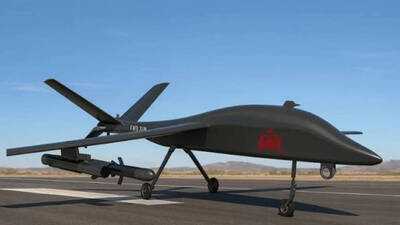
Strengthening India-Portugal cooperation in defence and aerospace, Indian AI warfare company Flying Wedge Defence & Aerospace (FWDA) has signed a partnership agreement with Keydef, the defence and aerospace division of Portuguese company Sketchpixel, to manufacture the Bengaluru-based firm’s Kaal Bhairava autonomous unmanned aerial vehicle (UAV) and swarm interceptor drone YAMA in Portugal for international markets.
The agreement was signed at Keydef facilities in Braga, in the presence of India’s Ambassador to Portugal Puneet Roy Kundal. The project includes an initial investment from Keydef of 6 million euros in FWDA’s made-in-India technologies, a company statement said on Wednesday.
Suhas Tejaskanda, CEO of FWDA, said, “Portugal represents a natural gateway for bringing Indian engineering into Europe. The combination of industrial capability, AI expertise and research partnerships gives us the opportunity to build a much broader aerospace technology footprint in Portugal.”
Under the agreement, production in Portugal will encompass FWDA’s entire portfolio, including surveillance systems, air defence and civilian applications such as precision agriculture, and Sketchpixel/Keydef will be responsible for developing some of the electronic components and artificial intelligence (AI) for the devices.
Speaking on the partnership, Miguel Abreu, CEO of SketchPixel and director of Keydef, said, “This agreement transforms a relationship of trust into a factory. Portugal will now produce, in a partnership that combines Portuguese and Indian engineering and know-how, systems that will be sold worldwide.”
Alongside the manufacturing agreement, FWDA, in partnership with Keydef/SketchPixel, a European technology company known for building advanced fighter jet simulation systems for aircraft such as F-16, has collaborated with University of Minho on the development of a long-duration uncrewed aircraft capable of achieving 100 hours of autonomy.
The agreement was signed at Keydef facilities in Braga, in the presence of India’s Ambassador to Portugal Puneet Roy Kundal. The project includes an initial investment from Keydef of 6 million euros in FWDA’s made-in-India technologies, a company statement said on Wednesday.
Suhas Tejaskanda, CEO of FWDA, said, “Portugal represents a natural gateway for bringing Indian engineering into Europe. The combination of industrial capability, AI expertise and research partnerships gives us the opportunity to build a much broader aerospace technology footprint in Portugal.”
Under the agreement, production in Portugal will encompass FWDA’s entire portfolio, including surveillance systems, air defence and civilian applications such as precision agriculture, and Sketchpixel/Keydef will be responsible for developing some of the electronic components and artificial intelligence (AI) for the devices.
Speaking on the partnership, Miguel Abreu, CEO of SketchPixel and director of Keydef, said, “This agreement transforms a relationship of trust into a factory. Portugal will now produce, in a partnership that combines Portuguese and Indian engineering and know-how, systems that will be sold worldwide.”
Alongside the manufacturing agreement, FWDA, in partnership with Keydef/SketchPixel, a European technology company known for building advanced fighter jet simulation systems for aircraft such as F-16, has collaborated with University of Minho on the development of a long-duration uncrewed aircraft capable of achieving 100 hours of autonomy.
Next Story