
Iran claims destruction of US radar in Bahrain, tanker hits mine in Strait of Hormuz


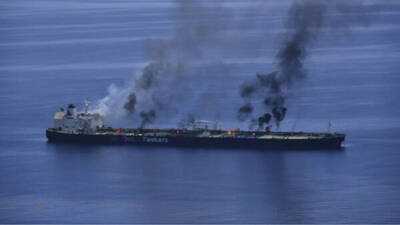
NEW DELHI: Iran 's Islamic Revolutionary Guard Corps (IRGC) on Friday claimed it had destroyed a US early-warning radar system in Bahrain and separately reported that a liquefied petroleum gas (LPG) tanker struck a mine while attempting to cross the Strait of Hormuz , triggering an explosion.
Neither claim could be independently verified. The developments come amid a fragile lull in the conflict between Iran and the US, with Tehran continuing to warn vessels against transiting the strategic waterway without its approval.
Iran's state-run IRNA news agency quoted an IRGC statement as saying that its forces had targeted and destroyed a US early-warning radar system in Bahrain.
The Guards said the attack was carried out in retaliation for a US strike on a telecommunications pole in Sirik, a coastal county in Iran's southern Hormozgan province.
The statement described the strike as a serious warning to Washington to stop its attacks on Iranian territory. It marks the first Iranian claim of an attack on a facility in Bahrain since September.
Bahrain is a key US military partner in the Gulf and hosts the US Navy's 5th Fleet, which oversees American naval operations across a large part of the Middle East.
During the air war that began in February, Iran targeted US military bases in neighbouring Arab countries, including Bahrain, in retaliation for American strikes.
The US Central Command and Bahrain's Ministry of Information did not immediately respond to requests for comment on the latest Iranian claim.
In a separate development, the IRGC claimed that an LPG tanker struck a mine while attempting to navigate the Strait of Hormuz, causing an explosion.
According to IRNA, the Guards said the vessel ignored repeated warnings while passing through the eastern section of the strait.
The claim could not be independently verified. There was also no immediate report of the incident from the United Kingdom Maritime Trade Operations (UKMTO), a British military agency that monitors maritime security incidents.
Iran has continued to warn commercial vessels against crossing the strategic shipping route without its approval.
The Strait of Hormuz connects the Persian Gulf with the Gulf of Oman and is one of the world's most important energy shipping routes. A disruption to traffic through the passage could affect international oil and gas supplies.
Meanwhile, Iran held large funeral processions on Friday for the remains of 350 unidentified soldiers killed during the Iran-Iraq war, more than 38 years after the conflict ended.
In Tehran, thousands of mourners attended a procession for the remains of 110 soldiers, while ceremonies for another 240 were held in other Iranian cities.
Trucks carrying coffins draped in Iranian flags passed near Tehran University as crowds dressed in black gathered to pay their respects. Several mourners were seen weeping during the procession.
President Masoud Pezeshkian and senior officials, including acting Revolutionary Guard chief Gen. Mostafa Izadi, attended the ceremony.
“Against the enemies, we are continuing the same as our martyrs did during the Iran-Iraq war," Izadi told reporters.
Neither claim could be independently verified. The developments come amid a fragile lull in the conflict between Iran and the US, with Tehran continuing to warn vessels against transiting the strategic waterway without its approval.
Iran's state-run IRNA news agency quoted an IRGC statement as saying that its forces had targeted and destroyed a US early-warning radar system in Bahrain.
The Guards said the attack was carried out in retaliation for a US strike on a telecommunications pole in Sirik, a coastal county in Iran's southern Hormozgan province.
The statement described the strike as a serious warning to Washington to stop its attacks on Iranian territory. It marks the first Iranian claim of an attack on a facility in Bahrain since September.
Bahrain is a key US military partner in the Gulf and hosts the US Navy's 5th Fleet, which oversees American naval operations across a large part of the Middle East.
During the air war that began in February, Iran targeted US military bases in neighbouring Arab countries, including Bahrain, in retaliation for American strikes.
The US Central Command and Bahrain's Ministry of Information did not immediately respond to requests for comment on the latest Iranian claim.
In a separate development, the IRGC claimed that an LPG tanker struck a mine while attempting to navigate the Strait of Hormuz, causing an explosion.
According to IRNA, the Guards said the vessel ignored repeated warnings while passing through the eastern section of the strait.
The claim could not be independently verified. There was also no immediate report of the incident from the United Kingdom Maritime Trade Operations (UKMTO), a British military agency that monitors maritime security incidents.
Iran has continued to warn commercial vessels against crossing the strategic shipping route without its approval.
The Strait of Hormuz connects the Persian Gulf with the Gulf of Oman and is one of the world's most important energy shipping routes. A disruption to traffic through the passage could affect international oil and gas supplies.
Meanwhile, Iran held large funeral processions on Friday for the remains of 350 unidentified soldiers killed during the Iran-Iraq war, more than 38 years after the conflict ended.
In Tehran, thousands of mourners attended a procession for the remains of 110 soldiers, while ceremonies for another 240 were held in other Iranian cities.
Trucks carrying coffins draped in Iranian flags passed near Tehran University as crowds dressed in black gathered to pay their respects. Several mourners were seen weeping during the procession.
President Masoud Pezeshkian and senior officials, including acting Revolutionary Guard chief Gen. Mostafa Izadi, attended the ceremony.
“Against the enemies, we are continuing the same as our martyrs did during the Iran-Iraq war," Izadi told reporters.
Next Story