
Iran, Ukraine and an uneasy Europe: G7 weighs fallout of Trump's election blow


G7 foreign ministers are meeting in Paris on Monday with one major question hanging over the discussions. Will Donald Trump's midterm election setback change Washington's approach to the world's biggest geopolitical conflicts?
As European allies assess the political fallout, the focus is on whether a weakened Trump will rethink his policies on Iran, Ukraine and relations with Europe.
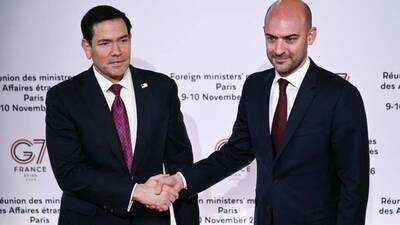
According to a Reuters report, citing four G7 diplomats, foreign ministers are seeking to assess whether the Republicans' midterm election setback will limit Trump's ability to pursue his foreign policy agenda.
While Democratic gains could narrow the White House's room for manoeuvre, diplomats cautioned against expecting a return to traditional US multilateralism, as foreign policy decisions remain largely under Trump's control.
Iran is expected to feature prominently at the Paris meeting, with European allies increasingly concerned that further US military action could deepen the conflict rather than bring it closer to an end. Washington's partners have repeatedly expressed scepticism over the war, which has also emerged as one of the issues behind Trump's electoral setback.
US secretary of state Marco Rubio, speaking ahead of the meeting, played down the possibility of an imminent agreement with Tehran, saying negotiations were far from a breakthrough.
He argued that Iran's demands were unacceptable and said leaders sometimes had to continue with unpopular policies if they believed they were necessary.
Ukraine war raises fears of Europe being sidelined
Ukraine is emerging as another major point of concern, with European allies worried that Washington could negotiate an end to the war with Moscow without giving European governments an adequate role.
The G7 meeting comes ahead of trilateral discussions between Ukraine, Russia and the United States in Abu Dhabi, where efforts will focus on ending the conflict and discussing post-war security arrangements.
The divisions are also exposing a lack of unity within Europe. Italian Prime Minister Giorgia Meloni has warned that Europe risks becoming irrelevant in efforts to end the war if individual countries continue pursuing separate diplomatic initiatives instead of agreeing on a common representative and strategy.
Meanwhile, diplomats have warned that Russia is increasingly targeting Ukraine's energy infrastructure to trigger widespread power shortages during winter. Kyiv's urgent need for Patriot interceptors and other air defence systems is also expected to feature in discussions, with G7 members looking to mobilise additional military, financial and energy assistance.
As European allies assess the political fallout, the focus is on whether a weakened Trump will rethink his policies on Iran, Ukraine and relations with Europe.
According to a Reuters report, citing four G7 diplomats, foreign ministers are seeking to assess whether the Republicans' midterm election setback will limit Trump's ability to pursue his foreign policy agenda.
While Democratic gains could narrow the White House's room for manoeuvre, diplomats cautioned against expecting a return to traditional US multilateralism, as foreign policy decisions remain largely under Trump's control.
Iran is expected to feature prominently at the Paris meeting, with European allies increasingly concerned that further US military action could deepen the conflict rather than bring it closer to an end. Washington's partners have repeatedly expressed scepticism over the war, which has also emerged as one of the issues behind Trump's electoral setback.
US secretary of state Marco Rubio, speaking ahead of the meeting, played down the possibility of an imminent agreement with Tehran, saying negotiations were far from a breakthrough.
He argued that Iran's demands were unacceptable and said leaders sometimes had to continue with unpopular policies if they believed they were necessary.
Ukraine war raises fears of Europe being sidelined
Ukraine is emerging as another major point of concern, with European allies worried that Washington could negotiate an end to the war with Moscow without giving European governments an adequate role.
The G7 meeting comes ahead of trilateral discussions between Ukraine, Russia and the United States in Abu Dhabi, where efforts will focus on ending the conflict and discussing post-war security arrangements.
The divisions are also exposing a lack of unity within Europe. Italian Prime Minister Giorgia Meloni has warned that Europe risks becoming irrelevant in efforts to end the war if individual countries continue pursuing separate diplomatic initiatives instead of agreeing on a common representative and strategy.
Meanwhile, diplomats have warned that Russia is increasingly targeting Ukraine's energy infrastructure to trigger widespread power shortages during winter. Kyiv's urgent need for Patriot interceptors and other air defence systems is also expected to feature in discussions, with G7 members looking to mobilise additional military, financial and energy assistance.
Next Story