
Need to build a navy that can fight, sustain without any constraints, we' need to invest more in R&D: Admiral Swaminathan


NEW DELHI: Navy chief Admiral Krishna Swaminathan on Tuesday stressed that there is a need to build a navy that can "fight, sustain and adapt without being constrained by extraneous factors or external dependencies". He also said there was a need to fill “critical gaps” and invest more in research and development (R&D), as well as in niche and emerging technologies. “The innovation-to-operational-capabilities transition needs to take place in a reasonable time."
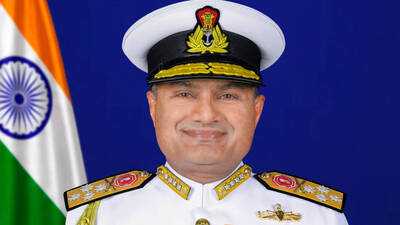
In his address at Delhi Defence Dialogue, the Admiral said all stakeholders need to put their minds and hearts together to build a navy that can “answer the requirements of the 21st-century national security of India and make every single one of us proud”. While emphasizing on self-reliance in defence, he stressed that Aatmanirbharta doesn't mean isolation, and pitched for collaborating with friendly foreign countries “from a position of strength, and not from a position of weakness”.
The dialogue was hosted by Delhi-based Manohar Parrikar Institute for Defence Studies and Analyses (IDSA), brought together senior defence officers, experts and industry representatives.
Pointing to the rise of non-state actors without naming anyone, he also said that democratisation of technology has happened, and technology is available to both “good boys” and “bad boys”. He said growing political tensions globally have inflamed “old, historical fault lines, and today one can see the use of force as an acceptable instrument of national policy, or rather a preferred instrument”.
On hostile forces, the Admiral said, “We are quite cognisant of the capabilities of our adversaries.” He said the Andaman and Nicobar Islands is a key area for the Navy, and so is Lakshadweep, adding that the naval force is “doing everything it can”, as part of boosting its overall capability matrix. On the Strait of Malacca query, the Navy chief said anything that happens on this critical sea lane “impacts us”, and therefore, the Navy “keeps a very good watch on that part of the world”.
Next Story