
No safe waters for Russian ships? How Ukraine pulled off 2,400-km drone strike in Libya


Russian ships are finding fewer safe waters as Ukraine takes its naval drone war far beyond the Black Sea, striking targets in the Mediterranean and Baltic Sea.
In the latest blow, a Ukrainian drone attack set a Russian Navy corvette ablaze at a port in Libya, thousands of kilometres from the Ukrainian coastline.
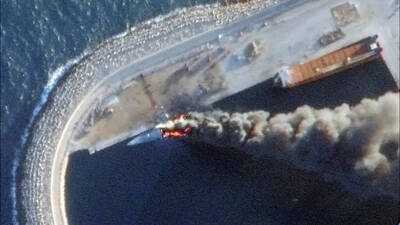
According to a report by The War Zone (TWZ), the attack took place on November 22 at Benghazi port in eastern Libya, where Ukrainian naval drones targeted the Russian Navy corvette Merkury and a Russian cargo vessel.
Ukrainian President Volodymyr Zelenskyy confirmed the operation on November 23, saying seven Ukrainian-made naval drones were used to sink the warship. Ukraine's Security Service (SBU) also claimed that a Russian Ka-27 military helicopter aboard the corvette was destroyed.
Satellite imagery published by TWZ showed the vessel engulfed in flames before capsizing, with much of its hull subsequently submerged. The operation marked a significant escalation in Ukraine's efforts to strike Russian naval assets far beyond the immediate theatre of war.
The Libya operation was not an isolated incident. Ukraine's naval drone campaign has increasingly extended to Russian vessels operating in other strategically important waterways, including the Baltic Sea.
Just a day before the Benghazi attack, a Russian defence ministry-linked cargo ship, Sparta II, came under a suspected drone attack in the Gulf of Finland on November 21. The vessel was reportedly heading towards Russia's Kaliningrad exclave when it was struck and caught fire.
How Ukraine managed to strike Russian warship thousands of kilometres from its coast
Ukraine's ability to strike the Russian corvette Merkury in Libya, around 2,400 km from its front line, may be linked to its reported military presence in the North African country.
According to the Ukrainian Security Service (SBU), seven domestically developed naval drones were transported to a designated location and launched from a so-called 'mothership'.
The agency has not disclosed the vessel's identity, its departure point or the route taken by the drones. However, two Libyan military officials told the Associated Press (AP) that the drones were launched from a base operated by Ukrainian forces in western Libya, with at least four intercepted and two hitting the Russian warship.
The reported Ukrainian presence in Libya dates back to an alleged military arrangement with the Tripoli-based government.
French broadcaster Radio France Internationale (RFI), in an investigation published in April 2026, reported that more than 200 Ukrainian military officers and specialists were deployed at three locations in western Libya, citing two Libyan sources.
These included an air force academy in Misrata, a facility near the Mellitah oil and gas complex in Zawiya, reportedly equipped to launch aerial and naval drones, and the headquarters of Libya's 111th Brigade near Tripoli.
The sources said the deployment followed an alleged agreement in October 2025 under which Ukraine would train Libyan forces in drone warfare in exchange for establishing a military presence. Neither government publicly confirmed the arrangement.
The reported military footprint has also been linked to previous Ukrainian operations against Russian vessels in the Mediterranean.
RFI reported that the December 2025 attack on the Russian-linked tanker Qendil was launched from the Misrata area, while Ukrainian forces allegedly used a Magura V5 naval drone launched from the Mellitah facility to strike the Russian LNG carrier Arctic Metagaz in March 2026.
Jalel Harchaoui, an analyst at the Royal United Services Institute (RUSI), told AP that the presence of Ukrainian operatives in the greater Tripoli area was "entirely plausible", suggesting it could have the knowledge and backing of Western powers.
However, Kyiv has not publicly confirmed its military deployment in Libya, and the Tripoli government's defence ministry has denied allowing Libyan military facilities to be used for attacks against foreign countries.
Why the destruction of Merkury is a major blow to Russia
The loss of the Merkury is significant for Russia because the corvette was not only a combat vessel but also part of Moscow's maritime security network in the Mediterranean.
According to Ukraine's Security Service (SBU), the warship regularly escorted Russian naval convoys, including the cargo ship MV Angara, which was used to transport military equipment along the so-called Syrian Express and Libyan Express supply routes.
Commissioned in May 2023, the Merkury was among Russia's newer warships. The Project 20380 Steregushchiy-class corvette has a displacement of around 2,200 tonnes, measures 104.5 metres in length and can reach speeds of 27 knots.
It has a crew of approximately 100 and carries eight Kh-35 anti-ship missiles, Redut air-defence missiles, a 100-mm naval gun and torpedoes. It can also operate a Ka-27 naval helicopter.
Its reported role in escorting Russian military shipments made it a valuable asset beyond its direct combat capabilities. Its destruction could weaken Russia's ability to protect military cargo moving through the Mediterranean, while depriving its navy of a relatively new multi-role warship.
In the latest blow, a Ukrainian drone attack set a Russian Navy corvette ablaze at a port in Libya, thousands of kilometres from the Ukrainian coastline.
According to a report by The War Zone (TWZ), the attack took place on November 22 at Benghazi port in eastern Libya, where Ukrainian naval drones targeted the Russian Navy corvette Merkury and a Russian cargo vessel.
Ukrainian President Volodymyr Zelenskyy confirmed the operation on November 23, saying seven Ukrainian-made naval drones were used to sink the warship. Ukraine's Security Service (SBU) also claimed that a Russian Ka-27 military helicopter aboard the corvette was destroyed.
Satellite imagery published by TWZ showed the vessel engulfed in flames before capsizing, with much of its hull subsequently submerged. The operation marked a significant escalation in Ukraine's efforts to strike Russian naval assets far beyond the immediate theatre of war.
The Libya operation was not an isolated incident. Ukraine's naval drone campaign has increasingly extended to Russian vessels operating in other strategically important waterways, including the Baltic Sea.
Just a day before the Benghazi attack, a Russian defence ministry-linked cargo ship, Sparta II, came under a suspected drone attack in the Gulf of Finland on November 21. The vessel was reportedly heading towards Russia's Kaliningrad exclave when it was struck and caught fire.
How Ukraine managed to strike Russian warship thousands of kilometres from its coast
Ukraine's ability to strike the Russian corvette Merkury in Libya, around 2,400 km from its front line, may be linked to its reported military presence in the North African country.
According to the Ukrainian Security Service (SBU), seven domestically developed naval drones were transported to a designated location and launched from a so-called 'mothership'.
The agency has not disclosed the vessel's identity, its departure point or the route taken by the drones. However, two Libyan military officials told the Associated Press (AP) that the drones were launched from a base operated by Ukrainian forces in western Libya, with at least four intercepted and two hitting the Russian warship.
The reported Ukrainian presence in Libya dates back to an alleged military arrangement with the Tripoli-based government.
French broadcaster Radio France Internationale (RFI), in an investigation published in April 2026, reported that more than 200 Ukrainian military officers and specialists were deployed at three locations in western Libya, citing two Libyan sources.
These included an air force academy in Misrata, a facility near the Mellitah oil and gas complex in Zawiya, reportedly equipped to launch aerial and naval drones, and the headquarters of Libya's 111th Brigade near Tripoli.
The sources said the deployment followed an alleged agreement in October 2025 under which Ukraine would train Libyan forces in drone warfare in exchange for establishing a military presence. Neither government publicly confirmed the arrangement.
The reported military footprint has also been linked to previous Ukrainian operations against Russian vessels in the Mediterranean.
RFI reported that the December 2025 attack on the Russian-linked tanker Qendil was launched from the Misrata area, while Ukrainian forces allegedly used a Magura V5 naval drone launched from the Mellitah facility to strike the Russian LNG carrier Arctic Metagaz in March 2026.
Jalel Harchaoui, an analyst at the Royal United Services Institute (RUSI), told AP that the presence of Ukrainian operatives in the greater Tripoli area was "entirely plausible", suggesting it could have the knowledge and backing of Western powers.
However, Kyiv has not publicly confirmed its military deployment in Libya, and the Tripoli government's defence ministry has denied allowing Libyan military facilities to be used for attacks against foreign countries.
Why the destruction of Merkury is a major blow to Russia
The loss of the Merkury is significant for Russia because the corvette was not only a combat vessel but also part of Moscow's maritime security network in the Mediterranean.
According to Ukraine's Security Service (SBU), the warship regularly escorted Russian naval convoys, including the cargo ship MV Angara, which was used to transport military equipment along the so-called Syrian Express and Libyan Express supply routes.
Commissioned in May 2023, the Merkury was among Russia's newer warships. The Project 20380 Steregushchiy-class corvette has a displacement of around 2,200 tonnes, measures 104.5 metres in length and can reach speeds of 27 knots.
It has a crew of approximately 100 and carries eight Kh-35 anti-ship missiles, Redut air-defence missiles, a 100-mm naval gun and torpedoes. It can also operate a Ka-27 naval helicopter.
Its reported role in escorting Russian military shipments made it a valuable asset beyond its direct combat capabilities. Its destruction could weaken Russia's ability to protect military cargo moving through the Mediterranean, while depriving its navy of a relatively new multi-role warship.
Next Story