
Russia's 'City of the Dead': Inside the 10,000 graves hidden in a mysterious mountain valley that still haunt visitors


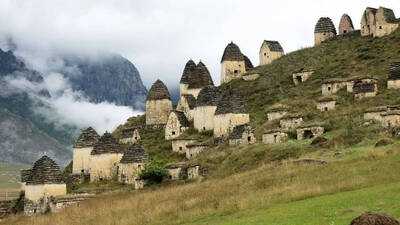
Just outside the remote Russian village of Dargavs lies a place that continues to fascinate and unsettle visitors in equal measure. Known as the “City of the Dead”, this medieval necropolis is located in the Caucasus mountains and is believed to contain the remains of more than 10,000 people. From a distance, it appears peaceful and almost artistic, with rows of stone structures blending into the rugged landscape. Yet as people move closer, the atmosphere often shifts. Many visitors reportedly describe an uneasy feeling, as if the site carries a memory that has not faded with time. It is a place where history, myth, and silence seem to overlap.
Why is the Russian mountain valley known as the “City of the Dead”
The necropolis near Dargavs is not hidden, but it is isolated. As reported by the BBC, it sits in a wide mountain valley surrounded by steep slopes and long, winding paths. The site consists of around 99 stone crypts, each built with curved roofs and small openings that resemble windows. These structures have survived for centuries, despite harsh weather conditions in the region.
According to experts, the site dates back to the 16th century, but there are those who think that the history of the site could be even more ancient than that. One school of thought attributes the formation of the site to the Mongol-Tatar invasions of the 13th century, where the local populace might have adjusted their death rituals owing to scarce resources of land.
Inside the stone crypts: How bodies were placed with clothing and belongings
The most fascinating features of the ‘ City of the Dead ’ are the way the bodies were placed inside the crypts. Many bodies were laid inside the stone chambers along with clothing and personal belongings. Reportedly, in some cases, the traces of tissues are still visible on bones. The cold, dry mountain air is believed to have played a major role in preserving these remains. However, cultural practices may also have influenced the burial methods. Experts suggest that above-ground crypts were a practical solution during times when digging deep graves was difficult in the rocky terrain.
During outbreaks of plague in the 17th and 18th centuries, some villagers reportedly chose to isolate themselves inside these crypts when they fell ill. It is believed that they did this to prevent the spread of disease to others in their community.
The strange discovery of boat burials and an oar beside the dead
Inside a few of the crypts, archaeologists have discovered wooden coffins shaped like small boats. In one unusual case, an oar was also found placed beside a body. This detail has puzzled researchers for years.
There are no navigable rivers near the site, which makes the discovery even more intriguing. Some historians believe the boat symbolism reflects an ancient belief that the soul must travel across water to reach the afterlife. Although there is no single confirmed explanation, these findings suggest that death was viewed not just as an end, but as a journey into another realm.
The ancient ‘city of the dead’ today continues to baffle historians
The historian and tourists who are drawn to the mysterious atmosphere and striking architecture are still attracted. As reported by the BBC, a local historian, Luidmila Gaboeva, has noted that the visitors often experience the silence of reflection while exploring the site. The exact origins of the necropolis are still debated, and many details about its use have been lost over time.
What remains is a silent landscape filled with stone tombs, memory, and uncertainty.
Why is the Russian mountain valley known as the “City of the Dead”
The necropolis near Dargavs is not hidden, but it is isolated. As reported by the BBC, it sits in a wide mountain valley surrounded by steep slopes and long, winding paths. The site consists of around 99 stone crypts, each built with curved roofs and small openings that resemble windows. These structures have survived for centuries, despite harsh weather conditions in the region.
According to experts, the site dates back to the 16th century, but there are those who think that the history of the site could be even more ancient than that. One school of thought attributes the formation of the site to the Mongol-Tatar invasions of the 13th century, where the local populace might have adjusted their death rituals owing to scarce resources of land.
Inside the stone crypts: How bodies were placed with clothing and belongings
The most fascinating features of the ‘ City of the Dead ’ are the way the bodies were placed inside the crypts. Many bodies were laid inside the stone chambers along with clothing and personal belongings. Reportedly, in some cases, the traces of tissues are still visible on bones. The cold, dry mountain air is believed to have played a major role in preserving these remains. However, cultural practices may also have influenced the burial methods. Experts suggest that above-ground crypts were a practical solution during times when digging deep graves was difficult in the rocky terrain.
During outbreaks of plague in the 17th and 18th centuries, some villagers reportedly chose to isolate themselves inside these crypts when they fell ill. It is believed that they did this to prevent the spread of disease to others in their community.
The strange discovery of boat burials and an oar beside the dead
Inside a few of the crypts, archaeologists have discovered wooden coffins shaped like small boats. In one unusual case, an oar was also found placed beside a body. This detail has puzzled researchers for years.
There are no navigable rivers near the site, which makes the discovery even more intriguing. Some historians believe the boat symbolism reflects an ancient belief that the soul must travel across water to reach the afterlife. Although there is no single confirmed explanation, these findings suggest that death was viewed not just as an end, but as a journey into another realm.
The ancient ‘city of the dead’ today continues to baffle historians
The historian and tourists who are drawn to the mysterious atmosphere and striking architecture are still attracted. As reported by the BBC, a local historian, Luidmila Gaboeva, has noted that the visitors often experience the silence of reflection while exploring the site. The exact origins of the necropolis are still debated, and many details about its use have been lost over time.
What remains is a silent landscape filled with stone tombs, memory, and uncertainty.
Next Story