Why Are Thailand And Cambodia Fighting Again? The 2025 Escalation Explained

Renewed fighting between Thailand and Cambodia has brought a long-running border dispute back into sharp focus, triggering fresh regional concern. The latest escalation, rooted in colonial-era boundaries and competing claims over historic temple sites, has left more than 40 people dead and forced close to one million civilians to flee border areas, according to official figures cited by AFP.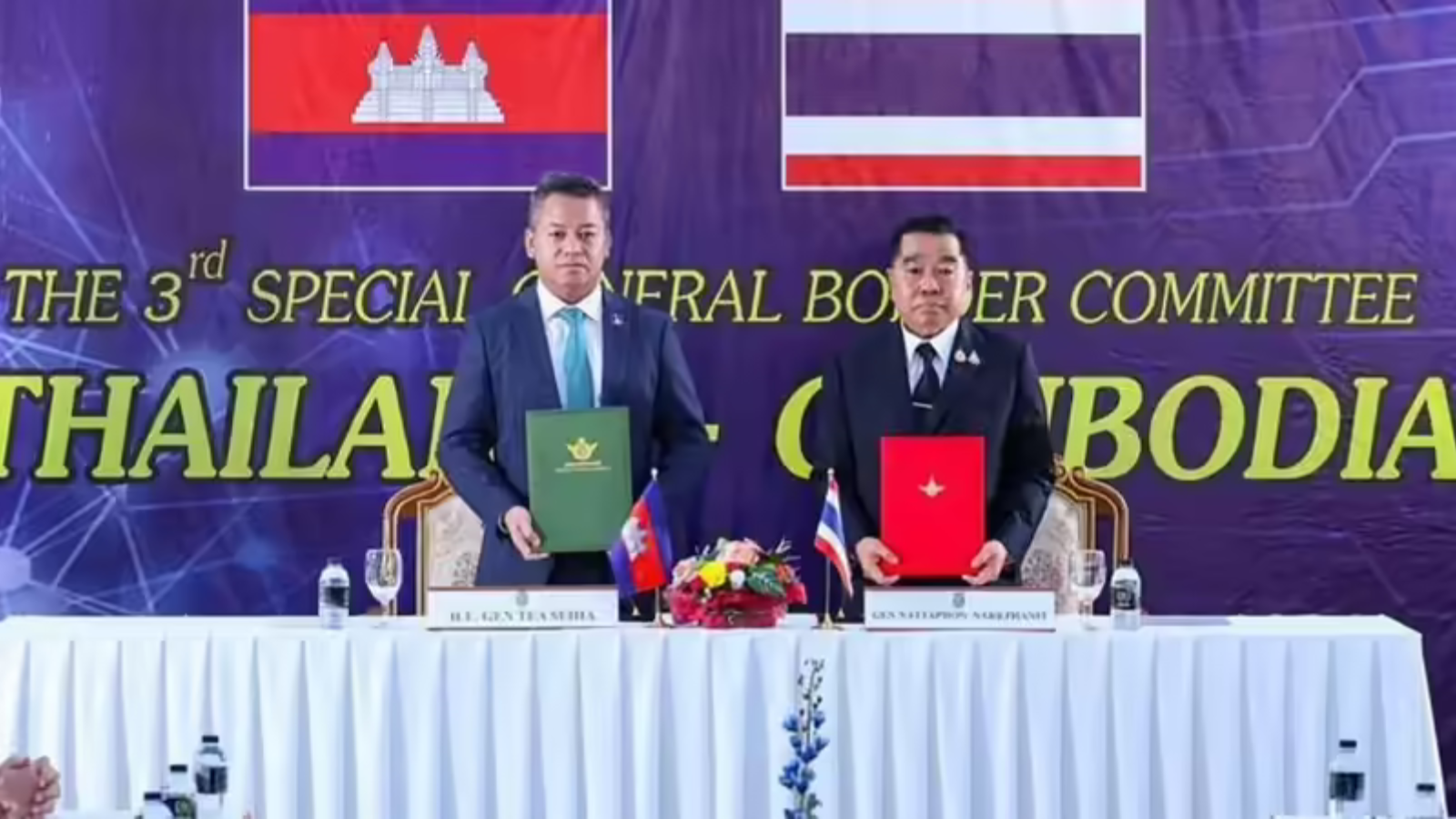
Violence intensified on December 8 and 9 after a ceasefire announced in July collapsed. Thailand carried out fighter jet missions and artillery strikes, while Cambodia responded with rocket fire. The clashes have continued despite ongoing peace talks, highlighting how fragile diplomatic efforts remain.
Cambodia has accused Thailand of launching fresh air strikes even as negotiations were under way. Thailand, meanwhile, defended its actions, including the removal of a Lord Vishnu statue from the disputed An Ses area in Cambodia’s Preah Vihear province, close to the Choam Ksan district border. Thai authorities said the demolition was necessary for security reasons, a claim rejected by Phnom Penh.
Videos verified by AFP showed the statue, constructed in 2014 and located roughly 100 metres from the frontier, being dismantled with a backhoe. The images drew criticism from neighbouring governments and regional observers, who warned that such symbolic acts could further inflame tensions.
The fighting has been reported along multiple contested stretches of the Thailand–Cambodia border, particularly around the Dangrek mountain range that separates northeast Thailand from northern Cambodia.
This region is dotted with ancient Khmer temples situated close to the frontier. Control of surrounding high ground has long been disputed, making these areas flashpoints for troop deployments, artillery exchanges and air operations during the current phase of the conflict.
Why Is the Thailand–Cambodia Border Disputed?
The roots of the dispute stretch back to the early 20th century, when borders were drawn during French colonial rule in Cambodia. Thailand has repeatedly argued that colonial-era maps incorrectly marked the boundary and failed to follow natural watershed lines referenced in earlier treaties.
One of the most sensitive flashpoints is the Preah Vihear temple. In 1962, the International Court of Justice ruled that the temple itself belongs to Cambodia. However, the ruling did not clearly define ownership of the surrounding land, leaving room for rival interpretations.
A further clarification by the court in 2013 reaffirmed Cambodia’s sovereignty over areas immediately adjacent to the temple, but it stopped short of resolving the broader border demarcation dispute.
What Happened to Donald Trump’s Peace Push?
During the December escalation, US President Donald Trump said he had spoken separately with the leaders of Thailand and Cambodia and claimed both sides had agreed to stop fighting.
According to Trump, the discussions were constructive and included commitments to “ceasing all shooting” and reviving a ceasefire framework similar to earlier arrangements. However, clashes continued to be reported after his comments, exposing a gap between diplomatic assurances and realities on the ground.
Thailand’s caretaker Prime Minister Anutin Charnvirakul later confirmed speaking with Trump but said Thai military operations would continue until there were no further threats to Thai territory or civilians. He accused Cambodian forces of breaching ceasefire commitments and described the border situation as unstable.
Cambodian Prime Minister Hun Manet reiterated his government’s commitment to dialogue and peace. In public statements and social media posts, Phnom Penh said it supported ceasefire efforts while accusing Thailand of escalating military action along the frontier.
What Triggered the Latest Escalation in 2025?
Tensions rose sharply in May after a confrontation near the Emerald Triangle, where Thailand, Cambodia and Laos meet, resulted in the death of a Cambodian soldier. The situation worsened in July when both sides used artillery and heavy weapons across several border points, forcing large-scale civilian evacuations.
Although a ceasefire later brought temporary calm, sporadic incidents continued. Fresh exchanges of fire in December ultimately led to the collapse of the truce, resulting in further military casualties and renewed displacement of civilians.
Officials from both countries have confirmed soldier fatalities and injuries, while border communities have faced repeated evacuations during both the July and December clashes.
International Response and the Current Situation
ASEAN member states have urged Thailand and Cambodia to return to negotiations, while both China and the United States have appealed for restraint and respect for ceasefire commitments. Diplomatic efforts are focused on preventing further civilian displacement and restoring stability along the frontier.
Following the December clashes, troops remain deployed on both sides of the disputed border. Military commanders and diplomats are holding talks aimed at reviving the ceasefire, with regional partners involved in mediation.
While both governments insist that diplomatic channels remain open, the core issues surrounding border demarcation and control of contested areas remain unresolved. As a result, tensions along the Thailand–Cambodia border continue to run high.
Violence intensified on December 8 and 9 after a ceasefire announced in July collapsed. Thailand carried out fighter jet missions and artillery strikes, while Cambodia responded with rocket fire. The clashes have continued despite ongoing peace talks, highlighting how fragile diplomatic efforts remain.
Cambodia has accused Thailand of launching fresh air strikes even as negotiations were under way. Thailand, meanwhile, defended its actions, including the removal of a Lord Vishnu statue from the disputed An Ses area in Cambodia’s Preah Vihear province, close to the Choam Ksan district border. Thai authorities said the demolition was necessary for security reasons, a claim rejected by Phnom Penh.
Videos verified by AFP showed the statue, constructed in 2014 and located roughly 100 metres from the frontier, being dismantled with a backhoe. The images drew criticism from neighbouring governments and regional observers, who warned that such symbolic acts could further inflame tensions.
Where Are the Clashes Taking Place?
The fighting has been reported along multiple contested stretches of the Thailand–Cambodia border, particularly around the Dangrek mountain range that separates northeast Thailand from northern Cambodia.
This region is dotted with ancient Khmer temples situated close to the frontier. Control of surrounding high ground has long been disputed, making these areas flashpoints for troop deployments, artillery exchanges and air operations during the current phase of the conflict.
Why Is the Thailand–Cambodia Border Disputed?
The roots of the dispute stretch back to the early 20th century, when borders were drawn during French colonial rule in Cambodia. Thailand has repeatedly argued that colonial-era maps incorrectly marked the boundary and failed to follow natural watershed lines referenced in earlier treaties.One of the most sensitive flashpoints is the Preah Vihear temple. In 1962, the International Court of Justice ruled that the temple itself belongs to Cambodia. However, the ruling did not clearly define ownership of the surrounding land, leaving room for rival interpretations.
A further clarification by the court in 2013 reaffirmed Cambodia’s sovereignty over areas immediately adjacent to the temple, but it stopped short of resolving the broader border demarcation dispute.
What Happened to Donald Trump’s Peace Push?
During the December escalation, US President Donald Trump said he had spoken separately with the leaders of Thailand and Cambodia and claimed both sides had agreed to stop fighting. According to Trump, the discussions were constructive and included commitments to “ceasing all shooting” and reviving a ceasefire framework similar to earlier arrangements. However, clashes continued to be reported after his comments, exposing a gap between diplomatic assurances and realities on the ground.
Thailand’s caretaker Prime Minister Anutin Charnvirakul later confirmed speaking with Trump but said Thai military operations would continue until there were no further threats to Thai territory or civilians. He accused Cambodian forces of breaching ceasefire commitments and described the border situation as unstable.
Cambodian Prime Minister Hun Manet reiterated his government’s commitment to dialogue and peace. In public statements and social media posts, Phnom Penh said it supported ceasefire efforts while accusing Thailand of escalating military action along the frontier.
What Triggered the Latest Escalation in 2025?
Tensions rose sharply in May after a confrontation near the Emerald Triangle, where Thailand, Cambodia and Laos meet, resulted in the death of a Cambodian soldier. The situation worsened in July when both sides used artillery and heavy weapons across several border points, forcing large-scale civilian evacuations. Although a ceasefire later brought temporary calm, sporadic incidents continued. Fresh exchanges of fire in December ultimately led to the collapse of the truce, resulting in further military casualties and renewed displacement of civilians.
You may also like
- Man arrested from Chennai for duping Kolkata hospital of crores of rupees in cyber fraud
- Maduro signals openness to talks with US, urges end to 'interference'
 Nalanda Literature Festival - a prominent platform to showcase Northeast's literary traditions
- "Don't interfere without knowing facts": DK Shivakumar hits back at Kerala CM over Bengaluru demolition drive
- Elon Musk retweets post on Tesla Model Y surviving 800-metre cliff fall in China
Officials from both countries have confirmed soldier fatalities and injuries, while border communities have faced repeated evacuations during both the July and December clashes.
International Response and the Current Situation
ASEAN member states have urged Thailand and Cambodia to return to negotiations, while both China and the United States have appealed for restraint and respect for ceasefire commitments. Diplomatic efforts are focused on preventing further civilian displacement and restoring stability along the frontier. Following the December clashes, troops remain deployed on both sides of the disputed border. Military commanders and diplomats are holding talks aimed at reviving the ceasefire, with regional partners involved in mediation.
While both governments insist that diplomatic channels remain open, the core issues surrounding border demarcation and control of contested areas remain unresolved. As a result, tensions along the Thailand–Cambodia border continue to run high.






More from our partners


Loving Newspoint? Download the app now
