Three US House Members Move To Revoke Trump’s 50% Tariffs On India

A fresh challenge has emerged in the United States Congress against President Donald Trump’s decision to impose steep tariffs on Indian imports, with three House lawmakers introducing a resolution to overturn the national emergency declaration that enabled duties of up to 50 per cent.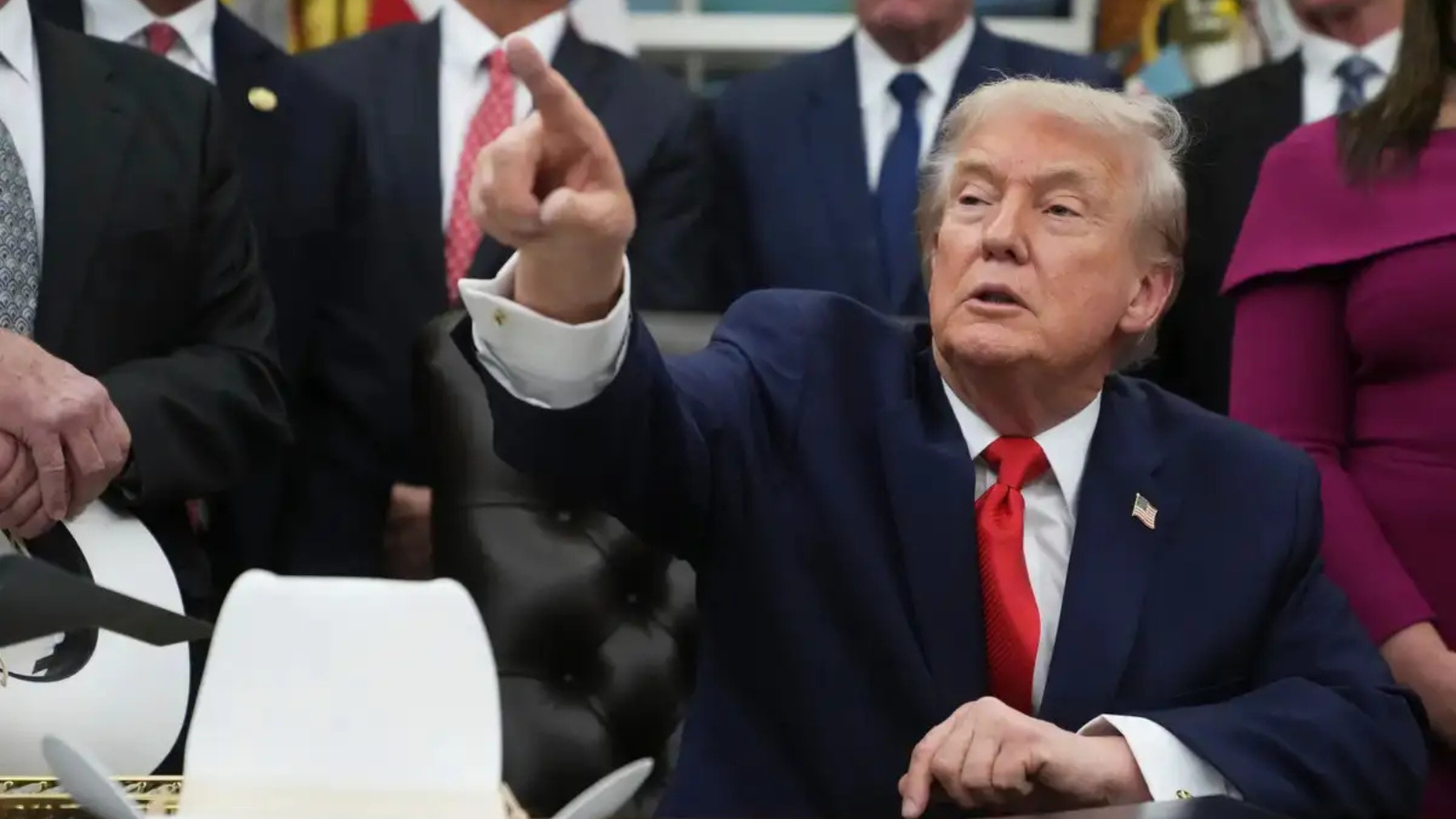
The move, led by Representatives Deborah Ross, Marc Veasey and Raja Krishnamoorthi, argues that the tariffs are “illegal” and risk undermining American jobs, increasing consumer prices and damaging critical US–India trade relations. The effort follows a bipartisan push in the Senate aimed at reversing similar emergency-based tariffs on Brazil and limiting presidential powers over trade.
The resolution specifically seeks to cancel the additional 25 per cent “secondary” tariffs imposed on Indian goods on August 27, 2025. These were added to earlier reciprocal duties, pushing total tariffs on several Indian exports to 50 per cent under the International Emergency Economic Powers Act (IEEPA).
Lawmakers backing the resolution highlighted the deep economic links between India and various US states. Emphasising North Carolina’s exposure, Congresswoman Ross said:
"North Carolina's economy is deeply connected to India through trade, investment, and a vibrant Indian American community," said Congresswoman Ross, noting that Indian companies have invested more than a billion dollars in the state, generating thousands of jobs in life sciences and technology, while North Carolina exporters send hundreds of millions of dollars’ worth of goods to India each year.
Congressman Veasey warned that the tariffs were directly affecting households already grappling with rising costs.
"India is an important cultural, economic, and strategic partner, and these illegal tariffs are a tax on everyday North Texans who are already struggling with rising costs," Congressman Veasey said.
Krishnamoorthi cautioned that the economic consequences could extend far beyond trade figures.
"Instead of advancing American interests or security, these duties disrupt supply chains, harm American workers, and drive up costs for consumers. Ending these damaging tariffs will allow the United States to engage with India to advance our shared economic and security needs," he said.
The House resolution is part of a wider Democratic effort to challenge what they describe as unilateral trade decisions taken by the Trump administration. Earlier in October, Ross, Veasey and Krishnamoorthi joined Congressman Ro Khanna and 19 other lawmakers in urging the President to withdraw the tariffs and repair strained economic ties with India.
"Ending Trump's India tariffs is part of a broader effort by congressional Democrats to reclaim Congress's constitutional authority over trade and to stop the President from using emergency powers to unilaterally impose his misguided trade policies," the release said.
The Trump administration first imposed a 25 per cent tariff on Indian-origin goods from August 1, followed by a second hike days later. Officials defended the move by citing India’s continued purchases of Russian oil, arguing that it indirectly supported Russia’s war in Ukraine.
Even as strategic cooperation between India and the United States continues across defence, technology and regional security, the tariff dispute has added fresh strain to an otherwise strengthening bilateral relationship.
The move, led by Representatives Deborah Ross, Marc Veasey and Raja Krishnamoorthi, argues that the tariffs are “illegal” and risk undermining American jobs, increasing consumer prices and damaging critical US–India trade relations. The effort follows a bipartisan push in the Senate aimed at reversing similar emergency-based tariffs on Brazil and limiting presidential powers over trade.
The resolution specifically seeks to cancel the additional 25 per cent “secondary” tariffs imposed on Indian goods on August 27, 2025. These were added to earlier reciprocal duties, pushing total tariffs on several Indian exports to 50 per cent under the International Emergency Economic Powers Act (IEEPA).
Lawmakers backing the resolution highlighted the deep economic links between India and various US states. Emphasising North Carolina’s exposure, Congresswoman Ross said:
"North Carolina's economy is deeply connected to India through trade, investment, and a vibrant Indian American community," said Congresswoman Ross, noting that Indian companies have invested more than a billion dollars in the state, generating thousands of jobs in life sciences and technology, while North Carolina exporters send hundreds of millions of dollars’ worth of goods to India each year.
You may also like
 Pak army's desperation could fracture Lashkar-e-Taiba as it is pushed to fight against Taliban
- Trump says he is leaning toward Warsh or Hassett to lead the Fed, WSJ reports
- Siddhant Chaturvedi reminisces about the 90s party songs
- House Democrats release Trump pics from Epstein estate
- Bihar: MoS Home Affairs Nityanad Rai attends Border Unity Run 2025 on 62nd Raising Day
Congressman Veasey warned that the tariffs were directly affecting households already grappling with rising costs.
"India is an important cultural, economic, and strategic partner, and these illegal tariffs are a tax on everyday North Texans who are already struggling with rising costs," Congressman Veasey said.
Krishnamoorthi cautioned that the economic consequences could extend far beyond trade figures.
"Instead of advancing American interests or security, these duties disrupt supply chains, harm American workers, and drive up costs for consumers. Ending these damaging tariffs will allow the United States to engage with India to advance our shared economic and security needs," he said.
The House resolution is part of a wider Democratic effort to challenge what they describe as unilateral trade decisions taken by the Trump administration. Earlier in October, Ross, Veasey and Krishnamoorthi joined Congressman Ro Khanna and 19 other lawmakers in urging the President to withdraw the tariffs and repair strained economic ties with India.
"Ending Trump's India tariffs is part of a broader effort by congressional Democrats to reclaim Congress's constitutional authority over trade and to stop the President from using emergency powers to unilaterally impose his misguided trade policies," the release said.
The Trump administration first imposed a 25 per cent tariff on Indian-origin goods from August 1, followed by a second hike days later. Officials defended the move by citing India’s continued purchases of Russian oil, arguing that it indirectly supported Russia’s war in Ukraine.
Even as strategic cooperation between India and the United States continues across defence, technology and regional security, the tariff dispute has added fresh strain to an otherwise strengthening bilateral relationship.






More from our partners


Loving Newspoint? Download the app now
