
Donald Trump Imposes 26% US Reciprocal Tariff on India – How Will It Affect Trade?

US President Donald Trump has announced new reciprocal tariffs on imports from India, China, and several other countries, calling them "discounted reciprocal tariffs." The move, which includes a 26% tariff on India and a 34% tariff on China, is aimed at countering what Trump describes as unfair trade practices. The announcement was made at the White House Rose Garden amid loud cheers, as he declared April 2 as "Liberation Day" for American industries.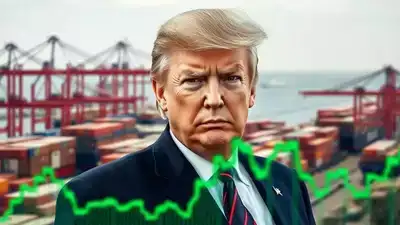
Trump's Justification for the India Tariff
Speaking about India, President Trump said that New Delhi's trade policies have been "very, very tough." He went on to say that "Their Prime Minister (Narendra Modi) just left (US recently)...he is a great friend of mine, but I said to him that 'you're a friend of mine, but you've not been treating us right'. India charges us 52 per cent, so we will charge them half of that - 26 per cent."
Apart from India and China, the US has also announced tariffs on imports from the European Union (20%), the UK (10%), Japan (24%), and several other trade partners. These new levies will be in addition to a baseline 10% import duty on all products entering the United States.
The Full List of Trump's Reciprocal Tariffs
1. China: 34%
2. European Union: 20%
3. South Korea: 25%
4. India: 26%
5. Vietnam: 46%
6. Taiwan: 32%
7. Japan: 24%
8. Thailand: 36%
9. Switzerland: 31%
10. Indonesia: 32%
11. Malaysia: 24%
12. Cambodia: 49%
13. United Kingdom: 10%
14. South Africa: 30%
15.Brazil: 10%
16. Bangladesh: 37%
17. Singapore: 10%
18. Israel: 17%
19. Philippines: 17%
20. Chile: 10%
21. Australia: 10%
22. Pakistan: 29%
23. Turkey: 10%
24. Sri Lanka: 44%
25. Colombia: 10%
Impact on India's Economy and Key Sectors
According to a Citi Research report, India's economy could suffer losses of up to $7 billion annually due to the new tariffs. Some of the most affected industries include:
A Morgan Stanley report highlights that despite potential challenges, a trade deal between India and the US is expected by late 2025. However, negotiations are likely to be complex.
India's Strategy to Counter US Tariffs
The Indian government is actively developing countermeasures to mitigate the impact of Trump's tariffs:
Timeline for Tariff Implementation
With India's merchandise exports to the US totaling around $74 billion in 2024, these tariffs could significantly impact bilateral trade relations. However, India's long-term strategy aims to offset losses by diversifying exports and strengthening its global trade partnerships.
Trump's Justification for the India Tariff
Speaking about India, President Trump said that New Delhi's trade policies have been "very, very tough." He went on to say that "Their Prime Minister (Narendra Modi) just left (US recently)...he is a great friend of mine, but I said to him that 'you're a friend of mine, but you've not been treating us right'. India charges us 52 per cent, so we will charge them half of that - 26 per cent."
Apart from India and China, the US has also announced tariffs on imports from the European Union (20%), the UK (10%), Japan (24%), and several other trade partners. These new levies will be in addition to a baseline 10% import duty on all products entering the United States.
The Full List of Trump's Reciprocal Tariffs
1. China: 34%
2. European Union: 20%
3. South Korea: 25%
4. India: 26%
5. Vietnam: 46%
6. Taiwan: 32%
7. Japan: 24%
8. Thailand: 36%
9. Switzerland: 31%
10. Indonesia: 32%
11. Malaysia: 24%
12. Cambodia: 49%
13. United Kingdom: 10%
14. South Africa: 30%
15.Brazil: 10%
16. Bangladesh: 37%
17. Singapore: 10%
18. Israel: 17%
19. Philippines: 17%
20. Chile: 10%
21. Australia: 10%
22. Pakistan: 29%
23. Turkey: 10%
24. Sri Lanka: 44%
25. Colombia: 10%
Impact on India's Economy and Key Sectors
According to a Citi Research report, India's economy could suffer losses of up to $7 billion annually due to the new tariffs. Some of the most affected industries include:
- Chemicals, metal products, and jewelry face the highest risks.
- Pharmaceutical exports, which make up 2.8% of India's total exports, could see significant losses.
- Processed seafood, sugar, and cocoa products are expected to become less competitive in the US market.
- Gems and jewelry, valued at $8.5 billion in exports, could take a major hit.
- India’s agricultural and machinery exports may also experience substantial losses.
A Morgan Stanley report highlights that despite potential challenges, a trade deal between India and the US is expected by late 2025. However, negotiations are likely to be complex.
India's Strategy to Counter US Tariffs
The Indian government is actively developing countermeasures to mitigate the impact of Trump's tariffs:
- Strengthening economic ties with the US by negotiating a broad trade and investment agreement.
- Reducing dependency on the US market by exploring alternative global trade routes and increasing exports to Europe and the Middle East.
- Enhancing incentives for US businesses to set up production in India, particularly in semiconductors, electronics, and renewable energy.
- Boosting local manufacturing to become a credible alternative to China in key sectors such as defense, technology, and pharmaceuticals.
Timeline for Tariff Implementation
- April 5, 2025: A baseline 10% tariff on all imported goods will take effect.
- April 9, 2025: The country-specific tariffs (such as 26% on India) will be implemented.
With India's merchandise exports to the US totaling around $74 billion in 2024, these tariffs could significantly impact bilateral trade relations. However, India's long-term strategy aims to offset losses by diversifying exports and strengthening its global trade partnerships.
Next Story