
Trump Issues Stern Warning to Iran Over Nuclear Weapons Program

As Iran edges closer to finalizing a nuclear deal with the United States, President Donald Trump has issued a stern warning to Tehran against pursuing nuclear weapons, vowing that military action remains an option if the Middle Eastern nation refuses to halt its activities. The US leader also accused Iran of deliberately stalling negotiations, asserting that the country is "fairly close" to developing a nuclear weapon.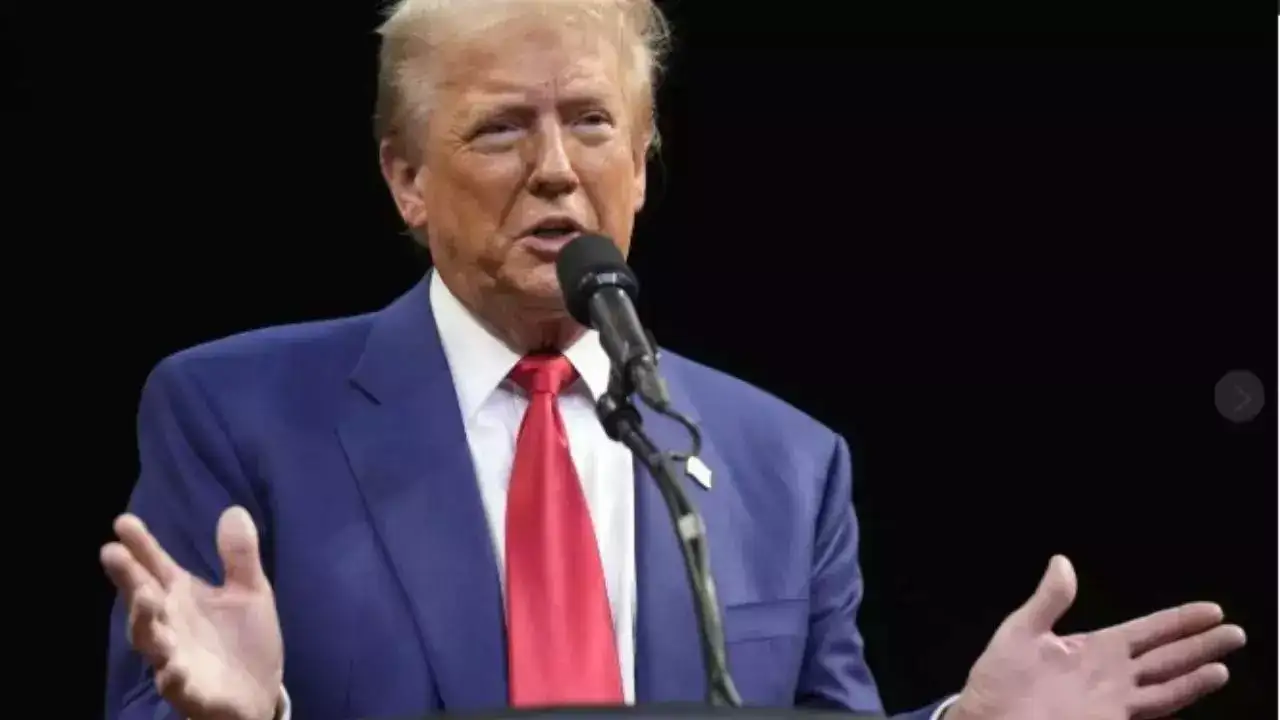
"I think they're tapping us along," Trump told reporters following a meeting between US Special Envoy Steve Witkoff and a senior Iranian official in Oman over the weekend.
"Iran has to get rid of the concept of a nuclear weapon. They cannot have a nuclear weapon," the American president emphasized.
When questioned whether military strikes on Iran’s nuclear facilities were being considered, Trump responded bluntly: "Of course it does."
He further warned that Tehran must act swiftly to avoid severe consequences, stating, "they're fairly close" to achieving nuclear weapons capability. Iran, however, has repeatedly denied seeking nuclear arms.
US-Iran Nuclear Negotiations Progress
Both nations described their recent discussions in Oman as "positive" and "constructive," with a second round of talks set for Rome this Saturday. According to a Reuters report, the negotiations aim to outline a potential agreement’s framework.
Meanwhile, Iran’s Foreign Minister Abbas Araghchi is scheduled to visit Russia, a key ally and signatory to the 2015 nuclear deal, to discuss the ongoing talks with the US. China has also engaged with Iran in recent weeks regarding its nuclear program.
Previous indirect talks under former President Joe Biden yielded minimal progress, while the last known direct negotiations occurred during Barack Obama’s administration, which brokered the 2015 accord that Trump later abandoned. Iran initially complied with the deal for a year after the US withdrawal but gradually reduced its adherence.
Since returning to office in January, Trump has intensified pressure on Iran. In March, he sent a letter to Supreme Leader Ayatollah Ali Khamenei, urging renewed nuclear discussions while cautioning against military escalation if diplomacy fails.
Western nations, including the US, have long accused Iran of covertly developing nuclear weapons—a claim Tehran consistently denies, maintaining that its nuclear activities are solely for peaceful purposes.
"I think they're tapping us along," Trump told reporters following a meeting between US Special Envoy Steve Witkoff and a senior Iranian official in Oman over the weekend.
"Iran has to get rid of the concept of a nuclear weapon. They cannot have a nuclear weapon," the American president emphasized.
When questioned whether military strikes on Iran’s nuclear facilities were being considered, Trump responded bluntly: "Of course it does."
He further warned that Tehran must act swiftly to avoid severe consequences, stating, "they're fairly close" to achieving nuclear weapons capability. Iran, however, has repeatedly denied seeking nuclear arms.
You may also like
- World leaders meet at UN as their planet grapples with war, division, runaway AI and climate shocks
- Priscilla Chan's school project closed after 10 years and $125 million in funding, her organisation then committed another $10 million to support the surrounding community
- Pakistan petrol price may touch PKR 1,000 per litre amid supply concerns; Bangladesh raises fuel rates
- Robot vs human: Humanoid robot throws punches, kicks influencer across cage - video
- 'PTI's drama will never achieve anything': Pak minister Naqvi warns Imran Khan's party ahead of Islamabad march
US-Iran Nuclear Negotiations Progress
Both nations described their recent discussions in Oman as "positive" and "constructive," with a second round of talks set for Rome this Saturday. According to a Reuters report, the negotiations aim to outline a potential agreement’s framework.
Meanwhile, Iran’s Foreign Minister Abbas Araghchi is scheduled to visit Russia, a key ally and signatory to the 2015 nuclear deal, to discuss the ongoing talks with the US. China has also engaged with Iran in recent weeks regarding its nuclear program.
Previous indirect talks under former President Joe Biden yielded minimal progress, while the last known direct negotiations occurred during Barack Obama’s administration, which brokered the 2015 accord that Trump later abandoned. Iran initially complied with the deal for a year after the US withdrawal but gradually reduced its adherence.
Since returning to office in January, Trump has intensified pressure on Iran. In March, he sent a letter to Supreme Leader Ayatollah Ali Khamenei, urging renewed nuclear discussions while cautioning against military escalation if diplomacy fails.
Western nations, including the US, have long accused Iran of covertly developing nuclear weapons—a claim Tehran consistently denies, maintaining that its nuclear activities are solely for peaceful purposes.






Loving Newspoint? Download the app now
