
Trump's heir, but not his echo: JD Vance, Iran and the limits of loyalty


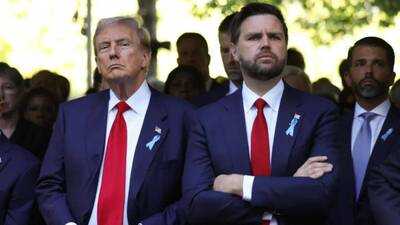
When Donald Trump picked JD Vance as his running mate in 2024, he chose a politician who had once described him as “America’s Hitler”. Two years later, Vance is not only the US vice-president but is also frequently discussed as a possible successor to Trump and the Republican Party ’s “America First” movement.
The transformation has been striking. Vance has embraced much of Trump’s political agenda, from economic nationalism and restrictive immigration policies to scepticism towards America’s overseas commitments. Yet the war with Iran has demonstrated that the two men do not always share the same instincts on how that agenda should be pursued.
Vance has generally been more sceptical of prolonged military involvement. He has also sought to place greater emphasis on the domestic and economic consequences of foreign policy. These differences do not necessarily amount to a break with Trumpism. But they offer an indication of how Vance might seek to define the movement if he eventually has to lead it without Trump.
From critic to political heir
Vance’s transformation is central to understanding his relationship with Trump. In a report published in July 2024, Reuters recalled that Vance had publicly called Trump an “idiot” and described him as “reprehensible” during the 2016 presidential campaign. Reuters also reported that Vance had privately compared Trump to Adolf Hitler.
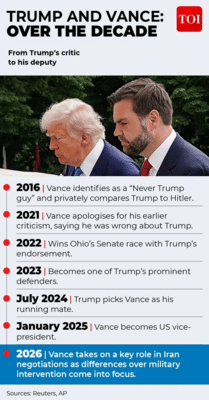
By the time Trump selected him as his running mate in 2024, however, Vance had become one of his most prominent defenders. Reuters described the choice as a signal that Trump wanted his Make America Great Again (MAGA) movement to continue beyond his own presidency. Vance was increasingly being viewed within the Republican Party as a possible inheritor of that political project.
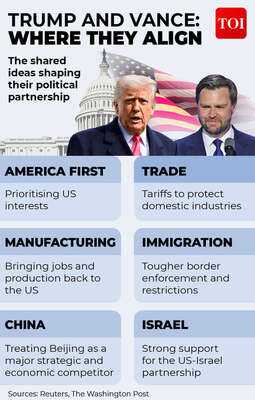
The ideological overlap is visible across several policy areas. Both men have challenged the traditional Republican preference for free trade, advocated tougher immigration enforcement and questioned the scale of America’s international commitments.
For Vance, economic nationalism is also about the position of American workers. His criticism of multinational corporations and the movement of manufacturing overseas fits into the broader argument that the US should prioritise domestic industry over the interests of global markets. This is a central theme of Trump’s political appeal as well.
Ukraine : a more pronounced scepticism
Foreign policy is where Vance’s views have, at times, been more clearly defined than Trump’s. Both have questioned the scale of American support for Ukraine and argued for an end to the war through negotiations. But Vance has been a more consistent and vocal opponent of continued US assistance.
In an interview in 2022, Vance said: “I don't really care what happens to Ukraine one way or the other.” Reuters quoted the remark in its July 2024 assessment of his foreign-policy positions. The agency also reported that Vance had argued Ukraine had little chance of regaining all the territory occupied by Russia and that American resources should instead be directed towards issues such as the US-Mexico border and competition with China.
Trump, too, has expressed scepticism about US aid to Kyiv and promised to end the conflict through negotiations. However, Reuters noted that, unlike Vance, Trump had not explicitly opposed the congressional aid package for Ukraine passed in April 2024.
Their preference for a negotiated settlement may overlap, but Vance’s opposition to American involvement has been more categorical. It is therefore important not to treat their positions as identical.
Vance’s wider scepticism towards overseas military commitments was also evident before he became vice-president. In a 2023 opinion article for The Wall Street Journal, he praised Trump for not starting wars during his first term. The Associated Press later cited Vance’s explanation for supporting Trump: “I know he won't recklessly send Americans to fight overseas.”
Iran: Where the differences became visible
The US-Israeli military campaign against Iran in February 2026 brought Vance’s foreign-policy instincts into sharper focus.
Trump argued that military action was necessary to prevent Tehran from acquiring a nuclear weapon. Vance supported that stated objective, but the president himself acknowledged that the two had approached the decision differently.
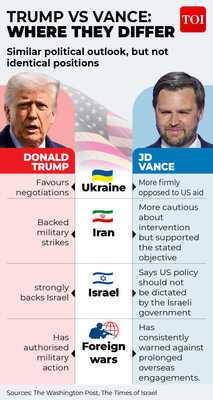
At a news conference on March 9, Trump said Vance was “philosophically a little bit different than me” and had been “maybe less enthusiastic about going” to war. Trump added: “I felt it was something we had to do. I didn't feel we had a choice.” The remarks were reported by the Associated Press.
Vance’s reservations had also been evident before the strikes. He had told The Washington Post that there was “no chance” the United States would become involved in a prolonged conflict similar to the Iraq war, Reuters and AP reported.
Once the operation began, however, Vance publicly backed the president. In an interview with Fox News, he defended the administration’s approach by arguing that Trump had clearly defined the military objectives.
“What's so different about this, Jesse, is that the president has clearly defined what he wants to accomplish,” Vance told Fox News, according to the Associated Press.
Vance’s role in the conflict later extended to diplomacy. He became a central figure in efforts to negotiate an end to the fighting and defended the preliminary agreement reached with Tehran. In June, he presented the agreement as a success, pointing to its potential economic benefits, including lower fuel prices and the resumption of shipping through the Strait of Hormuz.
Trump publicly joked about the political risks of giving his vice-president responsibility for the negotiations. “If it works out, I'm going to take the credit. If it doesn't work out, I'm blaming JD,” Trump said on June 17, according to the Associated Press.
The agreement did not bring a lasting end to the conflict. On November 2, Vance told reporters that he and Trump were optimistic about the prospects of a negotiated settlement. “We've certainly made some progress. We'll see if we can make some more,” he said, as reported by CBS News. Trump had also indicated on Truth Social that a deal with Iran “could happen”.
The position changed within days. On November 12, Trump said the United States did not need an agreement with Tehran and directed Vance to shift his attention from Iran to a domestic anti-fraud campaign.
“We don't need a deal with Iran,” Trump wrote on Truth Social, adding that the United States had “got their money, Hundreds of Billions of Dollars, and we've got their Strait!” Reuters reported that the directive came after Vance had been involved in efforts to resolve the conflict.
Israel : Support, but not without limits
Vance’s position on Israel also requires a distinction between support for the country and agreement with every decision taken by its government.
In July 2024, Reuters described Vance as a consistent supporter of Israel, a position broadly in line with Trump’s. Vance had also supported sending aid to Israel while opposing a wider package that included assistance to Ukraine.
However, during the Iran conflict, Vance became more willing to question Israeli actions when he believed they could undermine American diplomatic objectives. In June 2026, he criticised Israeli strikes on civilian infrastructure in Beirut, suggesting that they risked damaging US-led peace efforts.
Vance made the broader argument more explicitly in September, when he addressed the All-In Summit. “We cannot let our Middle Eastern foreign policy be subservient to the State of Israel,” he said, according to The Times of Israel.
He also argued that Trump had shown a willingness to disagree with Israeli Prime Minister Benjamin Netanyahu when he believed American interests required it. Vance’s comments were not a rejection of the US-Israel relationship. Rather, they reflected his argument that Washington should retain the freedom to pursue its own strategic priorities.
The midterm setback
The clearest public divergence between Trump and Vance emerged after the Republican Party’s losses in the November 2026 midterm elections. Democrats regained control of both chambers of Congress, and Vance identified the Iran war as one of the reasons for the defeat.
In a post on X on November 4, Vance wrote: “The reason we lost is the war. The president himself said so last night.” He also challenged Republicans who believed the military operation had been worth the political cost.
“If you'd like to argue it was worth it, that losing the Senate for the next 6 years was worth it, then do so,” he wrote. CBS News reported that Vance identified four concerns among voters who had supported Trump in 2024 but switched to the Democrats: the Iran war, the cost of living and inflation, putting America first, and the US relationship with Israel.
Trump continued to defend the decision to launch the war, arguing that preventing Iran from acquiring a nuclear weapon justified the operation. In an interview with The Wall Street Journal, he acknowledged that Iran had been a factor in the election but said he had no regrets. “I don't think about it. I did the right thing. I would have done it again,” he said, according to The Guardian’s report of the interview.
Trump did not entirely dismiss Vance’s assessment. The Associated Press reported that he described the vice-president’s post as “good” and said: “I know how he feels about it.” However, Trump continued to defend the military campaign.
The balancing act
Vance’s challenge is to distinguish himself from Trump without appearing to reject the movement that brought him to the vice-presidency. So far, his differences have largely been expressed through emphasis and approach rather than a wholesale break with the president.
On economic nationalism and immigration, he remains broadly aligned with Trump. On Ukraine, his opposition to continued US assistance has been more pronounced. On Iran, he supported the administration’s stated military objective but was more cautious about the prospect of a prolonged conflict and later became a leading advocate of negotiations. On Israel, he has defended the partnership while arguing that Washington should be able to disagree with Netanyahu when American interests demand it.
For now, Vance’s political position rests on two competing requirements: Maintaining the support of Trump’s voters and demonstrating that he can offer something beyond a continuation of the president’s own political approach. Whether that balance is enough to make him the movement’s next leader remains to be seen.
The transformation has been striking. Vance has embraced much of Trump’s political agenda, from economic nationalism and restrictive immigration policies to scepticism towards America’s overseas commitments. Yet the war with Iran has demonstrated that the two men do not always share the same instincts on how that agenda should be pursued.
Vance has generally been more sceptical of prolonged military involvement. He has also sought to place greater emphasis on the domestic and economic consequences of foreign policy. These differences do not necessarily amount to a break with Trumpism. But they offer an indication of how Vance might seek to define the movement if he eventually has to lead it without Trump.
From critic to political heir
Vance’s transformation is central to understanding his relationship with Trump. In a report published in July 2024, Reuters recalled that Vance had publicly called Trump an “idiot” and described him as “reprehensible” during the 2016 presidential campaign. Reuters also reported that Vance had privately compared Trump to Adolf Hitler.
By the time Trump selected him as his running mate in 2024, however, Vance had become one of his most prominent defenders. Reuters described the choice as a signal that Trump wanted his Make America Great Again (MAGA) movement to continue beyond his own presidency. Vance was increasingly being viewed within the Republican Party as a possible inheritor of that political project.
The ideological overlap is visible across several policy areas. Both men have challenged the traditional Republican preference for free trade, advocated tougher immigration enforcement and questioned the scale of America’s international commitments.
For Vance, economic nationalism is also about the position of American workers. His criticism of multinational corporations and the movement of manufacturing overseas fits into the broader argument that the US should prioritise domestic industry over the interests of global markets. This is a central theme of Trump’s political appeal as well.
Ukraine : a more pronounced scepticism
Foreign policy is where Vance’s views have, at times, been more clearly defined than Trump’s. Both have questioned the scale of American support for Ukraine and argued for an end to the war through negotiations. But Vance has been a more consistent and vocal opponent of continued US assistance.
In an interview in 2022, Vance said: “I don't really care what happens to Ukraine one way or the other.” Reuters quoted the remark in its July 2024 assessment of his foreign-policy positions. The agency also reported that Vance had argued Ukraine had little chance of regaining all the territory occupied by Russia and that American resources should instead be directed towards issues such as the US-Mexico border and competition with China.
Trump, too, has expressed scepticism about US aid to Kyiv and promised to end the conflict through negotiations. However, Reuters noted that, unlike Vance, Trump had not explicitly opposed the congressional aid package for Ukraine passed in April 2024.
Their preference for a negotiated settlement may overlap, but Vance’s opposition to American involvement has been more categorical. It is therefore important not to treat their positions as identical.
Vance’s wider scepticism towards overseas military commitments was also evident before he became vice-president. In a 2023 opinion article for The Wall Street Journal, he praised Trump for not starting wars during his first term. The Associated Press later cited Vance’s explanation for supporting Trump: “I know he won't recklessly send Americans to fight overseas.”
Iran: Where the differences became visible
The US-Israeli military campaign against Iran in February 2026 brought Vance’s foreign-policy instincts into sharper focus.
Trump argued that military action was necessary to prevent Tehran from acquiring a nuclear weapon. Vance supported that stated objective, but the president himself acknowledged that the two had approached the decision differently.
At a news conference on March 9, Trump said Vance was “philosophically a little bit different than me” and had been “maybe less enthusiastic about going” to war. Trump added: “I felt it was something we had to do. I didn't feel we had a choice.” The remarks were reported by the Associated Press.
Vance’s reservations had also been evident before the strikes. He had told The Washington Post that there was “no chance” the United States would become involved in a prolonged conflict similar to the Iraq war, Reuters and AP reported.
Once the operation began, however, Vance publicly backed the president. In an interview with Fox News, he defended the administration’s approach by arguing that Trump had clearly defined the military objectives.
“What's so different about this, Jesse, is that the president has clearly defined what he wants to accomplish,” Vance told Fox News, according to the Associated Press.
Vance’s role in the conflict later extended to diplomacy. He became a central figure in efforts to negotiate an end to the fighting and defended the preliminary agreement reached with Tehran. In June, he presented the agreement as a success, pointing to its potential economic benefits, including lower fuel prices and the resumption of shipping through the Strait of Hormuz.
Trump publicly joked about the political risks of giving his vice-president responsibility for the negotiations. “If it works out, I'm going to take the credit. If it doesn't work out, I'm blaming JD,” Trump said on June 17, according to the Associated Press.
The agreement did not bring a lasting end to the conflict. On November 2, Vance told reporters that he and Trump were optimistic about the prospects of a negotiated settlement. “We've certainly made some progress. We'll see if we can make some more,” he said, as reported by CBS News. Trump had also indicated on Truth Social that a deal with Iran “could happen”.
The position changed within days. On November 12, Trump said the United States did not need an agreement with Tehran and directed Vance to shift his attention from Iran to a domestic anti-fraud campaign.
“We don't need a deal with Iran,” Trump wrote on Truth Social, adding that the United States had “got their money, Hundreds of Billions of Dollars, and we've got their Strait!” Reuters reported that the directive came after Vance had been involved in efforts to resolve the conflict.
Israel : Support, but not without limits
Vance’s position on Israel also requires a distinction between support for the country and agreement with every decision taken by its government.
In July 2024, Reuters described Vance as a consistent supporter of Israel, a position broadly in line with Trump’s. Vance had also supported sending aid to Israel while opposing a wider package that included assistance to Ukraine.
However, during the Iran conflict, Vance became more willing to question Israeli actions when he believed they could undermine American diplomatic objectives. In June 2026, he criticised Israeli strikes on civilian infrastructure in Beirut, suggesting that they risked damaging US-led peace efforts.
Vance made the broader argument more explicitly in September, when he addressed the All-In Summit. “We cannot let our Middle Eastern foreign policy be subservient to the State of Israel,” he said, according to The Times of Israel.
He also argued that Trump had shown a willingness to disagree with Israeli Prime Minister Benjamin Netanyahu when he believed American interests required it. Vance’s comments were not a rejection of the US-Israel relationship. Rather, they reflected his argument that Washington should retain the freedom to pursue its own strategic priorities.
The midterm setback
In a post on X on November 4, Vance wrote: “The reason we lost is the war. The president himself said so last night.” He also challenged Republicans who believed the military operation had been worth the political cost.
“If you'd like to argue it was worth it, that losing the Senate for the next 6 years was worth it, then do so,” he wrote. CBS News reported that Vance identified four concerns among voters who had supported Trump in 2024 but switched to the Democrats: the Iran war, the cost of living and inflation, putting America first, and the US relationship with Israel.
Trump continued to defend the decision to launch the war, arguing that preventing Iran from acquiring a nuclear weapon justified the operation. In an interview with The Wall Street Journal, he acknowledged that Iran had been a factor in the election but said he had no regrets. “I don't think about it. I did the right thing. I would have done it again,” he said, according to The Guardian’s report of the interview.
Trump did not entirely dismiss Vance’s assessment. The Associated Press reported that he described the vice-president’s post as “good” and said: “I know how he feels about it.” However, Trump continued to defend the military campaign.
The balancing act
Vance’s challenge is to distinguish himself from Trump without appearing to reject the movement that brought him to the vice-presidency. So far, his differences have largely been expressed through emphasis and approach rather than a wholesale break with the president.
On economic nationalism and immigration, he remains broadly aligned with Trump. On Ukraine, his opposition to continued US assistance has been more pronounced. On Iran, he supported the administration’s stated military objective but was more cautious about the prospect of a prolonged conflict and later became a leading advocate of negotiations. On Israel, he has defended the partnership while arguing that Washington should be able to disagree with Netanyahu when American interests demand it.
For now, Vance’s political position rests on two competing requirements: Maintaining the support of Trump’s voters and demonstrating that he can offer something beyond a continuation of the president’s own political approach. Whether that balance is enough to make him the movement’s next leader remains to be seen.
Next Story