
Why the Moon Always Shows Us the Same Face

Why does the Moon always show us the same face, no matter when or where we look at it from Earth? For centuries, people across different cultures have spotted familiar patterns on the lunar surface, imagining them as rabbits, men or women carrying water. Yet these dark patches never seem to change their position. The reason lies in a fascinating cosmic phenomenon called tidal locking, which keeps the Moon's rotation synchronised with its orbit around Earth.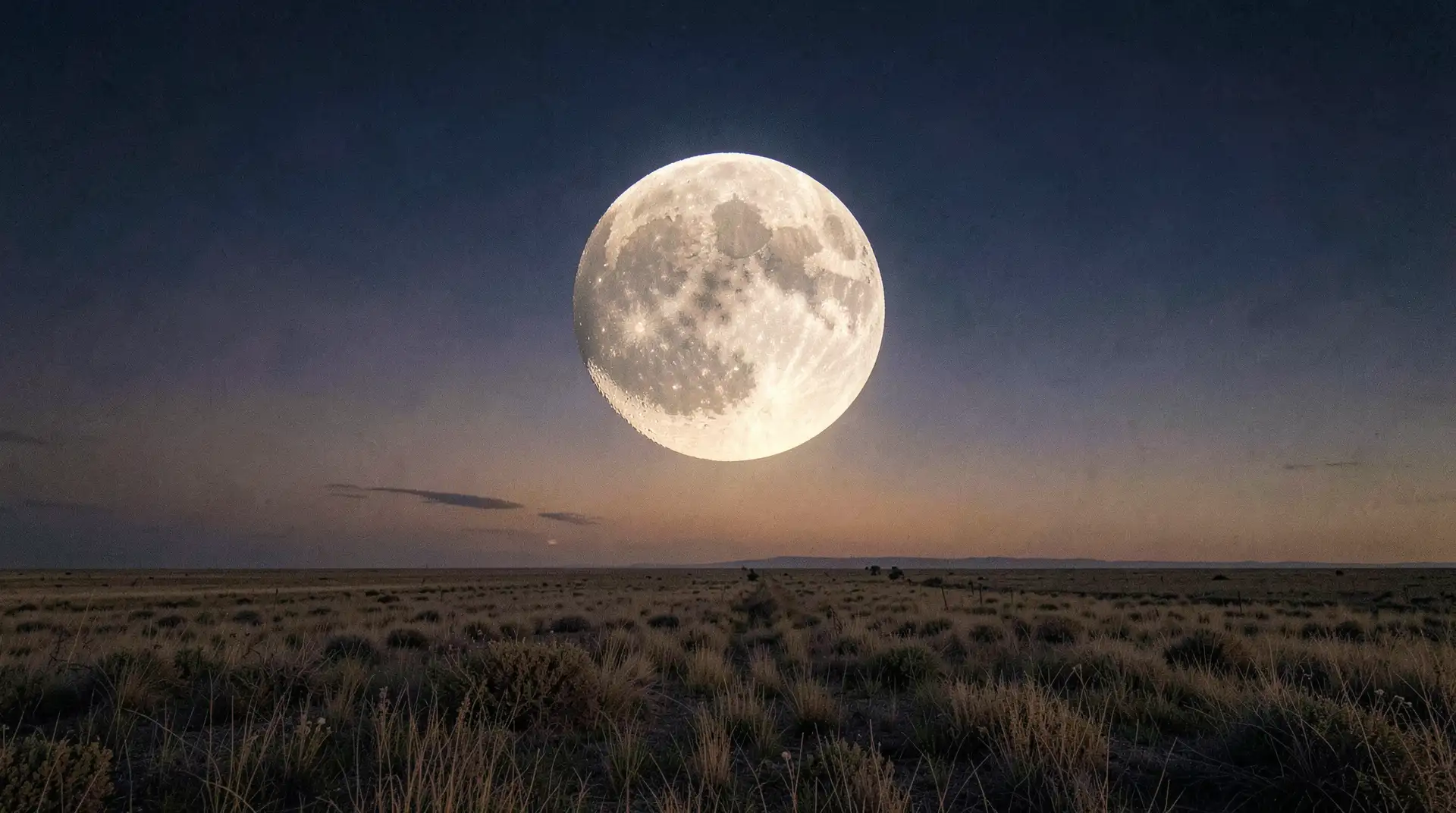
Tidal locking is not unique to the Moon, but the Moon is where humans first noticed it and spent the longest time wondering why. The answer, once understood, turns out to say something larger: gravity does not only hold things in orbit. Given enough time, it sculpts the way they move within that orbit, smoothing out any rotation that does not fit, until the system settles into the most stable arrangement available. The Moon's familiar face is not a feature of the Moon alone. It is the signature of Earth's gravity, written in slow motion across hundreds of millions of years.
The Moon Does Rotate, Just Not the Way You Might Expect
A common first guess is that the Moon simply does not spin. If it did not spin at all, we would eventually see every side of it as it travelled around Earth. But the Moon does spin on its own axis. It completes one full rotation in the same time it takes to complete one full orbit around Earth: roughly 27 days. Because these two periods match exactly, the same hemisphere always faces us. Every degree the Moon gains in its orbit, it turns one matching degree on its axis, keeping the same face locked in our direction. This is not a coincidence that happened to work out. It is the outcome of a physical process that took hundreds of millions of years to run to completion.Gravity Slowed the Moon Down
When the Moon formed, most likely from debris thrown out by a massive collision early in Earth's history, it almost certainly spun faster than it does now. Earth's gravity acted on the slight bulge in the Moon's shape, pulling on it the way you might drag on a spinning top with your finger. This gravitational drag, called tidal locking, gradually bled rotational energy away from the Moon over an enormous span of time. The spin slowed, and slowed, until it reached the one speed at which Earth's gravity could no longer change it: the speed that matched its orbital period exactly. There it stopped, and there it has remained. The technical name for this state is synchronous rotation. The Moon is not the only body in this condition. Pluto and its largest moon Charon are mutually tidally locked, each showing the same face to the other permanently. Many large moons of Jupiter and Saturn are locked to their planets the same way.You may also like
- A Virginia couple turned their gravel backyard into a garden for their toddlers after buying a century-old home; a year later, neighbour claimed part of the land was his and demanded that fence be removed
- Halloween turns deadly across US as gun violence leaves at least 24 dead, 94 injured
- South Korean lawmaker denied US visa for 1991 conviction. Three days later, he was issued A-2 visa after Marco Rubio's diplomatic intervention
- High-Stakes Referendum on Donald Trump as America Decides Control of Capitol Hill on Nov 3
- Netanyahu Eyes Unity Pact with Rival Eizenkot as Fears Grow Over Arab Parties
The Far Side Is Not the Dark Side
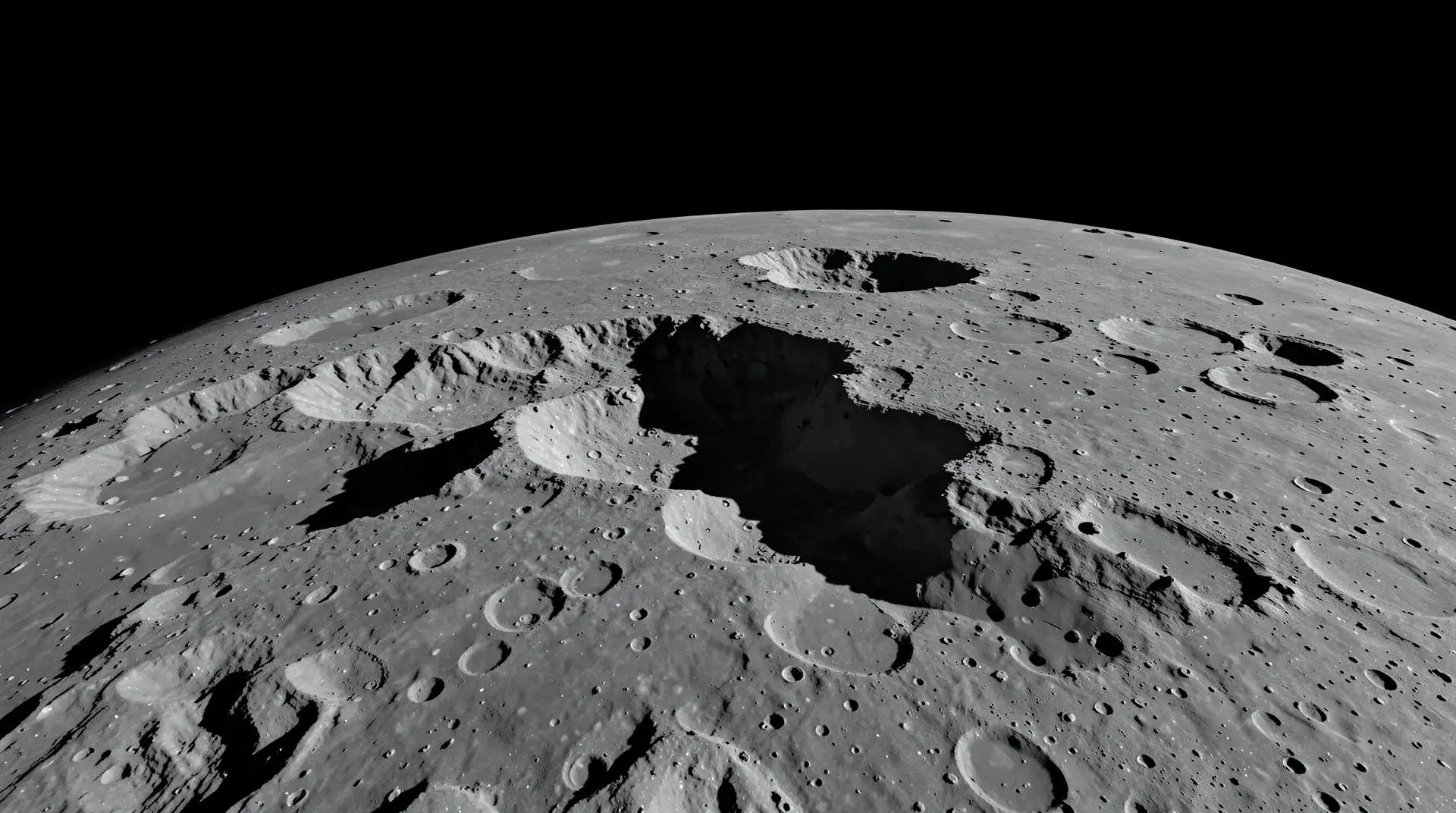
The hemisphere we never see from Earth is often called the dark side of the Moon, but the name misleads. It receives exactly as much sunlight as the near side does. What it never receives is a view of Earth. A person standing on the far side would see the Sun cross the sky on the same schedule as someone on the near side, but Earth would never appear above their horizon. The far side was completely unknown until a Soviet spacecraft photographed it in 1959. The images showed a surface quite different from the near side: fewer of the large dark plains called maria, more craters, a thicker crust. Why the two hemispheres differ so much is still an open question in planetary science, with competing explanations involving ancient heat distribution and the physics of early lunar formation.A Small Wobble Lets Us See a Little More
The lock is not perfectly rigid. The Moon's orbit is slightly elliptical rather than a perfect circle, and its axis tilts a little relative to its orbital plane. These two factors cause the Moon to appear to rock gently back and forth and nod slightly up and down over the course of each orbit, a motion called libration. Because of libration, patient observers on Earth can, over time, glimpse about 59 percent of the Moon's surface rather than exactly half. The remaining 41 percent stayed hidden from human eyes until the space age.Tidal locking is not unique to the Moon, but the Moon is where humans first noticed it and spent the longest time wondering why. The answer, once understood, turns out to say something larger: gravity does not only hold things in orbit. Given enough time, it sculpts the way they move within that orbit, smoothing out any rotation that does not fit, until the system settles into the most stable arrangement available. The Moon's familiar face is not a feature of the Moon alone. It is the signature of Earth's gravity, written in slow motion across hundreds of millions of years.






Loving Newspoint? Download the app now
