
US-China Tariff Showdown Intensifies: Who Will Blink First in This High-Stakes Economic Standoff?

A full-fledged trade war between the United States and China appears imminent, following U.S. President Donald Trump's announcement of potential tariffs exceeding 100% on Chinese imports starting April 9. The looming clash between the world’s top two economies comes at a turbulent time for global trade and is amplifying fears of a potential American recession.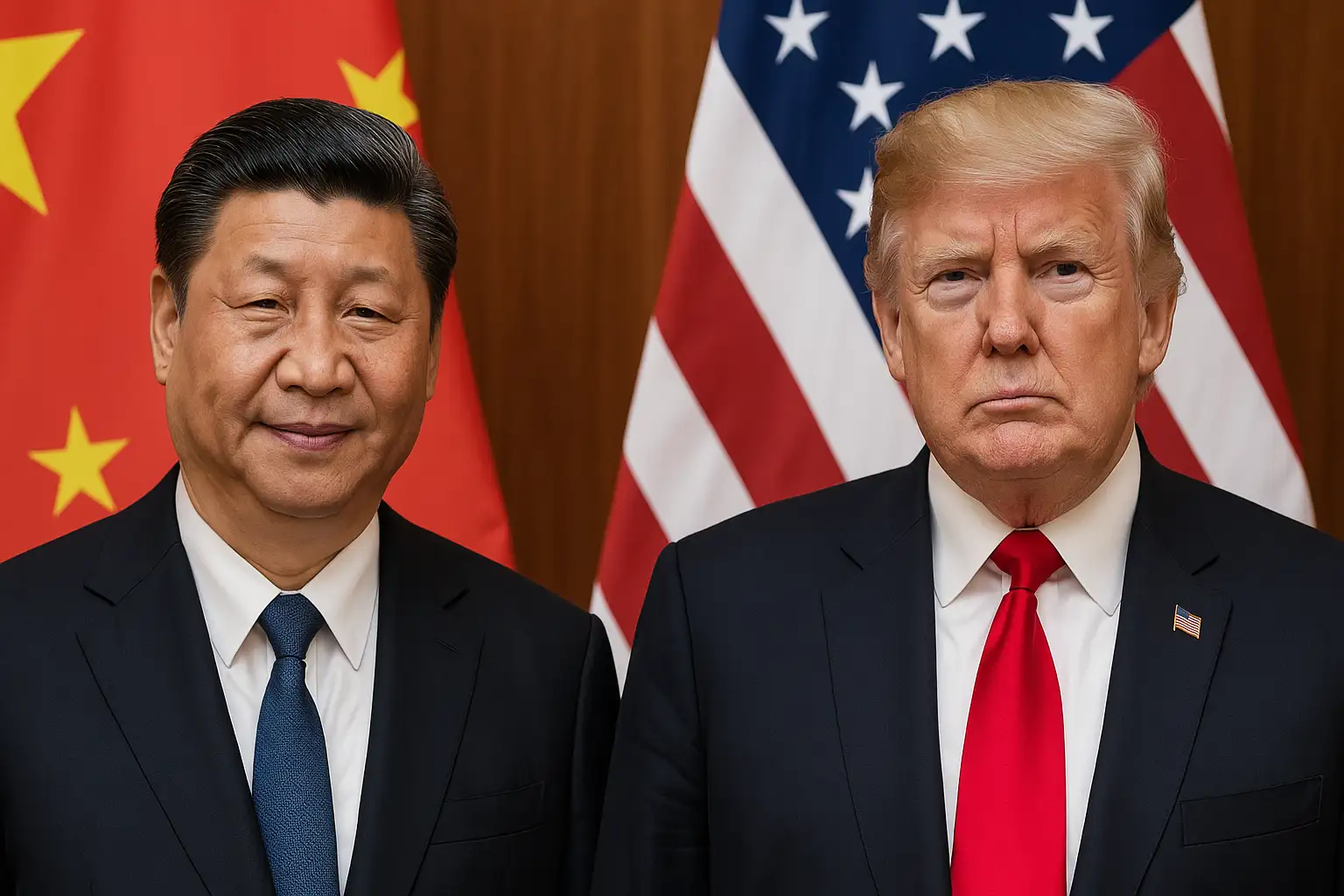
If enforced, these steep tariffs would effectively act as a trade blockade on Chinese exports and risk triggering a chaotic separation in direct trade between the U.S. and China. As the world's largest importer and exporter respectively, a deepening conflict between the two could reignite financial market instability after a brief period of calm.
In the longer term, this tariff battle could accelerate global economic fragmentation . While Trump's approach is seen by critics as reckless, it might inadvertently offer China a chance to extend its global influence, especially among nations increasingly skeptical of American leadership. Analysts believe this could be a step toward a shifting global order, possibly moving away from U.S. dominance.
The full implications of U.S. tariffs on other countries are still unfolding, but it's likely that some Chinese goods could be rerouted to the U.S. via third countries like Vietnam or Mexico. However, regardless of the route, inflationary pressure in the U.S. seems inevitable. What remains to be seen is whether China will suffer more than the U.S., especially since Trump has expressed willingness to negotiate with other nations even as he maintains pressure on Beijing.
The Current Trade Landscape
In 2024, the U.S. recorded $582.4 billion in total trade with China. American exports to China amounted to $143.5 billion, marking a 2.9% decline from the previous year. Meanwhile, imports rose by 2.8% to $438.9 billion, resulting in a $295 billion trade deficit—significant, but far from the $1 trillion Trump has repeatedly cited.
Neither side has shown signs of retreat. China has vowed to "fight to the end" and has increased its own trade barriers in retaliation to Washington's measures.
For now, it seems likely that the tariffs will go into effect. Washington is prioritizing diplomatic engagements with Japan, South Korea, and other regional players before considering formal talks with Beijing.
Steep Tariffs, Steeper Consequences
Trump's tariff hike has been incremental—starting at 10% in February, doubling to 20% in March, and now slated to rise by an additional 34% from April 9. He has even threatened a further 50% increase unless China scales back its retaliatory tariffs, potentially pushing the cumulative tariff rate to 104%.
Such drastic measures would likely make many Chinese imports prohibitively expensive. The U.S. depends on China for key goods, including pharmaceutical ingredients, rare earth elements critical for defense, and luxury electronics. Sustained tariffs would force the U.S. to seek alternative suppliers or go without some essential imports.
Historically, tariffs haven’t been Washington’s main grievance. The U.S. has consistently criticized China’s currency manipulation—undervaluing the yuan to boost exports—as well as non-tariff barriers that restrict foreign businesses in sectors like banking and advanced manufacturing.
Who Holds the Advantage?
The question of leverage looms large. While the U.S. wields greater import power, China's economy is deeply reliant on external markets. Yet in the short term, China might have more endurance.
President Xi Jinping doesn’t face immediate electoral pressure, faces little internal dissent, and has already initiated a robust fiscal stimulus plan. Moreover, China is focusing on expanding domestic consumption to absorb any export losses if the trade war drags on.
Conversely, the U.S. economy faces more constraints. Many American households rely on affordable Chinese goods—apparel, electronics, and everyday essentials. Price hikes from earlier tariffs are already being felt, especially by low-income consumers. If the pain intensifies, political pressure on the Trump administration could mount quickly.
Additionally, Trump’s room for maneuver on economic policy is narrow. Apart from extending corporate tax cuts, there’s limited fiscal space. A looming standoff with the Federal Reserve over rate cuts further limits Washington’s ability to endure a long-term trade standoff.
For China, this trade war is viewed as a power struggle. Domestically, Xi must maintain a tough stance and avoid looking submissive—especially after adopting strong nationalist rhetoric. Unless the U.S. offers a substantial concession, a Chinese climbdown looks unlikely.
The Sticky Nature of Tariffs
Historically, tariffs, once implemented, are hard to reverse. The levies Trump introduced during his earlier term remained in place under President Biden. A study by researchers from MIT, Harvard, and the World Bank found those tariffs had little effect on U.S. job growth. For example, steel sector jobs saw minimal change despite the 2018 tariffs. Conversely, retaliatory duties from China harmed U.S. farmers, only partially cushioned by government aid.
This time, China has responded with full force. Should the standoff persist, Beijing will likely seek new markets, raising the risk of product dumping in regions like the European Union and India, according to the Global Trade Research Initiative (GTRI).
If enforced, these steep tariffs would effectively act as a trade blockade on Chinese exports and risk triggering a chaotic separation in direct trade between the U.S. and China. As the world's largest importer and exporter respectively, a deepening conflict between the two could reignite financial market instability after a brief period of calm.
In the longer term, this tariff battle could accelerate global economic fragmentation . While Trump's approach is seen by critics as reckless, it might inadvertently offer China a chance to extend its global influence, especially among nations increasingly skeptical of American leadership. Analysts believe this could be a step toward a shifting global order, possibly moving away from U.S. dominance.
The full implications of U.S. tariffs on other countries are still unfolding, but it's likely that some Chinese goods could be rerouted to the U.S. via third countries like Vietnam or Mexico. However, regardless of the route, inflationary pressure in the U.S. seems inevitable. What remains to be seen is whether China will suffer more than the U.S., especially since Trump has expressed willingness to negotiate with other nations even as he maintains pressure on Beijing.
The Current Trade Landscape
In 2024, the U.S. recorded $582.4 billion in total trade with China. American exports to China amounted to $143.5 billion, marking a 2.9% decline from the previous year. Meanwhile, imports rose by 2.8% to $438.9 billion, resulting in a $295 billion trade deficit—significant, but far from the $1 trillion Trump has repeatedly cited.
Neither side has shown signs of retreat. China has vowed to "fight to the end" and has increased its own trade barriers in retaliation to Washington's measures.
For now, it seems likely that the tariffs will go into effect. Washington is prioritizing diplomatic engagements with Japan, South Korea, and other regional players before considering formal talks with Beijing.
Steep Tariffs, Steeper Consequences
Trump's tariff hike has been incremental—starting at 10% in February, doubling to 20% in March, and now slated to rise by an additional 34% from April 9. He has even threatened a further 50% increase unless China scales back its retaliatory tariffs, potentially pushing the cumulative tariff rate to 104%.
Such drastic measures would likely make many Chinese imports prohibitively expensive. The U.S. depends on China for key goods, including pharmaceutical ingredients, rare earth elements critical for defense, and luxury electronics. Sustained tariffs would force the U.S. to seek alternative suppliers or go without some essential imports.
You may also like
- Ohio flash-flood threat persists as tornado warning ends
- Australia ageing population crisis report sparks migration debate
- 'Broke into house, forced them into vehicles': Imran Khan's son alleges aunts, cousins 'abducted' in Pakistan
- Bangladesh Tribunal accepts crimes against humanity charges against 8 over July 2024 protests
- 'Exercise Tarang Shakti is back': IAF announces resumption of multinational air exercise
Historically, tariffs haven’t been Washington’s main grievance. The U.S. has consistently criticized China’s currency manipulation—undervaluing the yuan to boost exports—as well as non-tariff barriers that restrict foreign businesses in sectors like banking and advanced manufacturing.
Who Holds the Advantage?
The question of leverage looms large. While the U.S. wields greater import power, China's economy is deeply reliant on external markets. Yet in the short term, China might have more endurance.
President Xi Jinping doesn’t face immediate electoral pressure, faces little internal dissent, and has already initiated a robust fiscal stimulus plan. Moreover, China is focusing on expanding domestic consumption to absorb any export losses if the trade war drags on.
Conversely, the U.S. economy faces more constraints. Many American households rely on affordable Chinese goods—apparel, electronics, and everyday essentials. Price hikes from earlier tariffs are already being felt, especially by low-income consumers. If the pain intensifies, political pressure on the Trump administration could mount quickly.
Additionally, Trump’s room for maneuver on economic policy is narrow. Apart from extending corporate tax cuts, there’s limited fiscal space. A looming standoff with the Federal Reserve over rate cuts further limits Washington’s ability to endure a long-term trade standoff.
For China, this trade war is viewed as a power struggle. Domestically, Xi must maintain a tough stance and avoid looking submissive—especially after adopting strong nationalist rhetoric. Unless the U.S. offers a substantial concession, a Chinese climbdown looks unlikely.
The Sticky Nature of Tariffs
Historically, tariffs, once implemented, are hard to reverse. The levies Trump introduced during his earlier term remained in place under President Biden. A study by researchers from MIT, Harvard, and the World Bank found those tariffs had little effect on U.S. job growth. For example, steel sector jobs saw minimal change despite the 2018 tariffs. Conversely, retaliatory duties from China harmed U.S. farmers, only partially cushioned by government aid.
This time, China has responded with full force. Should the standoff persist, Beijing will likely seek new markets, raising the risk of product dumping in regions like the European Union and India, according to the Global Trade Research Initiative (GTRI).






Loving Newspoint? Download the app now
