
US grand strategy falls short of delivering victory in Iran


In spite of glaring differences in capabilities of the US-Israeli combine vis-à-vis the Iranians, Operation Epic Fury has not led to a victory for the Americans. Somewhere in their planning process, the strategic, political and economic aspects were not enmeshed adequately to arrive at the grand strategy required to achieve victory. A bleak situation has evolved, with Houthis re-entering the fray, and putting under the scanner Saudi Arabia’s military capabilities.
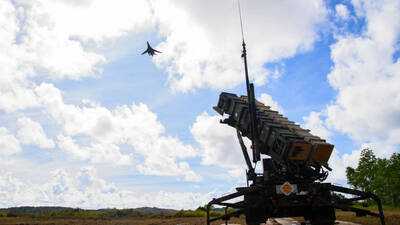
An analysis of the US miscalculations leads to the conclusion, that much as the Americans have achieved militarily, they have not been able to impose their will on Iran. As the shortfalls are studied, it’s also essential to identify major dilemmas that await the Americans at the next turn.
American miscalculations impeding evolving of grand strategyUnderestimating the Opponents Capabilities. The renowned military thinker Sun Tzu has stated, “If you know yourself but not the enemy, for every victory gained you will suffer a defeat.” Incorrect appreciation of the enemy capabilities can be the gravest of flaws in battle. The American assessment of Iranians resilience, especially the ability to absorb loss of top rung leaders, destruction of critical military and industrial capabilities, was flawed. They expected the Iranians to foldup once the decapitation campaign was successful. The resounding success in Venezuela, leading to capture of Maduro in January, 2026, possibly fanned euphoric deductions that proved untenable in Iran.
The deduction that simultaneous with a successful decapitation campaign, the Iranians would rise up against an oppressive regime, proved wrong. Iran has a history that goes back thousands of years. It provides the nation a strong foundation and identity. These factors surface sharply to complement national cohesion when a nation is in danger. The US miscalculations are not new, though. When the US led coalition entered Baghdad, Iraq in April 2003, they expected a rousing reception that wasn’t quite there.
Damage to Global Trade by Denial of Straits. The criticality of Strait of Hormuz was well known before the first American salvoes of missiles, aircraft, drones were released, however, did the Americans evaluate the force required to fully dominate the Hormuz with multi-layered Air Defence cover, physical occupation of its banks, disallowing Iranian minelaying endeavour, and also sustaining such deployment? Further, It doesn’t require sinking a super tanker to initiate a spike in freight costs. The insurance companies need barely an assessment of heightened risks to hike their rates.
The possibility of Bab el Mandeb further choking global trade wasn’t perhaps fully factored into the costs of war. That the Houthis will resurface as a force in being, wasn’t possibly fully considered either.
US Defence Pacts with Other Nations: The Myths. The US has its bases all over the West Asian region to create a defensive envelope that host countries had mostly taken as an impregnable shield. However, the Iranians have been able to penetrate the shield, fairly successfully. The US bases in the region include those at Kuwait, Bahrain, Qatar, UAE, Oman, Saudi Arabia, Jordan. These bases have faced Iranian attacks. The faith nations had in the US to be possessing the will and capability to protect allies and partners has been substantially eroded.
Disproportionate Costs of Sustaining War. The American economy has produced the world’s greatest military machine. They have run possibly the best intelligence-based operations that we have witnessed.
The flip side of the coin is its cost that’s straining the world’s largest economy. When a USD 35,000-dollar UAV of the Iranians triggers the launch of a top end 2.1-million-dollar interceptor of the US Navy, the cost of the war pinches Admiral Brad Cooper, Commander of U.S. Central Command is on record stating that the Persian Gulf countries are split over their support to a war against Iran. These countries, having allowed the use of the bases to the Americans for striking Iran, invited waves of attacks from the Iranians. Under such circumstances it’s not strange for alliances being stressed, differences arising and well entrenched relationships feeling the tug.
Geo Economics: The Tariff Battleground. With a tariff war running the course simultaneously, nations have begun to wonder, which way are geopolitical alliances headed. President Trump has literally opened an economic warfare battlefront against most of the world. The price of a gallon of petrol was already shooting up when his tariff follies hit across geographies for citizens to feel the pinch in procuring their daily bread and butter. Unfazed, the President has turned his guns on old friends like Canada, EU, Quad partner India and many more. In fact, the Canadian story promises to occupy considerable media space, soon. A ding-dong tariff battle is also being witnessed with Trump blowing the whistle for more tariffs today, and taking an U-turn, tomorrow.
Road ahead: Issues meriting close calculationsAmerican Boots on Ground. As of now, there is no tenable reason to believe that the war will stop very soon. However, the US cannot afford to put boots on ground. The IRGC has displayed adequate tenacity already to deter Trump, hopefully. The US has ordered a heavy escalation for a major assault, post elections.
Saudi Arabia has High Stakes. They are the biggest oil exporters and also one of the top importers of weapons, globally. They should be able to take the fight to the Houthis. Reliance on air power alone will not do, and the Mecca agreement will take time to be productive!
The World Order. It may witness changes, notwithstanding the results of November, 2026 elections in the US, or the post Trump era. Some old geopolitical alignments are already on crutches, while new ones are developing shoots. Bipolarity is mostly anticipated. The Chinese Prime Minister Xi Jinping said during his recent visit to the US, “ Achieving the great rejuvenation of the Chinese nation, and making America Great Again, can go hand in hand.”
Russian Decline. Though being often referred to as a declining power, Russia has displayed its ability to stall NATO spreading further East, The expansion of NATO at this stage, needs to be reviewed in-house, keeping in view its triggering an escalation in Ukraine.
Most of the world is looking for peace in Iran, Gaza and Lebanon to start with, and deescalation in other conflict-ridden areas. The Iran War is also a loud warning to great powers not to underestimate the middle powers, or even well-armed militias with State backing. They may not be able to tilt the scales decisively, but the can certainly increase the costs disproportionately.
Next Story