
Workers began carving “1776” into Mount Rushmore in 1930; a design change halted the planned history inscription, and the date was later removed


Mount Rushmore is famous for its four presidential faces, but the original design included another major feature: a large inscription about American history . Workers began carving the date “1776” into the mountain in 1930 as the first part of this plan. But the modification of the sculpture and worries about its legibility led to reconsideration of the plan by Gutzon Borglum . It was never placed on the mountain; rather, at a later date, the sculptor was intended to place the inscription in a room behind the sculptures. It was thought of by Gutzon Borglum, the sculptor responsible for directing the Mount Rushmore monument project in South Dakota. He intended that the monument should depict the history of the country and the reasons for choosing the four presidents. This inscription was named the Entablature .
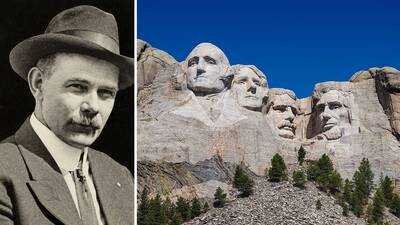
The original plan included a giant historical inscription
Borglum intended to carve the Entablature into an area beside the presidential figures. The space was situated in the Louisiana Purchase territory and the letters were supposed to stand about 3 feet tall. According to the National Park Service’s account of the Entablature, the inscription was meant to commemorate the first 150 years of the United States. It described the nine important events between 1776 and 1906. Borglum thought that president Calvin Coolidge would aid him in writing the inscription, but they differed on how to phrase it and Coolidge passed away in 1933, before they could reach a compromise. Another contest of essays led to yet another version of the text; nevertheless, Borglum did not approve of it. Work had already started. In 1930, “1776” was inscribed on the eastern side of Mount Rushmore. The purpose of this inscription was to represent the start of history. This inscription was the only one from the Entablature to be carved on the face of the mountain.
Moving Jefferson changed the design
The positioning of the president became altered while the monument was being constructed. In 1934, Borglum realised the need to shift the face of Thomas Jefferson from the right-hand side of George Washington to his left-hand side. This alteration affected the Entablature’s designated space. The designated space meant for the inscription had to be used for the sculpture of Abraham Lincoln. Borglum also felt that the huge inscription would not be readable by people viewing the monument from below. Due to these issues, the original plan could not work and hence Borglum thought it necessary to shift the historical record concept to a planned hall behind the presidents’ sculptures called the Hall of Records . The inscription “1776” was removed later.
The Hall of Records also remains unfinished
This hall was supposed to have some documents related to US history in order to show the story of the country. Work started in 1938. Tunnels were approximately 21 m into the granite wall behind the sculpture figures. But the work stopped in 1939, after Congress ordered that money should be spent to finish the heads of presidents. Gutzon Borglum died on March 6, 1941, without completing this structure. According to the National Park Service , the completion of this memorial was done under the guidance of Lincoln Borglum on October 31, 1941.
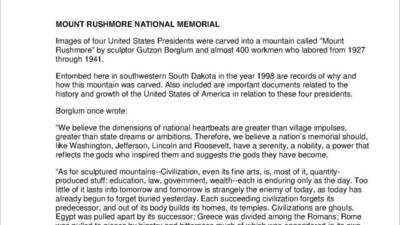 Eventually, the miniature version of the archival idea was implemented. On August 9, 1998, a vault housing 16 porcelain and enamel panels was put in the entrance of the Hall of Records. These panels describe the creation of the memorial, its sculptor and the reason for the four figures of presidents. The Entablature was never completed and the Hall of Records remained unfinished. Four faces of presidents became the hallmark of Mount Rushmore, but the plan of Gutzon Borglum was not implemented in full. The National Park Service’s history of the Hall of Records and its historical study of the project document how the original inscription plan evolved.
The original plan included a giant historical inscription
Borglum intended to carve the Entablature into an area beside the presidential figures. The space was situated in the Louisiana Purchase territory and the letters were supposed to stand about 3 feet tall. According to the National Park Service’s account of the Entablature, the inscription was meant to commemorate the first 150 years of the United States. It described the nine important events between 1776 and 1906. Borglum thought that president Calvin Coolidge would aid him in writing the inscription, but they differed on how to phrase it and Coolidge passed away in 1933, before they could reach a compromise. Another contest of essays led to yet another version of the text; nevertheless, Borglum did not approve of it. Work had already started. In 1930, “1776” was inscribed on the eastern side of Mount Rushmore. The purpose of this inscription was to represent the start of history. This inscription was the only one from the Entablature to be carved on the face of the mountain.
Moving Jefferson changed the design
The positioning of the president became altered while the monument was being constructed. In 1934, Borglum realised the need to shift the face of Thomas Jefferson from the right-hand side of George Washington to his left-hand side. This alteration affected the Entablature’s designated space. The designated space meant for the inscription had to be used for the sculpture of Abraham Lincoln. Borglum also felt that the huge inscription would not be readable by people viewing the monument from below. Due to these issues, the original plan could not work and hence Borglum thought it necessary to shift the historical record concept to a planned hall behind the presidents’ sculptures called the Hall of Records . The inscription “1776” was removed later.
The Hall of Records also remains unfinished
This hall was supposed to have some documents related to US history in order to show the story of the country. Work started in 1938. Tunnels were approximately 21 m into the granite wall behind the sculpture figures. But the work stopped in 1939, after Congress ordered that money should be spent to finish the heads of presidents. Gutzon Borglum died on March 6, 1941, without completing this structure. According to the National Park Service , the completion of this memorial was done under the guidance of Lincoln Borglum on October 31, 1941.
Next Story