
From Old Subway Station To Quran: NYC’s First Muslim Mayor Zohran Mamdani Breaks Swearing-In Traditions

As the clock struck midnight on 1 January 2026, New York City’s newest leader was not standing on a stage in the middle of a ticker-tape parade. Instead, Zohran Mamdani took his oath of office in the eerie, vaulted beauty of the decommissioned Old City Hall subway station. This subterranean relic, which first opened in 1904 as a flagship for the city’s underground transit system, served as a powerful backdrop for a mayor who built his platform on the rights of working-class New Yorkers.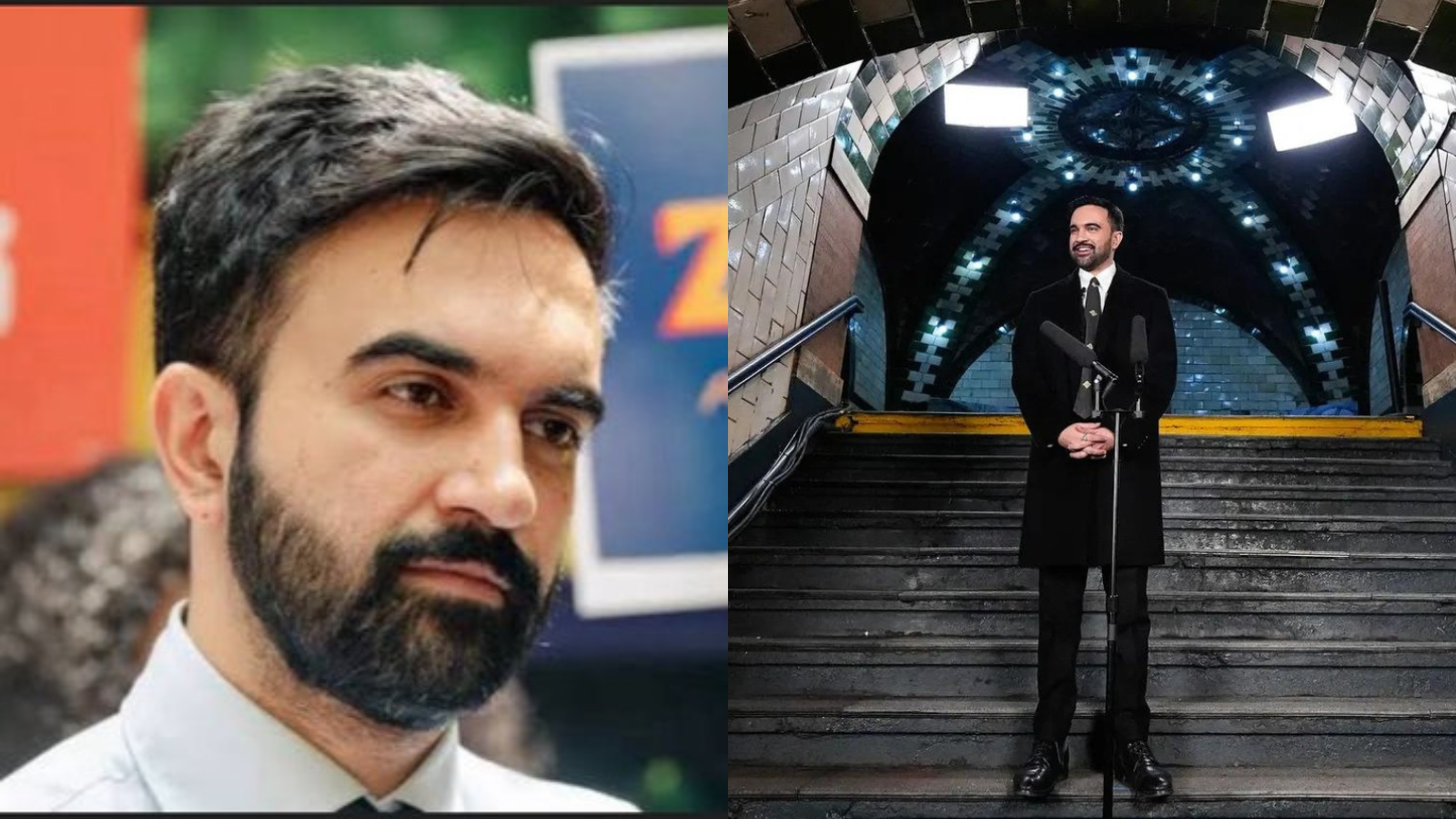
Explaining his choice of venue, Mamdani stated in a press release:
"When Old City Hall Station first opened in 1904 — one of New York’s 28 original subway stations — it was a physical monument to a city that dared to be both beautiful and build great things that would transform working peoples’ lives. That ambition need not be a memory confined only to our past, nor must it be isolated only to the tunnels beneath City Hall: It will be the purpose of the administration fortunate enough to serve New Yorkers from the building above."
Mamdani’s ascension is a collection of firsts. Beyond his age, he is the first Muslim and first South Asian individual to hold the keys to Gracie Mansion. Adding to the gravity of the moment, he became the first mayor to be sworn in using the Quran.
The mayor-elect used three distinct versions of the holy text across his ceremonies. For the midnight oath, he placed his hand on his grandfather’s Quran alongside one previously owned by the legendary Black historian Arturo Schomburg, on loan from the New York Public Library. For his public ceremony, he used heirlooms belonging to both his grandfather and grandmother.
The Role of Letitia James
The private midnight ceremony was administered by New York State Attorney General Letitia James. A pivotal figure in Mamdani’s rise, James supported him during a bruising Democratic primary where other party elites kept their distance.
James, who described the opportunity as "an honour," noted that Mamdani:
"Ran a campaign that brought together New Yorkers around the universal idea that we should all be able to afford to live in our city."
Mamdani’s victory is widely considered one of the greatest upsets in modern New York political history. Starting the race with just 8% support in early 2025, he trailed far behind political heavyweights like former Governor Andrew Cuomo. However, his grassroots focus on labour rights, free bus pilots, and housing affordability resonated with a city struggling with high costs of living.
By June, he had overtaken Cuomo in the final round of ranked-choice voting, eventually securing the Democratic nomination with 56.4% of the vote. He cemented his lead in the general election, defeating both Cuomo (who ran as an independent) and Republican Curtis Sliwa.
The Public Celebration: Bernie Sanders and AOC
While the official business began at midnight, the public face of the inauguration took place on the steps of City Hall at 1 pm. In a move that underscored Mamdani’s progressive roots, the public oath was administered by Senator Bernie Sanders.
Sanders framed the event as a victory for the working class:
"His victory is not just about one city or one election, it is about the strength of a working-class movement that says unequivocally: the future of New York belongs to the people, not the billionaire class. It is my honor to swear him in as the next mayor of New York City."
Representative Alexandria Ocasio-Cortez, a close ally, delivered the opening remarks, while thousands of New Yorkers gathered for a massive block party along Broadway’s "Canyon of Heroes." Unlike the exclusive, ticketed events of the past, this celebration spanned several blocks and featured interfaith musical performances, allowing residents to witness the transition of power firsthand.
A New Chapter for New York
The day was not without its logistical hurdles. With the "Canyon of Heroes" packed with tens of thousands of spectators, security was tight and subway service was rerouted across Lower Manhattan.
As Zohran Mamdani moves into his new role, he faces a city eager for the "new era of opportunity" he promised. Whether it is through rent freezes or expanded public transit, New Yorkers are now watching to see if the ambition that built the subways a century ago can be revived for the 21st century.
Explaining his choice of venue, Mamdani stated in a press release:
"When Old City Hall Station first opened in 1904 — one of New York’s 28 original subway stations — it was a physical monument to a city that dared to be both beautiful and build great things that would transform working peoples’ lives. That ambition need not be a memory confined only to our past, nor must it be isolated only to the tunnels beneath City Hall: It will be the purpose of the administration fortunate enough to serve New Yorkers from the building above."
A Ceremony of Historic Firsts
Mamdani’s ascension is a collection of firsts. Beyond his age, he is the first Muslim and first South Asian individual to hold the keys to Gracie Mansion. Adding to the gravity of the moment, he became the first mayor to be sworn in using the Quran.
The mayor-elect used three distinct versions of the holy text across his ceremonies. For the midnight oath, he placed his hand on his grandfather’s Quran alongside one previously owned by the legendary Black historian Arturo Schomburg, on loan from the New York Public Library. For his public ceremony, he used heirlooms belonging to both his grandfather and grandmother.
The Role of Letitia James
The private midnight ceremony was administered by New York State Attorney General Letitia James. A pivotal figure in Mamdani’s rise, James supported him during a bruising Democratic primary where other party elites kept their distance. James, who described the opportunity as "an honour," noted that Mamdani:
"Ran a campaign that brought together New Yorkers around the universal idea that we should all be able to afford to live in our city."
From Long Shot to City Hall
Mamdani’s victory is widely considered one of the greatest upsets in modern New York political history. Starting the race with just 8% support in early 2025, he trailed far behind political heavyweights like former Governor Andrew Cuomo. However, his grassroots focus on labour rights, free bus pilots, and housing affordability resonated with a city struggling with high costs of living.
By June, he had overtaken Cuomo in the final round of ranked-choice voting, eventually securing the Democratic nomination with 56.4% of the vote. He cemented his lead in the general election, defeating both Cuomo (who ran as an independent) and Republican Curtis Sliwa.
The Public Celebration: Bernie Sanders and AOC
While the official business began at midnight, the public face of the inauguration took place on the steps of City Hall at 1 pm. In a move that underscored Mamdani’s progressive roots, the public oath was administered by Senator Bernie Sanders. Sanders framed the event as a victory for the working class:
"His victory is not just about one city or one election, it is about the strength of a working-class movement that says unequivocally: the future of New York belongs to the people, not the billionaire class. It is my honor to swear him in as the next mayor of New York City."
Representative Alexandria Ocasio-Cortez, a close ally, delivered the opening remarks, while thousands of New Yorkers gathered for a massive block party along Broadway’s "Canyon of Heroes." Unlike the exclusive, ticketed events of the past, this celebration spanned several blocks and featured interfaith musical performances, allowing residents to witness the transition of power firsthand.
A New Chapter for New York
The day was not without its logistical hurdles. With the "Canyon of Heroes" packed with tens of thousands of spectators, security was tight and subway service was rerouted across Lower Manhattan.
As Zohran Mamdani moves into his new role, he faces a city eager for the "new era of opportunity" he promised. Whether it is through rent freezes or expanded public transit, New Yorkers are now watching to see if the ambition that built the subways a century ago can be revived for the 21st century.
Next Story