
Why Wednesday Is Linked to Green in Indian Tradition

Seven days, seven colours, this is how Vedic tradition has long understood the week. Each day belongs to a planet, each planet carries a temperament, and from that temperament flows a colour. Wednesday's colour is green, and the planet behind it is Budh, known in Western astronomy as Mercury.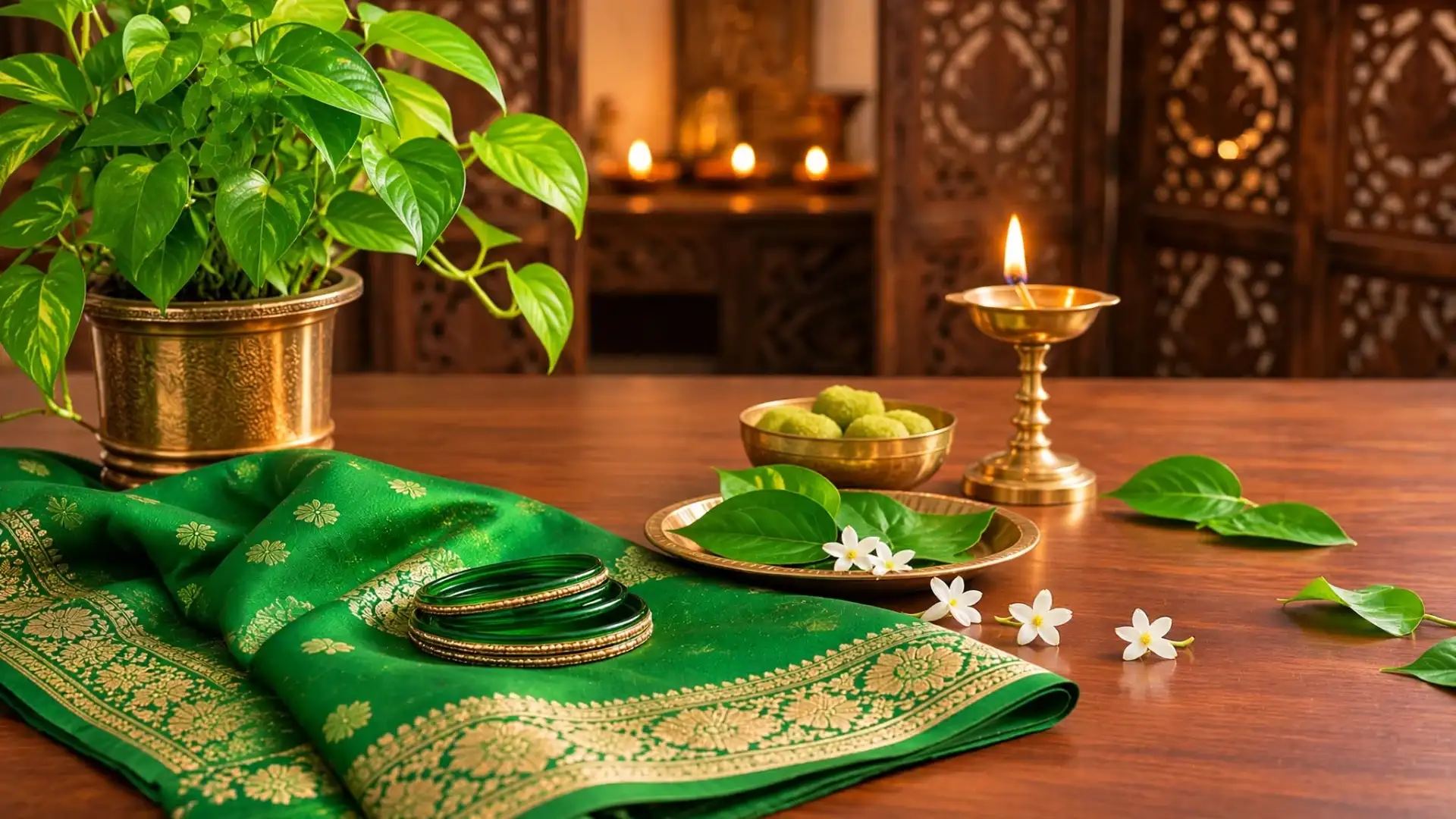
Budh is associated with intellect, communication, trade, skill, and learning. In Vedic thought, he is described as youthful, quick, and adaptable, a planet of the mind rather than the heart. Green, in this tradition, reflects those same qualities: the colour of new growth, of a mind that is fresh and active, of the merchant's eye that spots opportunity before others do.
There is also a correspondence with the emerald, the gemstone traditionally linked to Budh. Emeralds are green, and their association with Budh predates the colour chart by centuries; the colour followed the stone as much as the other way around.
In the classical planetary colour system used in Jyotish, each graha has a primary colour: the Sun is associated with copper-red, the Moon with white, Mars with red, Jupiter with yellow, Venus with white or cream, Saturn with black or dark blue, and Budh with green.
These associations appear in texts like the Brihat Parashara Hora Shastra, one of the foundational works of Vedic astrology.
Offerings made on Wednesday in some regional traditions include green items: green gram, green leaves, green vegetables. Temples dedicated to Navagraha shrines, which house the nine planetary deities, often see Wednesday visitors bringing green flowers or green cloth.
The practice is not universal and varies considerably by region and family tradition. In some households it is observed closely; in others it is simply known as a piece of cultural knowledge without active practice.
According to astrology, aligning one's dress or offering with the day's ruling planet brings a sense of harmony with the energies that tradition associates with that day.
Navagraha worship, practised across many Hindu temples in India particularly in South India, assigns Wednesday as the day to honour Budh with prayers and green offerings.
The Navagraha system is not a superstition in isolation; it is a complete cosmological framework that Vedic tradition built over centuries to map human temperament and experience onto the movements of the sky.
Whether or not one follows it as a practice, the internal logic is consistent: the planet's nature determines its day, its colour, its stone, and its grain.
Green on Wednesday, then, is not an arbitrary assignment. It is the visible end of a long chain: a planet's character, a tradition's colour vocabulary, a gemstone's hue, and centuries of practice that carried all of it into the everyday habit of choosing what to wear on a particular morning.
Disclaimer: This article is for general informational and cultural awareness purposes only. Astrological beliefs, planetary associations, and traditional practices vary across regions and communities, and readers are advised to consult a qualified astrologer or spiritual guide for personalized guidance.
Budh: The Planet Behind Wednesday
In Vedic astrology, Budh governs Wednesday. The very name Budhvar, the Hindi and Sanskrit word for Wednesday, comes directly from Budh. This is not coincidence; the day was named for the planet it belongs to, just as Ravivar (Sunday) belongs to Ravi, the Sun, and Shanivar (Saturday) to Shani, Saturn.Budh is associated with intellect, communication, trade, skill, and learning. In Vedic thought, he is described as youthful, quick, and adaptable, a planet of the mind rather than the heart. Green, in this tradition, reflects those same qualities: the colour of new growth, of a mind that is fresh and active, of the merchant's eye that spots opportunity before others do.
Why Green Specifically
The link between Budh and green is rooted in how Vedic astrology assigns qualities to planets. Budh rules the earth element in some classical texts, and green is the colour most immediately associated with the living earth, grass, leaves, unripe grain.There is also a correspondence with the emerald, the gemstone traditionally linked to Budh. Emeralds are green, and their association with Budh predates the colour chart by centuries; the colour followed the stone as much as the other way around.
In the classical planetary colour system used in Jyotish, each graha has a primary colour: the Sun is associated with copper-red, the Moon with white, Mars with red, Jupiter with yellow, Venus with white or cream, Saturn with black or dark blue, and Budh with green.
These associations appear in texts like the Brihat Parashara Hora Shastra, one of the foundational works of Vedic astrology.
How It Shows Up in Daily Life
In popular practice, many people wear green on Wednesdays, a kurta, a dupatta, a bangle, or even a green thread on the wrist, as a mark of reverence for Budh.Offerings made on Wednesday in some regional traditions include green items: green gram, green leaves, green vegetables. Temples dedicated to Navagraha shrines, which house the nine planetary deities, often see Wednesday visitors bringing green flowers or green cloth.
The practice is not universal and varies considerably by region and family tradition. In some households it is observed closely; in others it is simply known as a piece of cultural knowledge without active practice.
According to astrology, aligning one's dress or offering with the day's ruling planet brings a sense of harmony with the energies that tradition associates with that day.
Budh in the Navagraha System
The Navagraha, the nine celestial bodies of Vedic astrology, each have a dedicated day, a direction, a gemstone, a metal, a grain, and a colour. Budh's place in this system is precise: he rules the north direction, the emerald, green gram, and the colour green.Navagraha worship, practised across many Hindu temples in India particularly in South India, assigns Wednesday as the day to honour Budh with prayers and green offerings.
The Navagraha system is not a superstition in isolation; it is a complete cosmological framework that Vedic tradition built over centuries to map human temperament and experience onto the movements of the sky.
Whether or not one follows it as a practice, the internal logic is consistent: the planet's nature determines its day, its colour, its stone, and its grain.
Green on Wednesday, then, is not an arbitrary assignment. It is the visible end of a long chain: a planet's character, a tradition's colour vocabulary, a gemstone's hue, and centuries of practice that carried all of it into the everyday habit of choosing what to wear on a particular morning.
Disclaimer: This article is for general informational and cultural awareness purposes only. Astrological beliefs, planetary associations, and traditional practices vary across regions and communities, and readers are advised to consult a qualified astrologer or spiritual guide for personalized guidance.