
Why Tuesday Is Linked to the Colour Red in Indian Tradition

Walk into any Hanuman or Mangal temple on a Tuesday morning and the scene is unmistakably red. Sindoor heaped on the idol, red hibiscus in the offering plate, a red thread tied at the wrist on the way out. The colour is not decorative. In Vedic astrology, it belongs to the day as firmly as the day belongs to the week.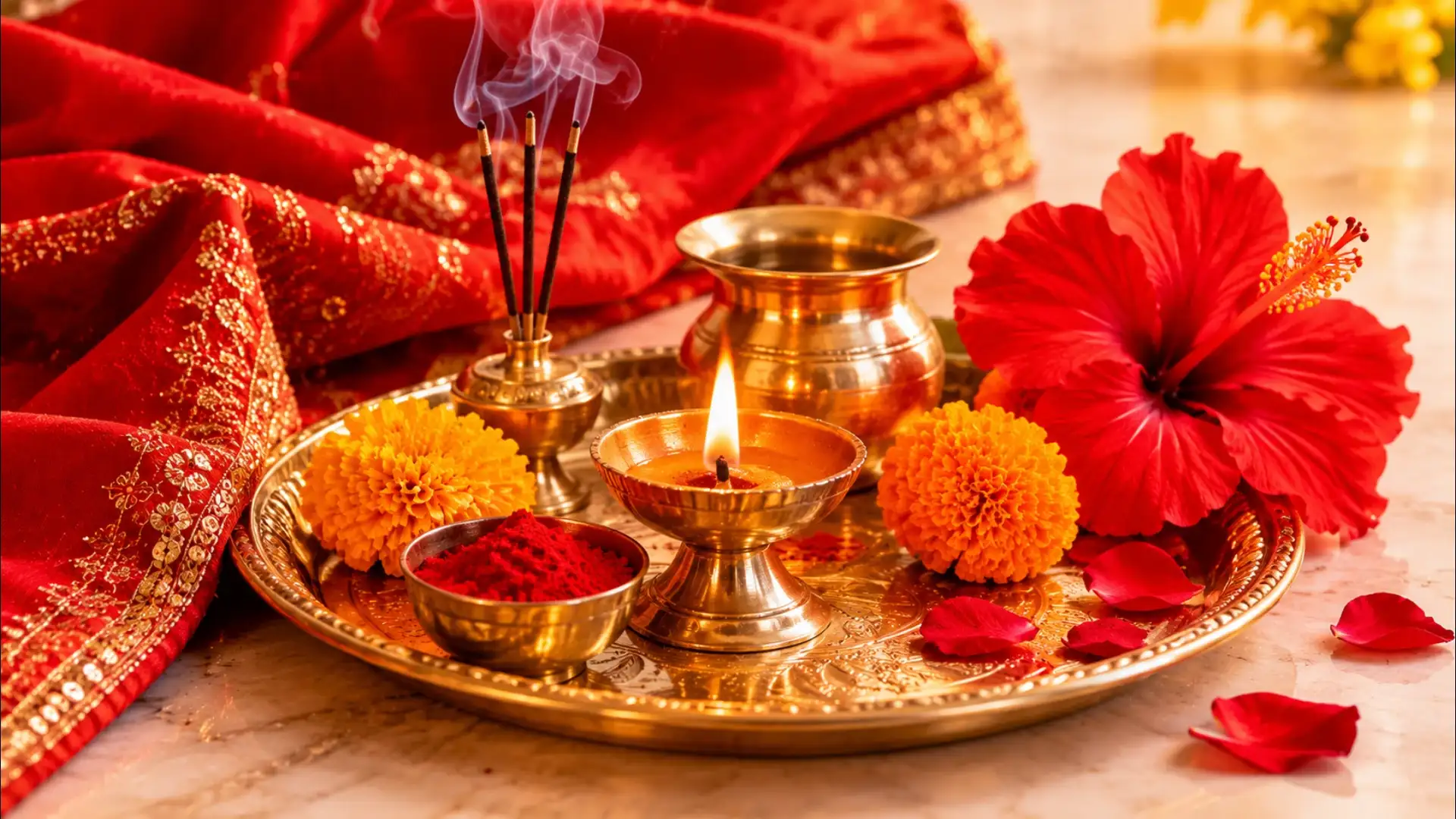
Mangal is the name given in Indian tradition to the planet Mars, and the word itself comes from a Sanskrit root meaning auspicious or fortunate, though the planet is also described as fierce, active, and commanding.
In Jyotish, Mangal is associated with courage, physical strength, ambition, and the force that drives action. He rules the signs Aries and Scorpio, and the tradition holds that his influence is most concentrated on his own day. Worshipping on Tuesday is understood as aligning with that energy at its peak.
Mangal's colour is red, lal in Hindi, rakta in Sanskrit, and the reasoning given within the tradition is consistent: Mars is a fiery planet, associated with blood, heat, vitality, and the force of will. Red is the colour of all of these things.
This is not a metaphor layered on later. The association appears in classical Jyotish texts, where Mangal is described as having a red complexion, wearing red garments, and holding a red coral as his gem.
The gem itself, moonga, red coral, is traditionally worn on Tuesdays by those seeking to strengthen Mars in their birth chart, according to the tradition.
The logic is one of correspondence: the planet has a nature, the colour carries that nature, and wearing or offering the colour on the planet's day is understood as a form of resonance with what the day represents.
In some traditions, Hanuman is described as being born under a Mangal influence, and the qualities the tradition assigns to him, immense strength, fearlessness, devotion, and the capacity to overcome obstacles, map closely onto what Mangal is said to govern.
Sindoor, the bright vermilion paste that is one of the most recognisable offerings at Hanuman temples, is red. Devotees apply it to the idol, and many carry a mark of it on their forehead or wrist when they leave.
The colour here carries both the planetary association and the devotional one, which is why Tuesday red is so saturated in practice, it arrives from two directions at once.
Thursday belongs to Brihaspati, Jupiter, whose colour is yellow. Friday belongs to Shukra, Venus, whose colour is white or light pink. Saturday belongs to Shani, Saturn, whose colour is black or dark blue.
Each colour reflects what the tradition says about the planet's temperament. Saturn's black speaks to his austere, slow, and weighty nature. Jupiter's yellow is expansive and warm.
Mars's red is active and intense. The system is internally consistent, which is part of why it has stayed legible across centuries of practice.
The Tuesday habit of wearing red, offering red flowers, or tying a red thread is, in this frame, a way of participating in the day's quality, not a superstition floating free of meaning, but a practice with a clear logic inside the tradition that produced it.
Disclaimer: This article is for general informational and cultural awareness purposes only. Astrological beliefs, planetary associations, and religious practices vary across traditions, and readers are advised to consult a qualified astrologer or spiritual guide for personalized guidance.
Mangal and the Day That Bears His Name
In the Vedic system, each day of the week is governed by a graha, a planetary body that is understood to carry a particular quality of energy. Tuesday is Mangalvar, the day of Mangal.Mangal is the name given in Indian tradition to the planet Mars, and the word itself comes from a Sanskrit root meaning auspicious or fortunate, though the planet is also described as fierce, active, and commanding.
In Jyotish, Mangal is associated with courage, physical strength, ambition, and the force that drives action. He rules the signs Aries and Scorpio, and the tradition holds that his influence is most concentrated on his own day. Worshipping on Tuesday is understood as aligning with that energy at its peak.
Why Red Belongs to Mars
The assignment of colours to grahas is one of the older organisational ideas in Vedic astrology. Each planet carries a colour that the tradition associates with its nature.Mangal's colour is red, lal in Hindi, rakta in Sanskrit, and the reasoning given within the tradition is consistent: Mars is a fiery planet, associated with blood, heat, vitality, and the force of will. Red is the colour of all of these things.
This is not a metaphor layered on later. The association appears in classical Jyotish texts, where Mangal is described as having a red complexion, wearing red garments, and holding a red coral as his gem.
The gem itself, moonga, red coral, is traditionally worn on Tuesdays by those seeking to strengthen Mars in their birth chart, according to the tradition.
The logic is one of correspondence: the planet has a nature, the colour carries that nature, and wearing or offering the colour on the planet's day is understood as a form of resonance with what the day represents.
You may also like
- Libra Horoscope Tomorrow, November 25, 2026: Sun Nears Opposition to Uranus, a Trip Plan Could Change Fast
- Virgo Horoscope Tomorrow, November 25, 2026: Mercury in Scorpio Helps You Win an Argument With Facts
- Leo Horoscope Tomorrow, November 25, 2026: Sun in Sagittarius Brings Fun and Romance Back
- Aries Horoscope Tomorrow, November 25, 2026: Gemini Moon Helps You Plan a Short Trip Properly
- Cancer Horoscope Tomorrow, November 25, 2026: Mars Spends Its Last Day in Leo, Finish a Money Task Now
Hanuman, Tuesday, and the Colour
A second thread runs through popular practice. Hanuman is the deity most widely worshipped on Tuesdays across North and Central India, and his association with the day comes partly through his connection to Mangal.In some traditions, Hanuman is described as being born under a Mangal influence, and the qualities the tradition assigns to him, immense strength, fearlessness, devotion, and the capacity to overcome obstacles, map closely onto what Mangal is said to govern.
Sindoor, the bright vermilion paste that is one of the most recognisable offerings at Hanuman temples, is red. Devotees apply it to the idol, and many carry a mark of it on their forehead or wrist when they leave.
The colour here carries both the planetary association and the devotional one, which is why Tuesday red is so saturated in practice, it arrives from two directions at once.
Red in the Week's Colour Map
The Vedic week has a colour for each day, and placing Tuesday's red alongside the others shows how the system is structured. Sunday belongs to Surya, the Sun, whose colour is saffron or orange. Monday belongs to Chandra, the Moon, whose colour is white or silver. Wednesday belongs to Budh, Mercury, whose colour is green.Thursday belongs to Brihaspati, Jupiter, whose colour is yellow. Friday belongs to Shukra, Venus, whose colour is white or light pink. Saturday belongs to Shani, Saturn, whose colour is black or dark blue.
Each colour reflects what the tradition says about the planet's temperament. Saturn's black speaks to his austere, slow, and weighty nature. Jupiter's yellow is expansive and warm.
Mars's red is active and intense. The system is internally consistent, which is part of why it has stayed legible across centuries of practice.
The Tuesday habit of wearing red, offering red flowers, or tying a red thread is, in this frame, a way of participating in the day's quality, not a superstition floating free of meaning, but a practice with a clear logic inside the tradition that produced it.
Disclaimer: This article is for general informational and cultural awareness purposes only. Astrological beliefs, planetary associations, and religious practices vary across traditions, and readers are advised to consult a qualified astrologer or spiritual guide for personalized guidance.
Loving Newspoint? Download the app now
