
Gemini and Sagittarius: How Astrology Describes These Two Signs

Astrology has long placed Gemini and Sagittarius across from each other on the zodiac wheel, what Western astrology calls an opposition. That placement is not accidental in the tradition's logic. These two signs share a ruling quality: both are described as mutable, meaning they sit at the end of a season and carry a restless, shifting energy. Where they differ is in where that restlessness points.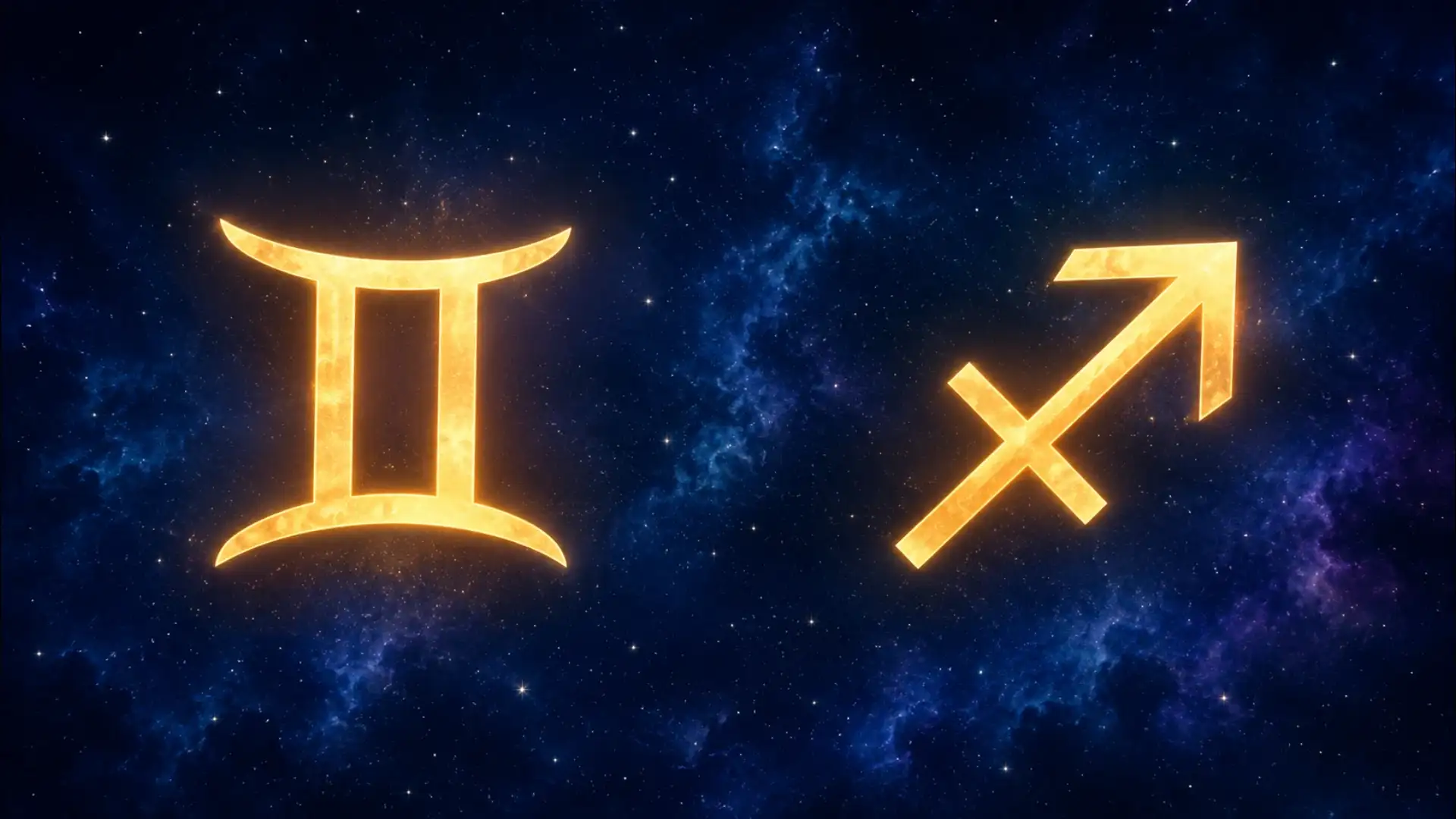
A Gemini is often characterised as someone who can hold two contradictory ideas at once without discomfort, which is where the sign's symbol, the twins, comes from.
In Vedic astrology, Gemini corresponds to Mithuna rashi, also ruled by Budha, Mercury's Sanskrit name. The tradition here emphasises duality and adaptability. Mithuna is described as quick-witted, socially fluent, and comfortable moving between different circles of people. The sign is associated with trade, writing, and the kind of intelligence that works through conversation rather than solitary study.
The sign's symbol is the archer, and astrology uses that image deliberately: the arrow aimed at a distant target, the eye on the horizon rather than the ground underfoot.
In Vedic astrology, Sagittarius is Dhanu rashi, ruled by Guru, Jupiter. The tradition describes Dhanu as oriented toward dharma, toward understanding one's place in a larger order. People born under this sign are often characterised as direct, sometimes blunt, with a strong pull toward travel, teaching, and philosophical inquiry.
The restlessness here is not the Gemini kind, it is not about gathering more information, but about finding a framework large enough to hold what they already know.
Compatibility readings that involve these two signs often note this dynamic. The tradition does not frame one as better suited than the other, it describes a tension that can either generate friction or generate depth, depending on how each person works with their sign's tendencies.
Neither sign is described as naturally patient, which is where the tradition says the real friction lives: two people who are both always ready to move on to the next thing.
The tradition also agrees that both signs carry a kind of optimism, though it expresses differently. Gemini's optimism is social: there is always another interesting person to meet, another angle to consider. Sagittarius's optimism is philosophical: the world is large, and meaning is out there if you travel far enough to find it.
Astrology describes these not as flaws or virtues but as the shape each sign's energy takes, the particular flavour of restlessness each one carries through the world.
Disclaimer: Content published here is for informational purposes only, and NewsPoint bears no responsibility or liability for its accuracy, completeness, or any actions taken based on it.
How Astrology Describes Gemini
In Western astrology, Gemini is an air sign ruled by Mercury, the planet associated with communication, language, and the movement of ideas. The tradition describes Gemini as curious in a particular way, drawn to breadth rather than depth, collecting information the way some people collect objects.A Gemini is often characterised as someone who can hold two contradictory ideas at once without discomfort, which is where the sign's symbol, the twins, comes from.
In Vedic astrology, Gemini corresponds to Mithuna rashi, also ruled by Budha, Mercury's Sanskrit name. The tradition here emphasises duality and adaptability. Mithuna is described as quick-witted, socially fluent, and comfortable moving between different circles of people. The sign is associated with trade, writing, and the kind of intelligence that works through conversation rather than solitary study.
How Astrology Describes Sagittarius
Sagittarius is a fire sign in Western astrology, ruled by Jupiter, the planet the tradition associates with expansion, philosophy, and the search for meaning. Where Gemini gathers facts, Sagittarius is described as seeking the principle behind the facts.The sign's symbol is the archer, and astrology uses that image deliberately: the arrow aimed at a distant target, the eye on the horizon rather than the ground underfoot.
In Vedic astrology, Sagittarius is Dhanu rashi, ruled by Guru, Jupiter. The tradition describes Dhanu as oriented toward dharma, toward understanding one's place in a larger order. People born under this sign are often characterised as direct, sometimes blunt, with a strong pull toward travel, teaching, and philosophical inquiry.
The restlessness here is not the Gemini kind, it is not about gathering more information, but about finding a framework large enough to hold what they already know.
The Opposition in Astrological Thinking
When two signs sit opposite each other on the zodiac wheel, astrology treats them as complementary rather than simply contrary. The Gemini-Sagittarius axis is described in the tradition as the axis of the mind: Gemini asks the local question, Sagittarius asks the universal one. Gemini wants to know what; Sagittarius wants to know why.Compatibility readings that involve these two signs often note this dynamic. The tradition does not frame one as better suited than the other, it describes a tension that can either generate friction or generate depth, depending on how each person works with their sign's tendencies.
Neither sign is described as naturally patient, which is where the tradition says the real friction lives: two people who are both always ready to move on to the next thing.
What the Traditions Agree On
Both Western and Vedic astrology characterise these signs through their relationship to knowledge, but they locate that knowledge differently. Gemini's knowledge is relational, it lives in conversation, in the space between people. Sagittarius's knowledge is directional, it moves toward a destination, a belief, a horizon.The tradition also agrees that both signs carry a kind of optimism, though it expresses differently. Gemini's optimism is social: there is always another interesting person to meet, another angle to consider. Sagittarius's optimism is philosophical: the world is large, and meaning is out there if you travel far enough to find it.
Astrology describes these not as flaws or virtues but as the shape each sign's energy takes, the particular flavour of restlessness each one carries through the world.
Disclaimer: Content published here is for informational purposes only, and NewsPoint bears no responsibility or liability for its accuracy, completeness, or any actions taken based on it.