
What Is Your Name Number in Numerology and How Letters Become Digits

Every name, in numerology, is also a number. The tradition holds that the alphabet is not arbitrary, each letter corresponds to a fixed digit, and when those digits are added together and reduced to a single figure, that figure is said to carry meaning about a person's character and inner tendencies. Whether you take the belief literally or treat it as a reflective exercise, the method itself is precise and easy to follow.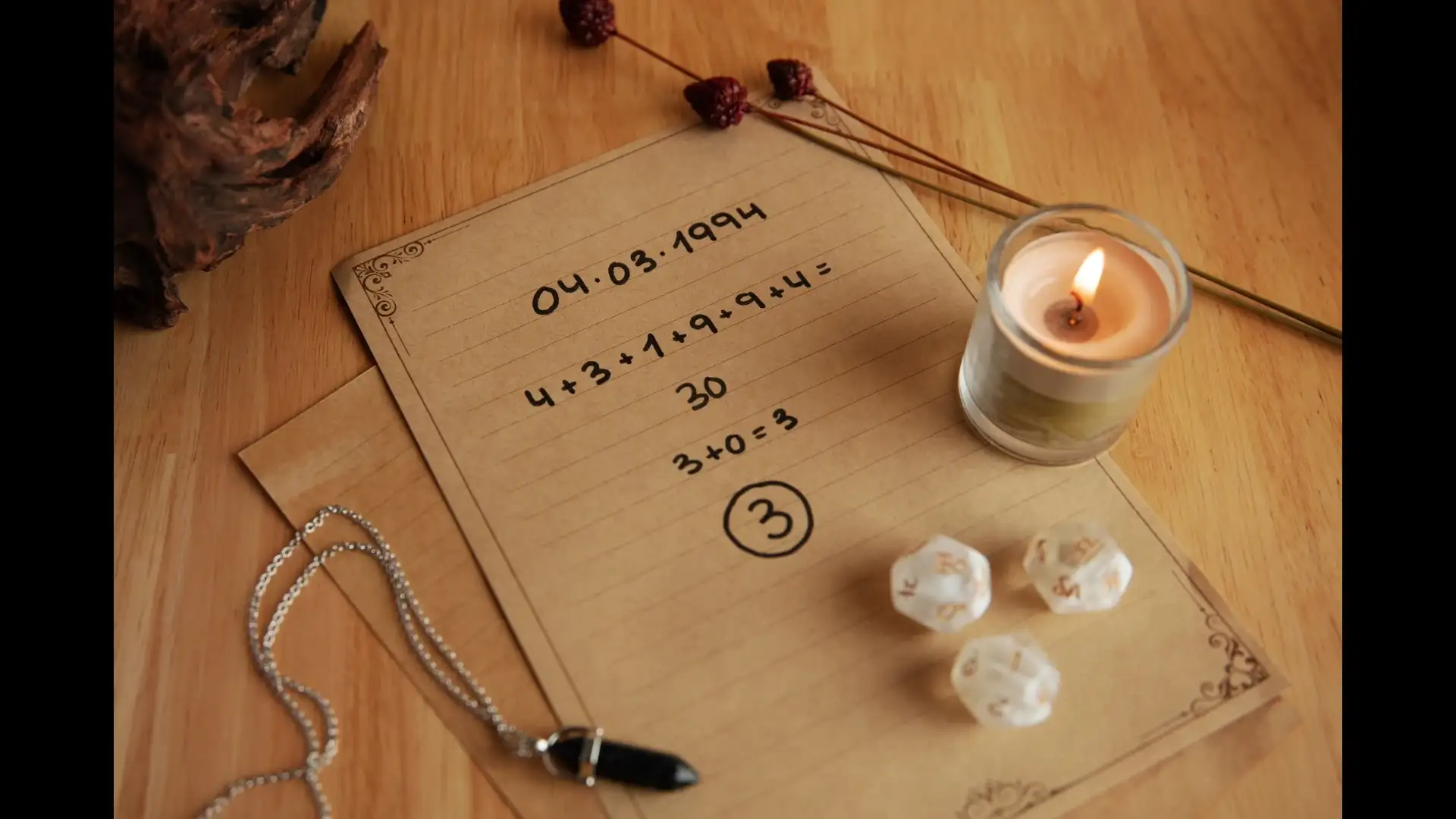
A parallel system, Chaldean numerology, uses a different assignment table and is older still, it assigns digits one through eight rather than one through nine, treating nine as sacred and separate. In Indian practice, ank jyotish blends both influences and sometimes maps letters to planetary energies rather than a linear sequence.
Each tradition claims its own logic, and practitioners within each hold their version to be the more accurate one. The Pythagorean table is the most widely used today, and it is the one most English-language numerology follows.
The one exception most traditions observe is when the addition produces 11, 22, or 33 before the final reduction, these are called master numbers and are typically left unreduced, as the tradition holds they carry amplified meaning. A name that reduces to 11 is not brought down to 2; it stays at 11.
Three to expression, creativity, and sociability. Four to discipline, structure, and reliability. Five to adaptability and a restless curiosity. Six to responsibility, care, and a pull toward family. Seven to introspection, analysis, and a philosophical bent. Eight to ambition and a practical orientation toward achievement. Nine to idealism, compassion, and a wide sense of purpose.
The master numbers, 11, 22, and 33, are described as carrying the qualities of 2, 4, and 6 respectively, but with greater intensity and a stronger pull toward a purpose beyond the personal. These are descriptions the tradition offers, not predictions of outcome or fortune.
A third position uses both, the birth name for the Destiny Number and the used name for what some traditions call the Personality Number. There is no single authoritative answer.
The tradition itself has regional and school-level variations, and a practitioner's method will depend on which lineage they follow. Working out your number under more than one approach and seeing which description resonates is itself part of how many people engage with the practice.
Disclaimer: Numerology is based on traditional beliefs and interpretations, not scientific evidence. The information presented is intended for general knowledge and cultural understanding only. Name numbers and their associated meanings should not be treated as factual assessments or predictions about an individual's personality or future.
Where the System Comes From
The numerological reading of names is most commonly traced to the Pythagorean tradition, which assigned numbers to the Western alphabet in a sequence that has remained largely stable.A parallel system, Chaldean numerology, uses a different assignment table and is older still, it assigns digits one through eight rather than one through nine, treating nine as sacred and separate. In Indian practice, ank jyotish blends both influences and sometimes maps letters to planetary energies rather than a linear sequence.
Each tradition claims its own logic, and practitioners within each hold their version to be the more accurate one. The Pythagorean table is the most widely used today, and it is the one most English-language numerology follows.
The Pythagorean Letter Table
In this system, the alphabet wraps around the digits one through nine repeatedly. A, J, and S each equal 1. B, K, and T equal 2. C, L, and U equal 3. D, M, and V equal 4. E, N, and W equal 5. F, O, and X equal 6. G, P, and Y equal 7. H, Q, and Z equal 8. I and R equal 9. Every letter in a name is replaced by its corresponding digit. Capital or lowercase makes no difference, only the letter matters.How the Reduction Works
Once each letter has been converted, the digits are added together. If the result has two digits, those two are added again. The process continues until a single digit remains. That single digit is the name number, sometimes called the Expression Number or Destiny Number in numerology literature.The one exception most traditions observe is when the addition produces 11, 22, or 33 before the final reduction, these are called master numbers and are typically left unreduced, as the tradition holds they carry amplified meaning. A name that reduces to 11 is not brought down to 2; it stays at 11.
What Each Number Is Said to Mean
In numerology, the tradition describes each digit as carrying a distinct quality. One is associated with independence and initiative, people with this name number are often described as self-directed. Two is linked to sensitivity and partnership.Three to expression, creativity, and sociability. Four to discipline, structure, and reliability. Five to adaptability and a restless curiosity. Six to responsibility, care, and a pull toward family. Seven to introspection, analysis, and a philosophical bent. Eight to ambition and a practical orientation toward achievement. Nine to idealism, compassion, and a wide sense of purpose.
The master numbers, 11, 22, and 33, are described as carrying the qualities of 2, 4, and 6 respectively, but with greater intensity and a stronger pull toward a purpose beyond the personal. These are descriptions the tradition offers, not predictions of outcome or fortune.
A Note on Which Name to Use
Practitioners disagree on this point, and the disagreement is worth knowing. Some hold that the full birth name as it appears on a birth certificate is the only valid input, because it was the name given before the person shaped their own identity. Others work with the name a person actually uses day to day, arguing that the name in active use carries the stronger energy.A third position uses both, the birth name for the Destiny Number and the used name for what some traditions call the Personality Number. There is no single authoritative answer.
The tradition itself has regional and school-level variations, and a practitioner's method will depend on which lineage they follow. Working out your number under more than one approach and seeing which description resonates is itself part of how many people engage with the practice.
Disclaimer: Numerology is based on traditional beliefs and interpretations, not scientific evidence. The information presented is intended for general knowledge and cultural understanding only. Name numbers and their associated meanings should not be treated as factual assessments or predictions about an individual's personality or future.
Next Story