
What Vastu Shastra Says About the Main Door and Why East Is Preferred

The main door is not just an entry point in vastu shastra, it is considered the mouth of the home, the threshold through which prana, or life energy, is said to flow in. Every direction a door can face carries a different significance in this tradition, and the east has long held a place of particular importance.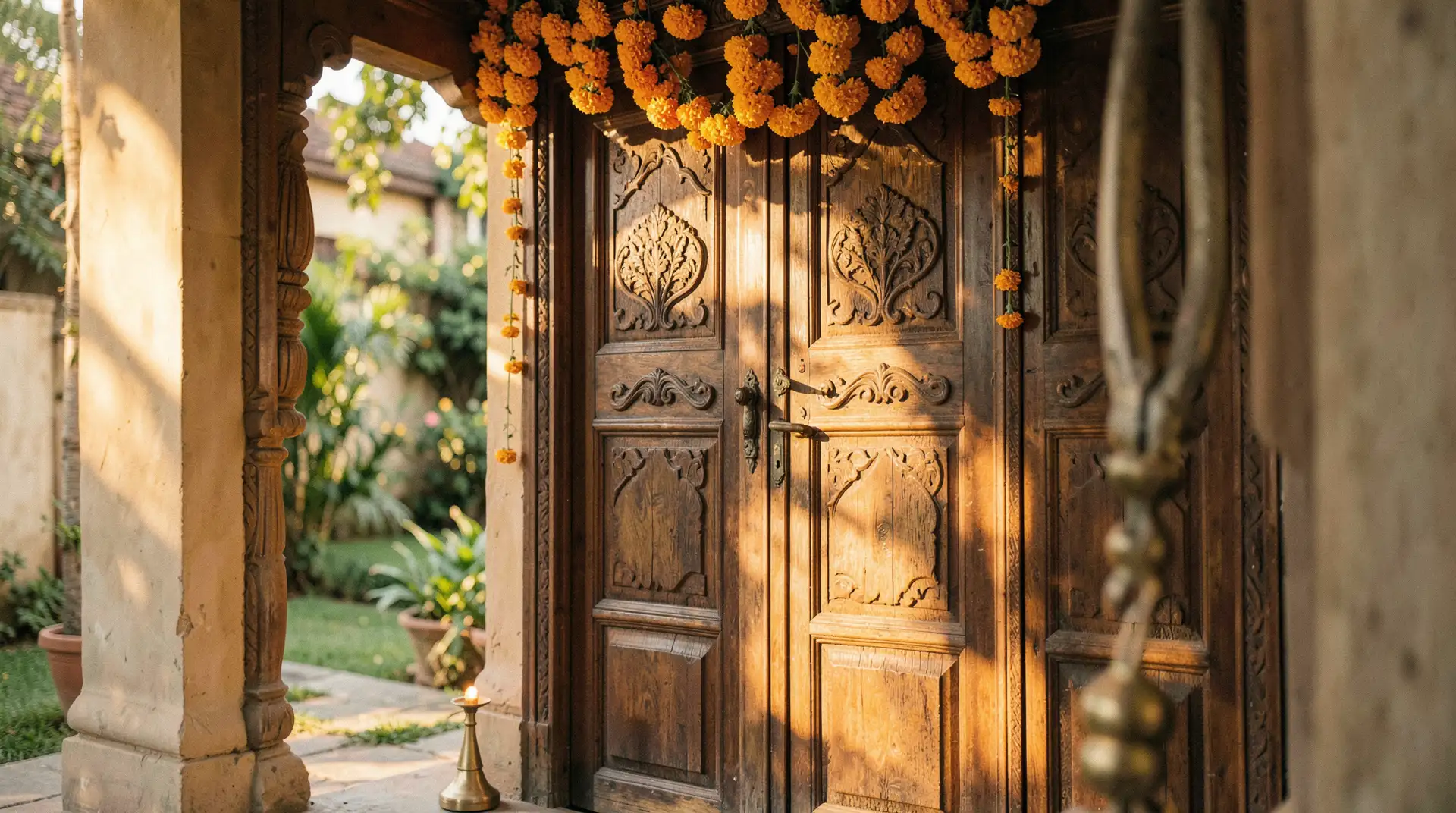
The northeast, the junction of these two favoured directions, is considered especially auspicious, vastu shastra describes it as the zone of divine energy and wisdom. The west is considered neutral in many vastu texts, neither strongly favourable nor harmful.
The south and southwest are generally described in the tradition as less preferred for the main entrance, as the south is associated with Yama, the deity of death in Hindu cosmology, though vastu practitioners note that remedies exist for homes where the door cannot be repositioned.
Wood is the preferred material in vastu shastra, with teak and sheesham mentioned in traditional texts as particularly suitable. The door is said to open inward, toward the interior of the home, as an outward-opening door is believed to push energy away rather than drawing it in.
The tradition also holds that the main door should open fully without obstruction, a door that cannot swing all the way open is said to restrict the flow of positive energy. Vastu shastra also advises that the entrance be well-lit, with a lamp or light kept near the threshold, particularly in the evening.
Shoes left just inside or directly in front of the main door are considered inauspicious in vastu shastra, as footwear is associated with the outside world and its energies. A nameplate is considered auspicious, as it announces the home's identity to visitors and, in the tradition's framing, to the energies that pass through.
Many of its practical prescriptions, morning light through an east-facing door, a clear and unobstructed threshold, a well-lit entrance, align with principles of natural ventilation and daylighting that architects across traditions have valued independently. Where the two overlap, vastu shastra offers its own reasoning; where they diverge, the tradition stands on its own terms as a system of belief.
Understanding what vastu shastra says about the main door is, above all, an entry into understanding how the tradition reads space itself.
Why East Holds a Special Place
Vastu shastra associates the east with the rising sun, and in the tradition, the sun is considered the source of light, vitality, and auspicious beginnings. A main door facing east is said to welcome the first light of morning directly into the home. Practically, this also means the entrance receives natural sunlight in the early hours, which keeps the threshold dry, warm, and well-lit, a physical reality that runs alongside the belief. The tradition holds that an east-facing door aligns with the energy of Indra, the deity associated with prosperity and rain in Vedic cosmology.Other Directions and What the Tradition Says
Vastu shastra does not restrict auspicious doors to the east alone. The north is considered equally favourable, associated with Kubera, the deity of wealth in Hindu tradition. A north-facing main door is said to invite abundance and financial wellbeing according to vastu shastra.The northeast, the junction of these two favoured directions, is considered especially auspicious, vastu shastra describes it as the zone of divine energy and wisdom. The west is considered neutral in many vastu texts, neither strongly favourable nor harmful.
The south and southwest are generally described in the tradition as less preferred for the main entrance, as the south is associated with Yama, the deity of death in Hindu cosmology, though vastu practitioners note that remedies exist for homes where the door cannot be repositioned.
You may also like
- Spiritual Quote of the Day, November 10: Annakut Is a Reminder of How Sharing Meals Nourishes the Soul
- Diwali 2026: Five zodiac signs whose luck turns for the better after the festival
- Tarot Card of the Day, November 10: Two of Cups Meets Venus Sextile Mars — Is a Real Connection Closer Than You Think?
- Daily Astrology News Alert, 10 November 2026: Moon Turns Weak in Scorpio, Hidden Feelings, Family Secrets Can Come Up Suddenly
- 11/11 Energy Portal 2026: What you should let go off according to your birth number?
What Vastu Shastra Says About the Door Itself
Beyond direction, vastu shastra has specific views on the door's character. The tradition holds that the main door should be the largest door in the home, larger than any interior door, so that the home's primary opening commands presence.Wood is the preferred material in vastu shastra, with teak and sheesham mentioned in traditional texts as particularly suitable. The door is said to open inward, toward the interior of the home, as an outward-opening door is believed to push energy away rather than drawing it in.
The tradition also holds that the main door should open fully without obstruction, a door that cannot swing all the way open is said to restrict the flow of positive energy. Vastu shastra also advises that the entrance be well-lit, with a lamp or light kept near the threshold, particularly in the evening.
The Threshold and What Surrounds It
Vastu shastra pays attention to what frames the main door as much as the door itself. The tradition considers the threshold, called the dehleez, a boundary between the outer world and the home's inner space. Keeping it clean and uncluttered is emphasised in vastu shastra. Placing a rangoli, a torana of mango leaves, or fresh flowers at the entrance is described in the tradition as a way of marking the threshold as auspicious and welcoming.Shoes left just inside or directly in front of the main door are considered inauspicious in vastu shastra, as footwear is associated with the outside world and its energies. A nameplate is considered auspicious, as it announces the home's identity to visitors and, in the tradition's framing, to the energies that pass through.
Reading Vastu Shastra as a Living Tradition
Vastu shastra developed over centuries as a system of architecture and spatial arrangement rooted in Vedic thought. Its rules about the main door reflect a worldview in which a home is not merely a structure but a living space in relationship with the directions, the elements, and the cosmos.Many of its practical prescriptions, morning light through an east-facing door, a clear and unobstructed threshold, a well-lit entrance, align with principles of natural ventilation and daylighting that architects across traditions have valued independently. Where the two overlap, vastu shastra offers its own reasoning; where they diverge, the tradition stands on its own terms as a system of belief.
Understanding what vastu shastra says about the main door is, above all, an entry into understanding how the tradition reads space itself.
Loving Newspoint? Download the app now
