
Why Vastu Shastra Places the Master Bedroom in the South-West

Walk through almost any traditionally built Indian home and the master bedroom sits in the south-west corner. The choice looks like habit, but vastu shastra gives it a precise internal logic rooted in directions, elements, and the qualities the tradition assigns to each.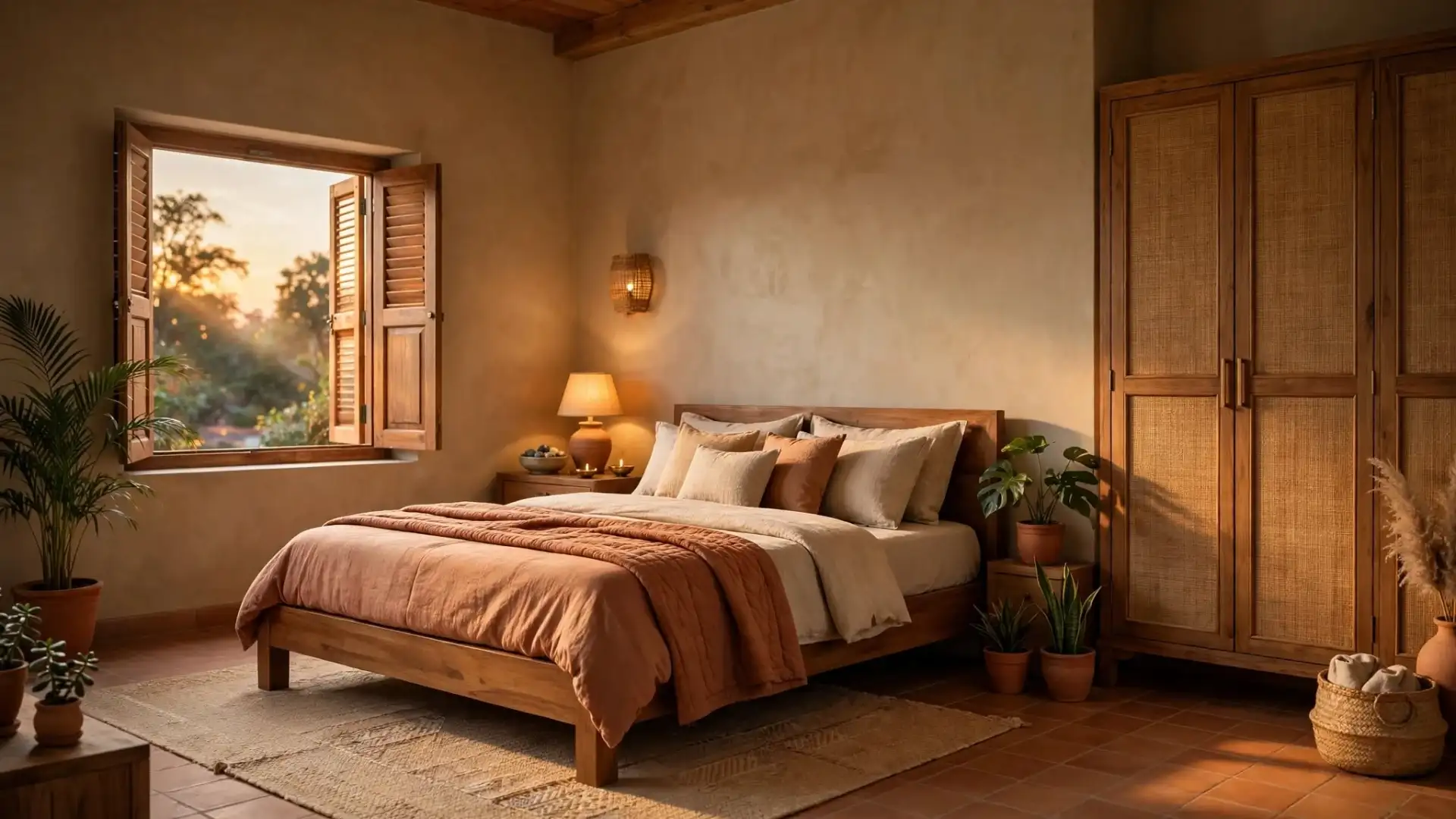
Earth is what stays put. It does not rise like fire, flow like water, or scatter like air. Vastu holds that the qualities of a space are shaped by the element that governs its direction, so a room placed in the south-west absorbs, in the tradition's framing, the grounding character of earth itself.
Vastu shastra interprets this planetary association as making the south-west corner the densest, most anchored point of a structure. The tradition reasons that the head of the household, the person who carries the greatest responsibility for the home's stability, belongs in the heaviest corner.
Sleeping there is understood, within the system, as aligning personal authority with the structural weight of the space.
The body's head is likened to the north pole of a magnetic field, and the south pole of the earth pulls it into what the tradition describes as a settled, unresisted rest.
Whether or not this maps onto any measurable physical phenomenon, it is the internal logic the system offers, and it is distinct from the room-placement rule itself.
The tradition reserves it for a pooja room or an open space that allows morning light to enter unobstructed. Placing a bedroom there is considered a mismatch of qualities: the heaviness of sleep in a corner meant for clarity and light.
The south-west bedroom rule and the north-east openness rule are, in the tradition's framework, two sides of the same map.
The tradition holds that a home arranged along these lines creates an environment where rest is deep, authority is grounded, and the household's senior members feel anchored rather than unsettled.
Whether a household follows these principles or not, understanding the reasoning behind them makes visible a coherent way of thinking about how space and human life are meant to meet.
The South-West and the Earth Element
In vastu shastra, each direction carries a presiding element and a corresponding quality. The south-west corner is associated with the earth element, prithvi, which the tradition describes as the heaviest and most stable of the five elements.Earth is what stays put. It does not rise like fire, flow like water, or scatter like air. Vastu holds that the qualities of a space are shaped by the element that governs its direction, so a room placed in the south-west absorbs, in the tradition's framing, the grounding character of earth itself.
Rahu and the Weight of the Corner
Vedic astrology associates the south-west direction with Rahu, the shadow planet regarded in the tradition as a force of weight and accumulation.Vastu shastra interprets this planetary association as making the south-west corner the densest, most anchored point of a structure. The tradition reasons that the head of the household, the person who carries the greatest responsibility for the home's stability, belongs in the heaviest corner.
Sleeping there is understood, within the system, as aligning personal authority with the structural weight of the space.
Head Direction While Sleeping
Vastu shastra adds a second layer specific to the bedroom itself: the direction the sleeper's head points. The tradition recommends the head toward the south while sleeping in the south-west room. The reasoning draws on an analogy between the human body and the earth.The body's head is likened to the north pole of a magnetic field, and the south pole of the earth pulls it into what the tradition describes as a settled, unresisted rest.
Whether or not this maps onto any measurable physical phenomenon, it is the internal logic the system offers, and it is distinct from the room-placement rule itself.
Why the North-East Is Kept Open
Vastu shastra's logic for the master bedroom becomes clearer when set against what the tradition says about the north-east. That corner is associated with water and with Ishanya, the direction of the divine, light, prayer, and openness.The tradition reserves it for a pooja room or an open space that allows morning light to enter unobstructed. Placing a bedroom there is considered a mismatch of qualities: the heaviness of sleep in a corner meant for clarity and light.
The south-west bedroom rule and the north-east openness rule are, in the tradition's framework, two sides of the same map.
What the Tradition Is Actually Describing
Vastu shastra is a system of spatial philosophy, not a building code. Its rules describe a relationship between the qualities of directions and the activities of daily life, and the south-west bedroom sits at the centre of that relationship.The tradition holds that a home arranged along these lines creates an environment where rest is deep, authority is grounded, and the household's senior members feel anchored rather than unsettled.
Whether a household follows these principles or not, understanding the reasoning behind them makes visible a coherent way of thinking about how space and human life are meant to meet.