
Why Is Venus So Hot? The Science Behind Its Extreme Heat Explained

Venus sits second from the Sun, yet it holds a record that surprises almost everyone who hears it: it is the hottest planet in the solar system, outpacing even Mercury, which orbits far closer to the Sun's surface. The reason lies not in distance but in atmosphere, and in a process so efficient it has turned a world roughly the size of Earth into something close to a furnace.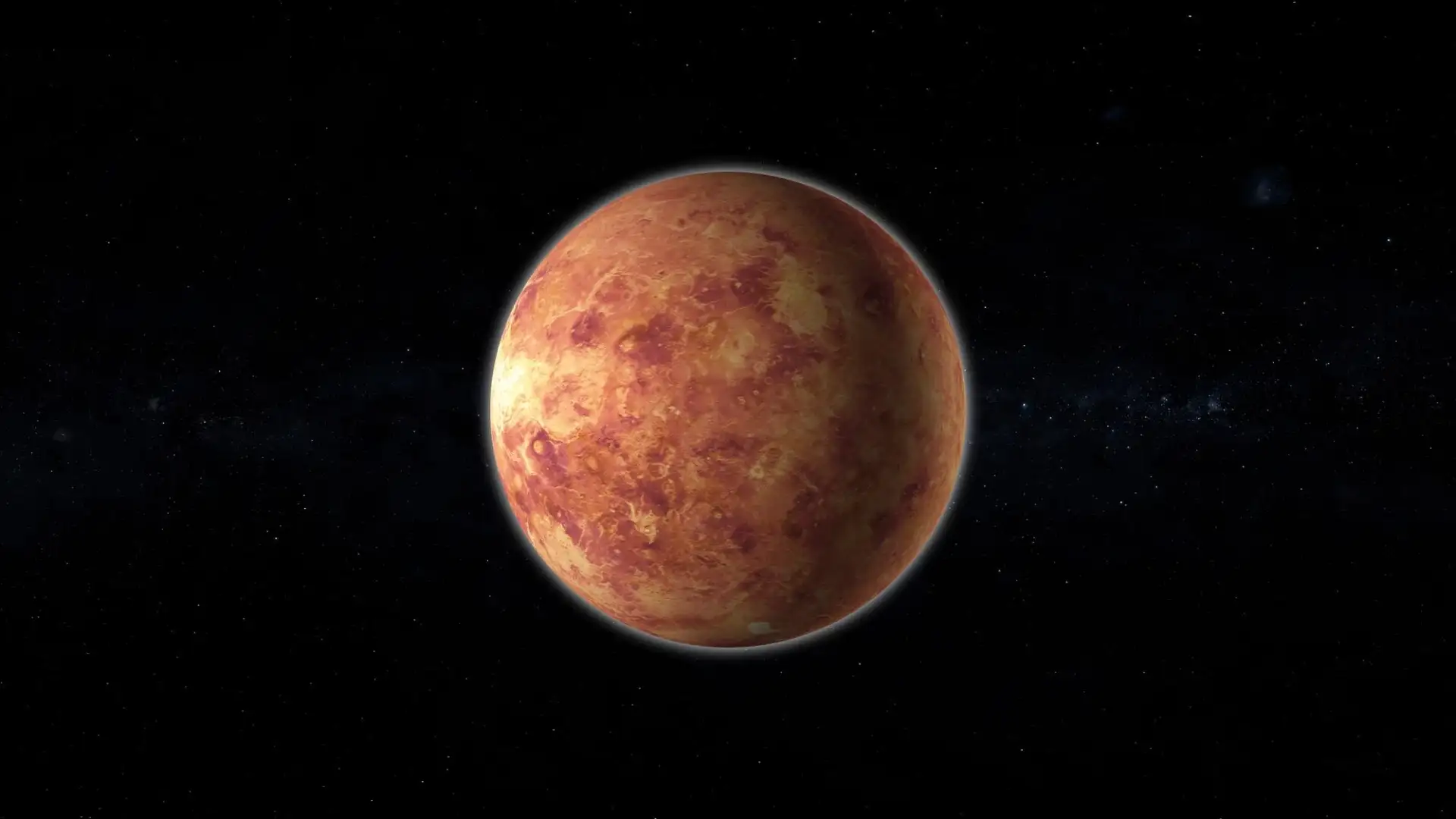
The heat builds, the atmosphere holds it, and the cycle feeds itself with no natural release. Scientists call this a runaway greenhouse effect, the same basic process that warms Earth, but taken to an extreme that Earth's thinner, more balanced atmosphere has never reached. Surface temperatures on Venus stay around 465 degrees Celsius, hot enough to melt lead and to destroy any spacecraft that lands within a couple of hours.
The reasons for this retrograde rotation are still debated among planetary scientists, with two leading explanations: a massive collision early in the solar system's history, or a gradual tipping caused by gravitational interactions with the Sun and its own thick atmosphere over billions of years. Either way, the slow spin means one side of Venus bakes in sunlight for an extraordinarily long stretch before the planet turns.
What tipped Venus toward its current state is not fully understood, whether a shift in volcanic activity flooded the atmosphere with carbon dioxide, or whether the planet simply lost its water to space over time and the carbon dioxide had nowhere to go. These questions make Venus one of the most studied planets in the solar system, because the answers carry implications for understanding how habitable conditions form and how they collapse.
Venus is, in a sense, a natural experiment in what happens when the greenhouse effect has no counterbalance. Every spacecraft mission to Venus, and several have been planned and some have already reached the planet, carries instruments designed to measure the atmosphere in finer detail, because the data helps scientists model how atmospheres behave across the solar system and beyond. The planet that looks like a bright, steady star in the evening sky holds, beneath those sulfuric clouds, one of the most complete demonstrations of atmospheric physics that the solar system offers.
The Runaway Greenhouse Effect
Venus's atmosphere is made up of roughly 96 percent carbon dioxide, with clouds of sulfuric acid layered so thickly that sunlight struggles to escape once it enters. When solar radiation reaches the planet's surface, it warms the ground. That warmth tries to radiate back outward as heat, but the dense carbon dioxide traps it, bouncing it back down again.The heat builds, the atmosphere holds it, and the cycle feeds itself with no natural release. Scientists call this a runaway greenhouse effect, the same basic process that warms Earth, but taken to an extreme that Earth's thinner, more balanced atmosphere has never reached. Surface temperatures on Venus stay around 465 degrees Celsius, hot enough to melt lead and to destroy any spacecraft that lands within a couple of hours.
Why Mercury Is Cooler Despite Being Closer
Mercury has almost no atmosphere. Without one, it cannot trap heat. The side facing the Sun scorches, but the night side drops to roughly minus 180 degrees Celsius because there is nothing to hold warmth in place. Venus, by contrast, has no meaningful temperature difference between its day side and its night side. Its atmosphere distributes and holds heat so completely that the entire planet stays at roughly the same temperature, all the time. Distance from the Sun matters far less than what a planet does with the energy it receives.The Slow, Backwards Spin
Venus rotates so slowly that a single Venusian day, one full rotation on its axis, lasts longer than a Venusian year, the time it takes to complete one orbit around the Sun. It also spins in the opposite direction to most planets, meaning the Sun rises in the west and sets in the east on Venus.You may also like
- Shani Mahadasha and marriage: Can Saturn bring marriage at the right time?
- Vastu Mistakes in the Kitchen That May Trigger Family Arguments
- November 02, 2026, Birthday Forecast: Discover what the next 12 months hold for you
- Numerology Predictions Today, November 02, 2026: Read your personalised forecast for numbers 1 to 9
- Pisces Shani Horoscope Today, 2 November 2026: Neptune Sextile Pluto Makes Money Dreams Big, Shani Wants a Budget
The reasons for this retrograde rotation are still debated among planetary scientists, with two leading explanations: a massive collision early in the solar system's history, or a gradual tipping caused by gravitational interactions with the Sun and its own thick atmosphere over billions of years. Either way, the slow spin means one side of Venus bakes in sunlight for an extraordinarily long stretch before the planet turns.
A World That Might Once Have Been Like Earth
Some planetary scientists believe Venus may have had liquid water on its surface billions of years ago, before the greenhouse effect took hold completely. If that is true, Venus and Earth began in similar conditions and arrived at radically different outcomes.What tipped Venus toward its current state is not fully understood, whether a shift in volcanic activity flooded the atmosphere with carbon dioxide, or whether the planet simply lost its water to space over time and the carbon dioxide had nowhere to go. These questions make Venus one of the most studied planets in the solar system, because the answers carry implications for understanding how habitable conditions form and how they collapse.
What Venus Tells Us About Atmospheres
The extreme case of Venus makes the mechanics of planetary atmospheres easier to see. A thin atmosphere, like Mercury's near-absence, offers no insulation. A balanced atmosphere, like Earth's, traps enough heat to keep liquid water stable without cooking the surface. An atmosphere as dense and carbon-dioxide-rich as Venus's traps so much heat that the surface becomes uninhabitable.Venus is, in a sense, a natural experiment in what happens when the greenhouse effect has no counterbalance. Every spacecraft mission to Venus, and several have been planned and some have already reached the planet, carries instruments designed to measure the atmosphere in finer detail, because the data helps scientists model how atmospheres behave across the solar system and beyond. The planet that looks like a bright, steady star in the evening sky holds, beneath those sulfuric clouds, one of the most complete demonstrations of atmospheric physics that the solar system offers.






Loving Newspoint? Download the app now
