
5 Quick Checks Every Rider Should Do Before Starting a Motorcycle

A motorcycle gives you nothing between yourself and the road except the machine working correctly. That is not a reason to be anxious before every ride; it is a reason to spend two minutes making sure the machine is ready to do its job. These five checks take almost no time, require no tools for most of them, and cover the systems most likely to cause trouble.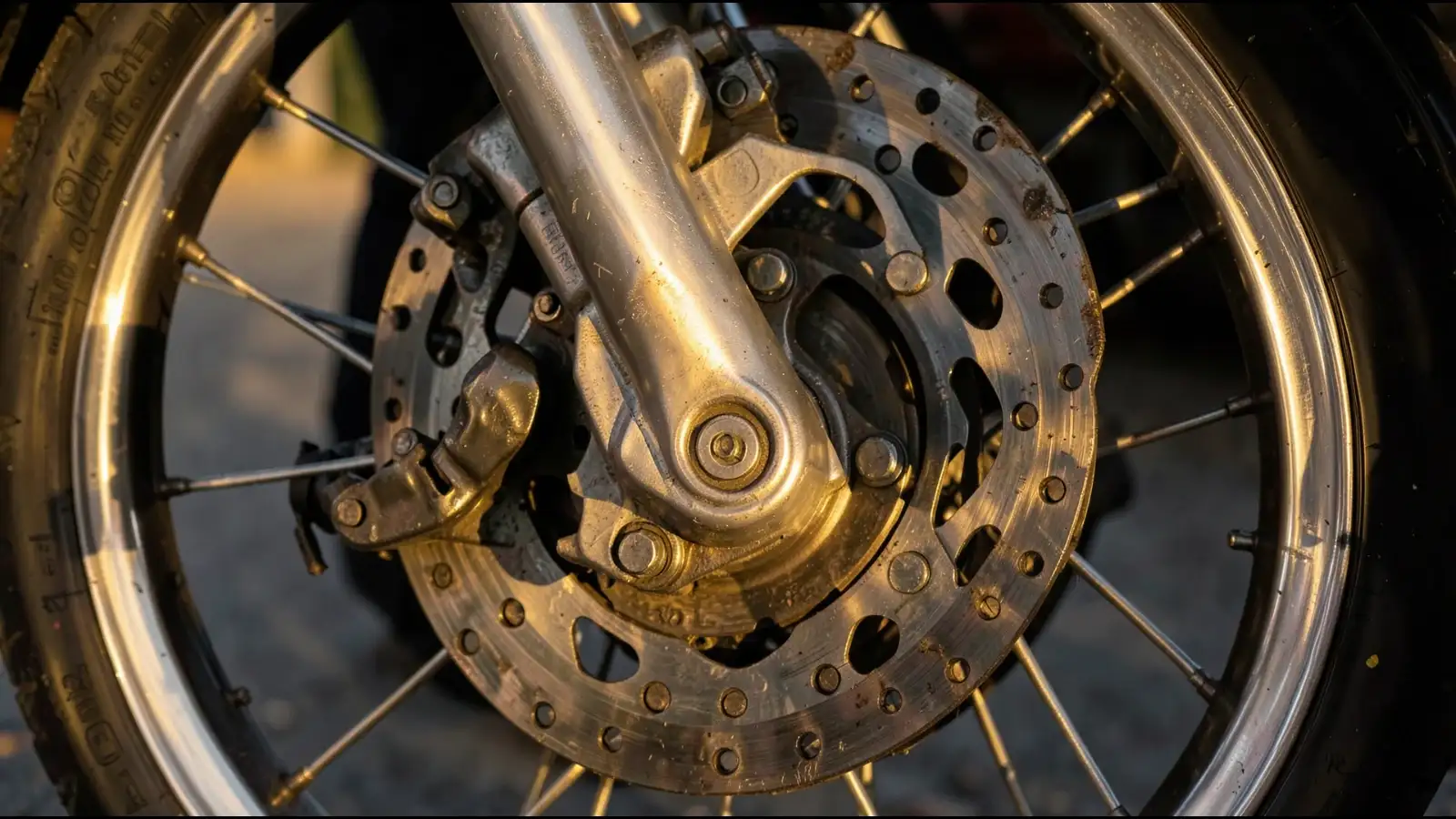
The correct figures are printed on a sticker on the swingarm or in the owner's manual; they differ between front and rear and between a solo rider and a loaded one.While you are crouching, run a hand around the tyre and look at the tread. A nail or a piece of wire embedded in the rubber is easy to miss at a glance but obvious to the touch. Check the tread depth at the centre of the tyre, a worn centre strip means the tyre has given what it had.
Press the rear brake pedal and check that it offers firm resistance.Look at the brake disc on each wheel. A disc that is deeply scored with grooves, or that has a lip at its outer edge where the pad no longer reaches, is worn past the point where it sheds heat evenly. Pad thickness is visible through the caliper on most motorcycles; if the friction material looks thin, it is worth a closer look before the next long ride.
Most manufacturers specify between 20 and 30 mm of free play at that point; check your manual for the exact figure.Run the chain through by rotating the rear wheel slowly and look at each link. A chain that has stiff links, ones that do not flex freely as they pass over the sprocket, needs lubrication or replacement.
A chain with a reddish-brown colour and visible rust has been running dry. Lubricate after every long ride or after riding in rain, and the chain will last far longer than one that is ignored between services.These five checks form a loop that takes about two minutes once it becomes a habit.
The tyre tells you about grip, the brakes about stopping, the oil about the engine's health, the lights about being seen, and the chain about power reaching the wheel. Each one is independent, and each one can strand you or worse if it fails without warning. The check is not caution, it is the fastest way to know the machine is ready.
1. Tyre Pressure and Condition
Tyres are the only part of the motorcycle in contact with the road, and they do their job only when inflated to the right pressure. An underinflated tyre spreads its contact patch in a way that generates heat, wears the edges faster, and makes the motorcycle feel vague in corners. An overinflated tyre shrinks the contact patch and loses grip on uneven surfaces. Check pressure when the tyres are cold, before the ride, not after.The correct figures are printed on a sticker on the swingarm or in the owner's manual; they differ between front and rear and between a solo rider and a loaded one.While you are crouching, run a hand around the tyre and look at the tread. A nail or a piece of wire embedded in the rubber is easy to miss at a glance but obvious to the touch. Check the tread depth at the centre of the tyre, a worn centre strip means the tyre has given what it had.
2. Brakes
With the motorcycle on its stand, squeeze the front brake lever fully and push the bike forward. The front wheel should lock immediately with no sponginess in the lever travel. Sponginess means air in the hydraulic line or fluid that has absorbed moisture, both reduce braking force under the conditions that demand it most.Press the rear brake pedal and check that it offers firm resistance.Look at the brake disc on each wheel. A disc that is deeply scored with grooves, or that has a lip at its outer edge where the pad no longer reaches, is worn past the point where it sheds heat evenly. Pad thickness is visible through the caliper on most motorcycles; if the friction material looks thin, it is worth a closer look before the next long ride.
You may also like
- Car Launches: Major and Updates Announced This Week in India
- Hero Splendor Plus Becomes More Expensive: Check the New Variant-Wise Prices and Latest Updates
- Kia Discontinues Multiple Variants of Seltos, Sonet and Carens Clavis: Check the Latest Changes Before Buying
- Hyundai Creta Leads SUV Sales in October 2026
- Yamaha Ray Tops Sales in October with 22,265 Units Sold
3. Engine Oil Level
An engine running low on oil runs hotter, and the moving parts inside it wear faster than they should. Checking takes thirty seconds. Most motorcycles have a sight glass on the right side of the engine, a small round window with upper and lower marks. The oil level should sit between those marks when the motorcycle is upright and the engine is cold. If the level is at or below the lower mark, top it up before riding.While you are there, look at the colour. Fresh engine oil is amber. Oil that has turned very dark and looks almost black has been working hard and is carrying combustion byproducts. That is a maintenance reminder, not an emergency, but it is worth noting.4. Lights and Horn
A motorcycle is harder to see than a car at the best of times. A non-functioning headlight at dusk or in rain reduces that margin further. Switch the ignition on and walk around the motorcycle: headlight on low beam, then high beam, both turn signals, the tail light, and the brake light triggered by both the lever and the pedal independently. A bulb that works for the tail light may not work when the brake is applied if the brake-light filament has blown separately.Press the horn once. It should be loud enough to be heard over traffic. A horn that produces a faint wheeze has a wiring or relay issue that is cheap to fix and inconvenient to discover when you actually need it.5. Chain Condition and Tension
The chain transfers engine power to the rear wheel. A chain that is too slack slaps against the swingarm and can jump off the sprocket under hard acceleration. A chain that is too tight puts strain on the gearbox output shaft bearing and wears both the chain and the sprockets faster. With the motorcycle on its centre stand, push the middle of the lower chain run up and down.Most manufacturers specify between 20 and 30 mm of free play at that point; check your manual for the exact figure.Run the chain through by rotating the rear wheel slowly and look at each link. A chain that has stiff links, ones that do not flex freely as they pass over the sprocket, needs lubrication or replacement.
A chain with a reddish-brown colour and visible rust has been running dry. Lubricate after every long ride or after riding in rain, and the chain will last far longer than one that is ignored between services.These five checks form a loop that takes about two minutes once it becomes a habit.
The tyre tells you about grip, the brakes about stopping, the oil about the engine's health, the lights about being seen, and the chain about power reaching the wheel. Each one is independent, and each one can strand you or worse if it fails without warning. The check is not caution, it is the fastest way to know the machine is ready.






Loving Newspoint? Download the app now
