
Why Engine Oil Needs Changing on Time, Not Just by Kilometres

Engine oil has two enemies, and only one of them is distance. The other is time, and most drivers never account for it.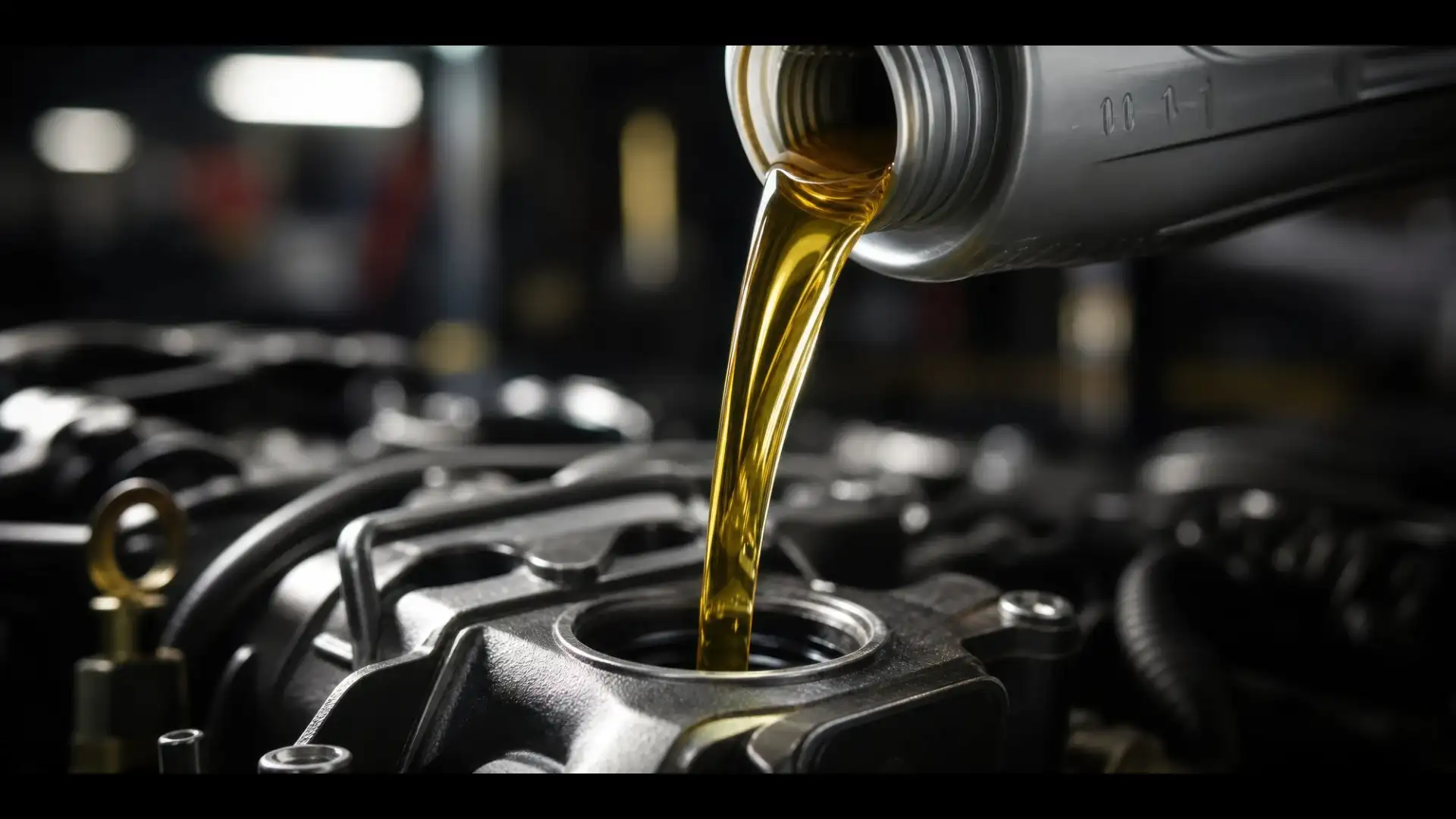
When oil sits inside a hot engine, it does not just wait patiently. Heat, moisture, combustion gases, and the slow oxidation of the oil's own molecules are all working on it, whether the car covers ten kilometres that week or a thousand. By the time the odometer triggers a change reminder, the oil may have already lost much of what made it useful.
Oil also carries heat away from parts the coolant cannot reach, suspends tiny metal particles and combustion debris so they travel to the filter rather than scratching cylinder walls, and keeps seals from drying out.
Fresh oil does all of this because its base molecules are long, flexible chains, and its additive package, detergents, anti-wear agents, viscosity modifiers, is intact. As oil ages, those chains break. The additives get used up. What remains is thinner, darker, and chemically different from what went in.
Water vapour from combustion condenses inside the crankcase and mixes into the oil rather than burning off. Over weeks and months, this turns into a milky sludge that clogs oil passages and starves bearings of lubrication.
Oxidation works on oil even when the engine is cold. Oxygen dissolved in the oil reacts slowly with its molecules, forming acids and varnish deposits.
A car parked for six months has oil that has been oxidising the entire time. The molecules are shorter, the viscosity has shifted, and the detergent additives that would normally clean those deposits have been consumed fighting them.
Engines that run mostly in stop-and-go city traffic face the same problem from the other direction: frequent short cycles, never enough sustained heat to drive off moisture, and constant cold starts that put maximum stress on oil that has drained back into the sump overnight.
This is the moment between the oil pump pushing oil out and that oil actually reaching the top of the engine. With fresh oil, this gap is almost nothing. With thick, sludgy oil, it is long enough to cause measurable wear on camshaft lobes and rocker arms.
Over time, varnish deposits build up on piston rings, reducing their ability to seal combustion gases. Blow-by increases. The engine uses more oil between changes.
Fuel economy drops slightly because friction has risen. None of these changes announce themselves loudly. They accumulate silently until a repair bill does the announcing instead.
A driver who covers very few kilometres but runs the engine often for short trips may hit the time limit while barely touching the kilometre limit. A driver who takes long highway runs regularly may hit the kilometre limit before the time limit. Both are real, and both matter.
The owner's manual for a specific vehicle is the right starting point. Synthetic oils generally carry longer intervals than mineral oils because their base molecules are more uniform and resist breakdown better. But even the best synthetic oil has a time limit, because oxidation and moisture contamination are chemistry problems, not friction problems.
None of these is a substitute for a proper change, but they tell you whether to wait until next month or go this weekend.
The dipstick check costs nothing and takes ninety seconds. The engine that runs on degraded oil for an extra season costs considerably more to fix than the oil change that would have prevented it.
Time and kilometres are both real measures of how much life an oil has left, and the one that runs out first is the one that matters.
When oil sits inside a hot engine, it does not just wait patiently. Heat, moisture, combustion gases, and the slow oxidation of the oil's own molecules are all working on it, whether the car covers ten kilometres that week or a thousand. By the time the odometer triggers a change reminder, the oil may have already lost much of what made it useful.
What Oil Actually Does Inside an Engine
Every moving metal part in an engine, the crankshaft, the camshaft, the pistons, the valve train, runs on a film of oil thinner than a human hair. That film keeps metal from touching metal directly. Without it, friction generates heat fast enough to weld surfaces together within seconds.Oil also carries heat away from parts the coolant cannot reach, suspends tiny metal particles and combustion debris so they travel to the filter rather than scratching cylinder walls, and keeps seals from drying out.
Fresh oil does all of this because its base molecules are long, flexible chains, and its additive package, detergents, anti-wear agents, viscosity modifiers, is intact. As oil ages, those chains break. The additives get used up. What remains is thinner, darker, and chemically different from what went in.
Why Time Breaks Oil Down Even Without Driving
Heat is the primary engine of oil degradation, and an engine generates heat every time it runs, even on a short trip to the market. Short trips are particularly hard on oil because the engine never reaches full operating temperature.Water vapour from combustion condenses inside the crankcase and mixes into the oil rather than burning off. Over weeks and months, this turns into a milky sludge that clogs oil passages and starves bearings of lubrication.
Oxidation works on oil even when the engine is cold. Oxygen dissolved in the oil reacts slowly with its molecules, forming acids and varnish deposits.
A car parked for six months has oil that has been oxidising the entire time. The molecules are shorter, the viscosity has shifted, and the detergent additives that would normally clean those deposits have been consumed fighting them.
Engines that run mostly in stop-and-go city traffic face the same problem from the other direction: frequent short cycles, never enough sustained heat to drive off moisture, and constant cold starts that put maximum stress on oil that has drained back into the sump overnight.
What Happens When Old Oil Stays In Too Long
Degraded oil does not fail all at once. It fails gradually, and the engine absorbs the cost quietly. The first sign is usually increased engine noise at startup, a rattle or tick that fades after a few seconds as oil pressure builds.This is the moment between the oil pump pushing oil out and that oil actually reaching the top of the engine. With fresh oil, this gap is almost nothing. With thick, sludgy oil, it is long enough to cause measurable wear on camshaft lobes and rocker arms.
Over time, varnish deposits build up on piston rings, reducing their ability to seal combustion gases. Blow-by increases. The engine uses more oil between changes.
Fuel economy drops slightly because friction has risen. None of these changes announce themselves loudly. They accumulate silently until a repair bill does the announcing instead.
You may also like
- Bajaj Pulsar: RS200 gets major updates for 2027 launch, which new features are confirmed?
- 2027 Bajaj Pulsar RS200 Spotted with Major Updates
- Hyundai Unveils Production-Ready Neira EV MPV Ahead of Debut
- Mahindra XEV 9S Achieves 5-Star Safety Rating in BNCAP Test
- Mini Cooper SE and Paul Smith Edition Pre-Bookings Open in India
Reading the Two Numbers Together
Manufacturers give two figures for oil change intervals, a kilometre number and a time interval, and the instruction is to follow whichever comes first. The kilometre number accounts for mechanical wear on the oil. The time interval accounts for chemical degradation.A driver who covers very few kilometres but runs the engine often for short trips may hit the time limit while barely touching the kilometre limit. A driver who takes long highway runs regularly may hit the kilometre limit before the time limit. Both are real, and both matter.
The owner's manual for a specific vehicle is the right starting point. Synthetic oils generally carry longer intervals than mineral oils because their base molecules are more uniform and resist breakdown better. But even the best synthetic oil has a time limit, because oxidation and moisture contamination are chemistry problems, not friction problems.
The Practical Test at Home
Pull the dipstick, wipe it clean, dip it again, and look at the oil on the cloth. Fresh oil is amber and slightly transparent. Oil that needs changing is dark brown to black and opaque. Rub a drop between two fingers, if it feels gritty, metal particles have overwhelmed the filter's capacity. Smell it: a sharp, acrid smell suggests fuel dilution from too many cold starts.None of these is a substitute for a proper change, but they tell you whether to wait until next month or go this weekend.
The dipstick check costs nothing and takes ninety seconds. The engine that runs on degraded oil for an extra season costs considerably more to fix than the oil change that would have prevented it.
Time and kilometres are both real measures of how much life an oil has left, and the one that runs out first is the one that matters.






Loving Newspoint? Download the app now
