
How Shared Jeeps Became the Everyday Ride in Hill Towns

Pull up to any motor stand in Darjeeling, Manali, Mussoorie, or Gangtok before seven in the morning and you will find the same thing: a row of Mahindra Boleros and Tata Sumos with their engines already warm, drivers calling out destinations, and strangers sorting themselves into seats by where they need to get off.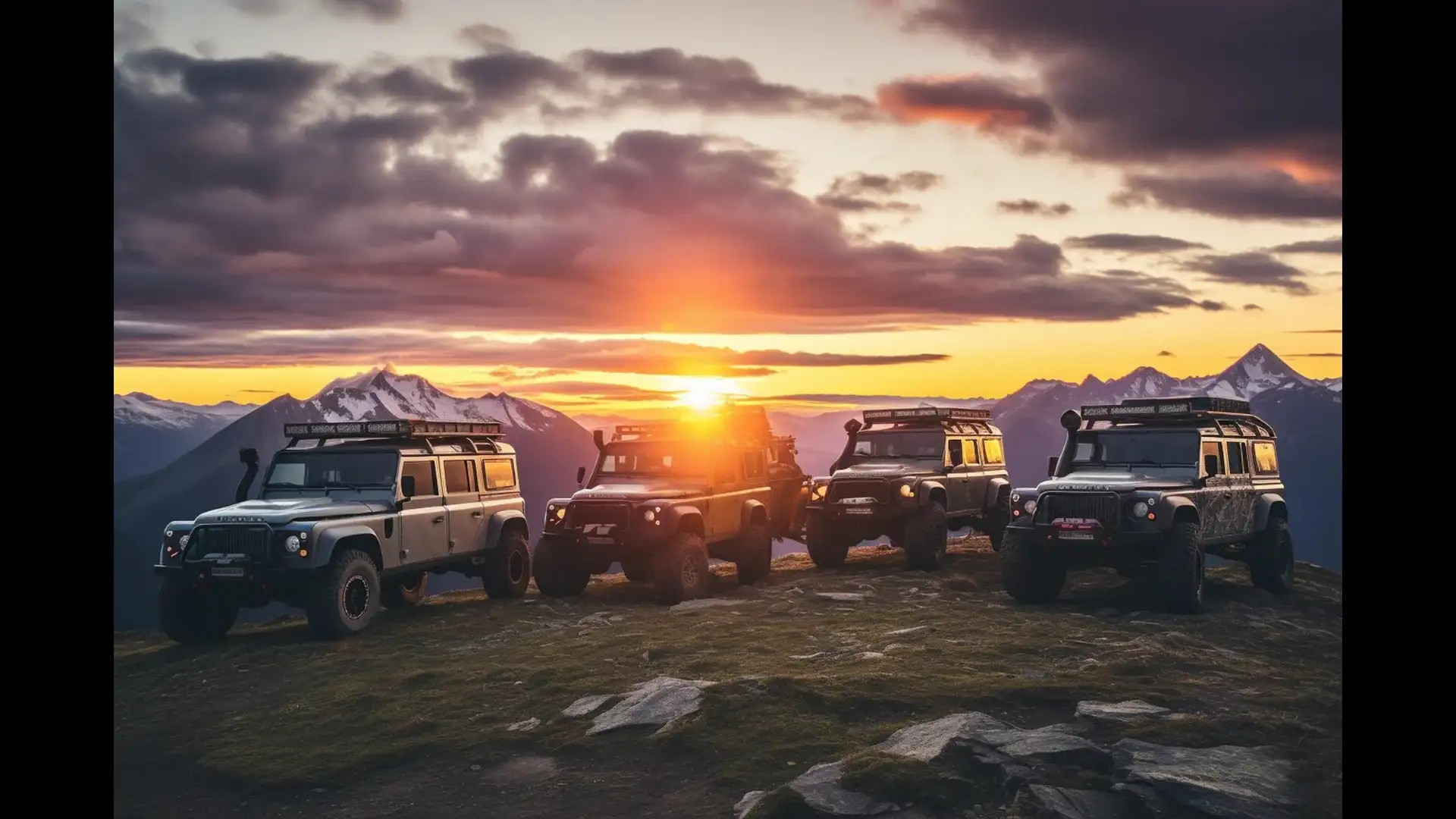
A jeep, the word used loosely across hill stations for any sturdy SUV, can reverse up a switchback, ford a shallow slide, and wait at a tea stall while the driver checks whether the road ahead is clear. The vehicle fits the road rather than the other way around.
The suspension geometry of a body-on-frame SUV also matters here. The front axle can twist independently of the rear on an uneven surface, keeping all four wheels in contact with the ground where a monocoque city car would lift a wheel and lose traction.
Hill roads are not uniformly steep, they are bumpy, cambered, and often broken at the edges. A vehicle that handles all three is worth more than raw engine power.
The first jeep on the rank fills first; only when it has enough passengers to make the run worthwhile does it leave. That threshold is set by the driver and the route, not by a timetable. On a busy route between two large towns, a jeep might fill in eight minutes. On a quieter feeder route, it might wait forty.
Fares are fixed by the regional transport authority for each route. Passengers pay per seat, not for the vehicle. A front seat, which has more legroom and one fewer neighbour, often commands a small premium that passengers negotiate before getting in.
The middle and back rows carry more people than the manufacturer intended for a city road, but on a mountain route where the alternative is waiting two hours for the next jeep, the arithmetic is different.
Luggage goes on the roof rack, strapped under a tarpaulin. A passenger travelling with a gas cylinder, a bag of rice, or a flat-screen television is not unusual. The roof rack is load-rated and the driver knows it; the calculation of how much the vehicle can safely carry on a gradient is not guesswork, it is experience accumulated over years on the same road.
You do not ask the driver to stop unless you are at your destination or there is an emergency. You do not play audio from your phone without earphones. If you are in the middle row and someone needs to get out, you step out, let them pass, and get back in, no resentment, no delay.
Conversation happens or it does not. A long route through the mountains, two hours of switchbacks and pine forest, can produce a genuine exchange between a local schoolteacher and a tourist who had no idea what the town they just passed through was called.
It can also pass in complete silence with six people looking at the same valley and thinking different things. Both are accepted.
A private taxi costs several times more and is often unavailable at the hour a local needs to travel. A bus runs twice a day on a route the jeep covers six times. An app requires connectivity that cuts out on the same curves where the road narrows.
The shared jeep also carries things the app cannot price: the driver who knows which section of road is iced over this morning, the informal message passed from a passenger in the front seat to a shopkeeper at the mid-route stop, the understanding that if someone misses the last jeep the driver will sometimes wait an extra ten minutes because the alternative for that person is spending the night in the wrong town.
The system has inefficiencies. Waiting at the motor stand is not comfortable in winter. The back seat of a full Bolero on a two-hour mountain road is not comfortable in any season.
But the shared jeep is not competing with comfort. It is competing with the absence of any other option, and on that measure it has been winning for decades.
Why the Hill Road Demands a Different Vehicle
A bus needs a road wide enough to turn around on and a schedule that justifies the run. Mountain roads offer neither consistently. A hairpin bend that drops two metres of road in the monsoon can strand a full-sized bus for days.A jeep, the word used loosely across hill stations for any sturdy SUV, can reverse up a switchback, ford a shallow slide, and wait at a tea stall while the driver checks whether the road ahead is clear. The vehicle fits the road rather than the other way around.
The suspension geometry of a body-on-frame SUV also matters here. The front axle can twist independently of the rear on an uneven surface, keeping all four wheels in contact with the ground where a monocoque city car would lift a wheel and lose traction.
Hill roads are not uniformly steep, they are bumpy, cambered, and often broken at the edges. A vehicle that handles all three is worth more than raw engine power.
How the Shared System Organises Itself
No app coordinates this. The motor stand is the exchange. Each route has a fixed rank, a designated parking row, and jeeps fill in order of arrival.The first jeep on the rank fills first; only when it has enough passengers to make the run worthwhile does it leave. That threshold is set by the driver and the route, not by a timetable. On a busy route between two large towns, a jeep might fill in eight minutes. On a quieter feeder route, it might wait forty.
Fares are fixed by the regional transport authority for each route. Passengers pay per seat, not for the vehicle. A front seat, which has more legroom and one fewer neighbour, often commands a small premium that passengers negotiate before getting in.
The middle and back rows carry more people than the manufacturer intended for a city road, but on a mountain route where the alternative is waiting two hours for the next jeep, the arithmetic is different.
Luggage goes on the roof rack, strapped under a tarpaulin. A passenger travelling with a gas cylinder, a bag of rice, or a flat-screen television is not unusual. The roof rack is load-rated and the driver knows it; the calculation of how much the vehicle can safely carry on a gradient is not guesswork, it is experience accumulated over years on the same road.
The Culture Inside the Cab
A shared jeep is not a taxi and it is not a bus. It is closer to a carpool among strangers who happen to need the same road. The etiquette is unwritten but consistent.You do not ask the driver to stop unless you are at your destination or there is an emergency. You do not play audio from your phone without earphones. If you are in the middle row and someone needs to get out, you step out, let them pass, and get back in, no resentment, no delay.
Conversation happens or it does not. A long route through the mountains, two hours of switchbacks and pine forest, can produce a genuine exchange between a local schoolteacher and a tourist who had no idea what the town they just passed through was called.
It can also pass in complete silence with six people looking at the same valley and thinking different things. Both are accepted.
Why Nothing Has Replaced It
Ride-hailing apps have reached hill towns. Private taxis exist. State buses run on the main arteries. None of them does what the shared jeep does.A private taxi costs several times more and is often unavailable at the hour a local needs to travel. A bus runs twice a day on a route the jeep covers six times. An app requires connectivity that cuts out on the same curves where the road narrows.
The shared jeep also carries things the app cannot price: the driver who knows which section of road is iced over this morning, the informal message passed from a passenger in the front seat to a shopkeeper at the mid-route stop, the understanding that if someone misses the last jeep the driver will sometimes wait an extra ten minutes because the alternative for that person is spending the night in the wrong town.
The system has inefficiencies. Waiting at the motor stand is not comfortable in winter. The back seat of a full Bolero on a two-hour mountain road is not comfortable in any season.
But the shared jeep is not competing with comfort. It is competing with the absence of any other option, and on that measure it has been winning for decades.