
Why Uphill Vehicles Get Right of Way on Narrow Mountain Roads

On a narrow Himalayan switchback, a loaded truck crawls upward and a car comes the other way. The car reverses to a wider point without argument. This happens thousands of times a day on mountain roads across India, and most drivers follow the rule without knowing the physics behind it. The physics is what makes the rule unbreakable.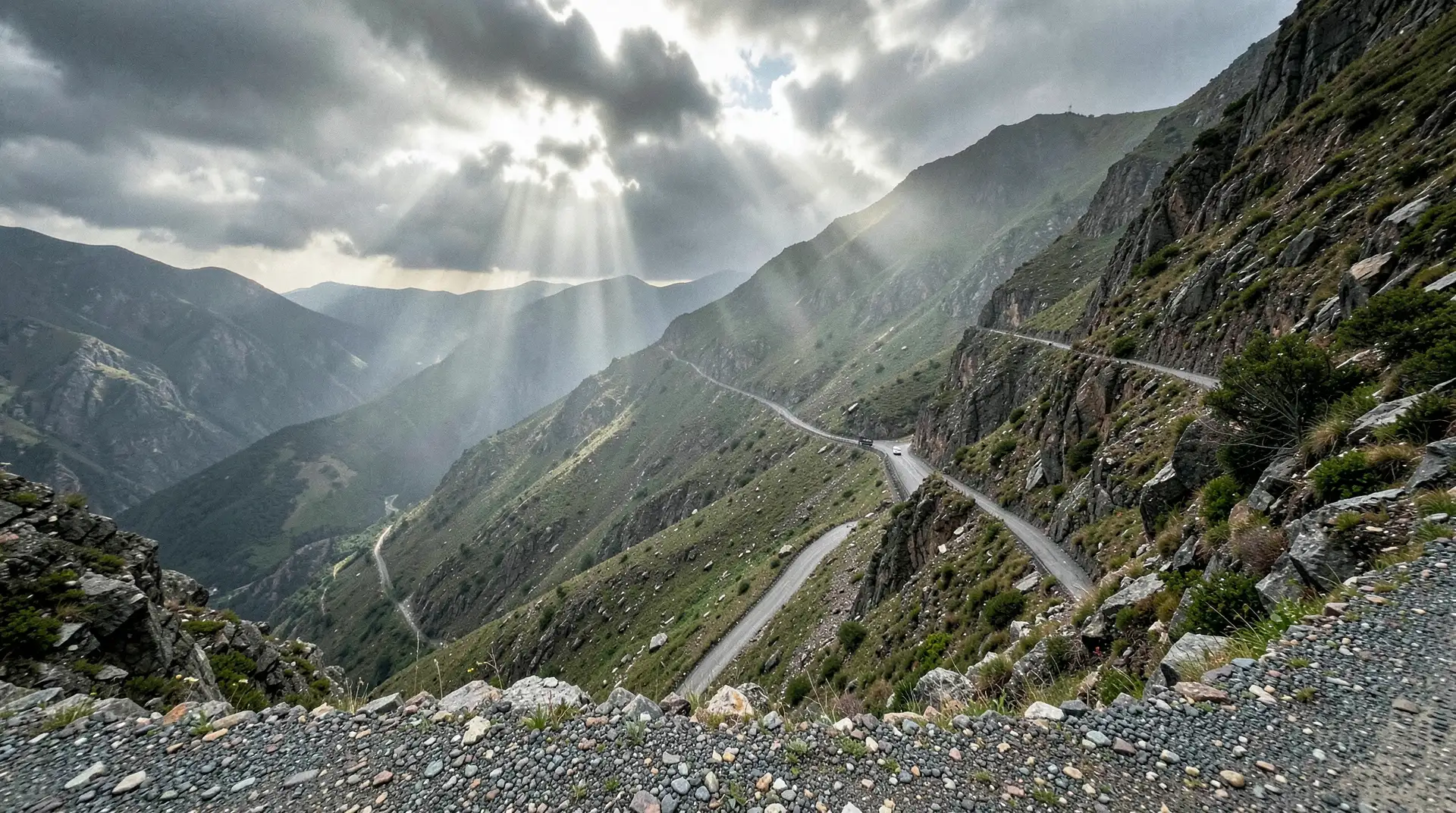
In a manual transmission, the driver holds a precise balance between clutch engagement, throttle, and brake, what mountain drivers call the hill hold. If that balance breaks, if the vehicle rolls back even slightly, regaining it on a narrow road with a drop on one side is genuinely dangerous. The vehicle has almost no margin to manoeuvre.
A descending driver can modulate speed with engine braking and wheel brakes, and can stop and hold position on the slope with far less mechanical effort than the climbing vehicle. Reversing downhill is also easier: the driver releases the brake gently and lets gravity do the work, steering into a wider point. The descending vehicle has options. The climbing vehicle, at its torque limit, has almost none.
In a manual vehicle without a hill-start assist system, this rollback can be a metre or more. On a road that is barely wider than the vehicle, with no guardrail and a cliff edge nearby, that metre is the difference between a controlled restart and a catastrophe. The descending vehicle, stopping on the same slope, does not face this problem: it simply holds the brake and waits.
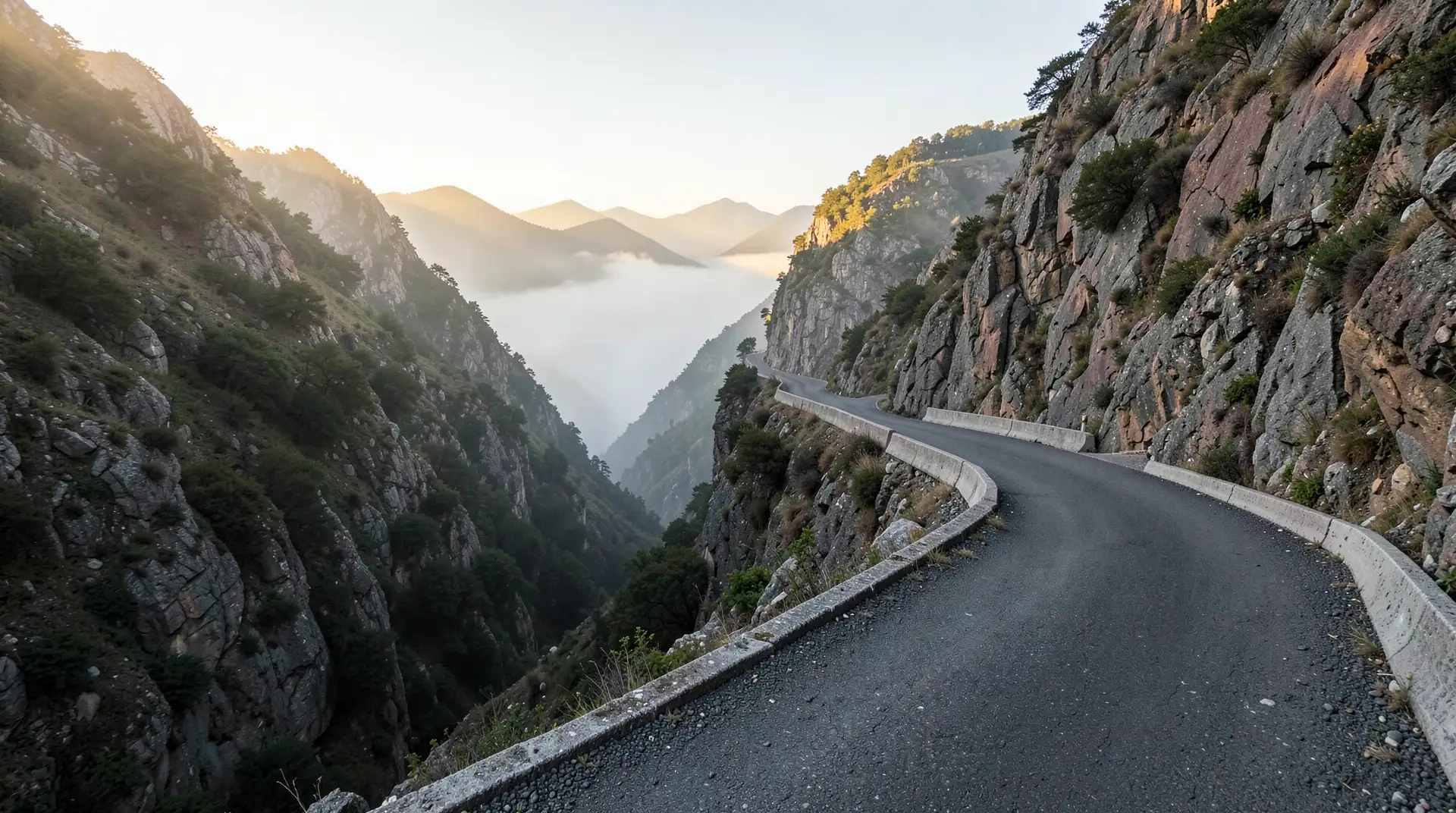
A loaded goods vehicle cannot. This is why on routes where trucks regularly climb, the Rohtang, the Zoji La approaches, the Ghats, the rule is enforced most strictly, and why experienced drivers of descending vehicles pull aside well before the meeting point, not at it.
The climbing driver, once the way is clear, should not stop mid-climb unless essential: a moving vehicle on a gradient is far easier to control than one that has stalled and needs a hill start. On very narrow roads, the vehicle closer to a natural passing point moves first, regardless of direction, but when neither vehicle is near one, the descending vehicle always gives way. Gravity wrote that rule long before any traffic authority did.
What Gravity Does to a Climbing Engine
Gravity pulls every vehicle downhill at all times. On a flat road, the engine overcomes rolling resistance and air drag. On a steep climb, it also has to overcome the full weight of the vehicle acting against forward motion. To maintain even a slow, steady speed uphill, the engine runs close to its torque limit.In a manual transmission, the driver holds a precise balance between clutch engagement, throttle, and brake, what mountain drivers call the hill hold. If that balance breaks, if the vehicle rolls back even slightly, regaining it on a narrow road with a drop on one side is genuinely dangerous. The vehicle has almost no margin to manoeuvre.
What Gravity Does to a Descending Vehicle
The descending vehicle has the opposite problem: gravity is working with it, not against it. The engine is barely needed. The real task is braking, slowing a vehicle that wants to accelerate on its own.A descending driver can modulate speed with engine braking and wheel brakes, and can stop and hold position on the slope with far less mechanical effort than the climbing vehicle. Reversing downhill is also easier: the driver releases the brake gently and lets gravity do the work, steering into a wider point. The descending vehicle has options. The climbing vehicle, at its torque limit, has almost none.
The Rollback Problem
This is the specific mechanical reason the rule exists. When a climbing vehicle stops on a steep grade and then tries to move forward again, there is a moment, the instant between releasing the brake and the clutch engaging the engine, when the vehicle has no drive force and gravity is pulling it backward.In a manual vehicle without a hill-start assist system, this rollback can be a metre or more. On a road that is barely wider than the vehicle, with no guardrail and a cliff edge nearby, that metre is the difference between a controlled restart and a catastrophe. The descending vehicle, stopping on the same slope, does not face this problem: it simply holds the brake and waits.
Loaded Vehicles and Heavier Consequences
A fully loaded truck or bus climbing a gradient carries this problem in its most severe form. The heavier the vehicle, the more torque the engine needs to hold speed, and the more violent the rollback if it stalls. An empty car can sometimes restart on a steep grade with less drama.A loaded goods vehicle cannot. This is why on routes where trucks regularly climb, the Rohtang, the Zoji La approaches, the Ghats, the rule is enforced most strictly, and why experienced drivers of descending vehicles pull aside well before the meeting point, not at it.
How to Apply This on the Road
The rule is simple in principle but requires judgment in practice. The descending driver should identify a wider section, a cut in the hillside, a passing bay, a gentle curve with extra width, and pull into it before the vehicles are nose to nose. Waiting until the vehicles meet leaves no room for either to manoeuvre.The climbing driver, once the way is clear, should not stop mid-climb unless essential: a moving vehicle on a gradient is far easier to control than one that has stalled and needs a hill start. On very narrow roads, the vehicle closer to a natural passing point moves first, regardless of direction, but when neither vehicle is near one, the descending vehicle always gives way. Gravity wrote that rule long before any traffic authority did.






Loving Newspoint? Download the app now
