
Why Your Bike Won't Start with the Side Stand Down

Most riders discover the side stand cut off the hard way: parked, thumb hammering the starter, and the engine refusing to fire until the stand is flipped up. What feels like a random electrical glitch is actually one of the most effective, low-profile safety features on modern two-wheelers.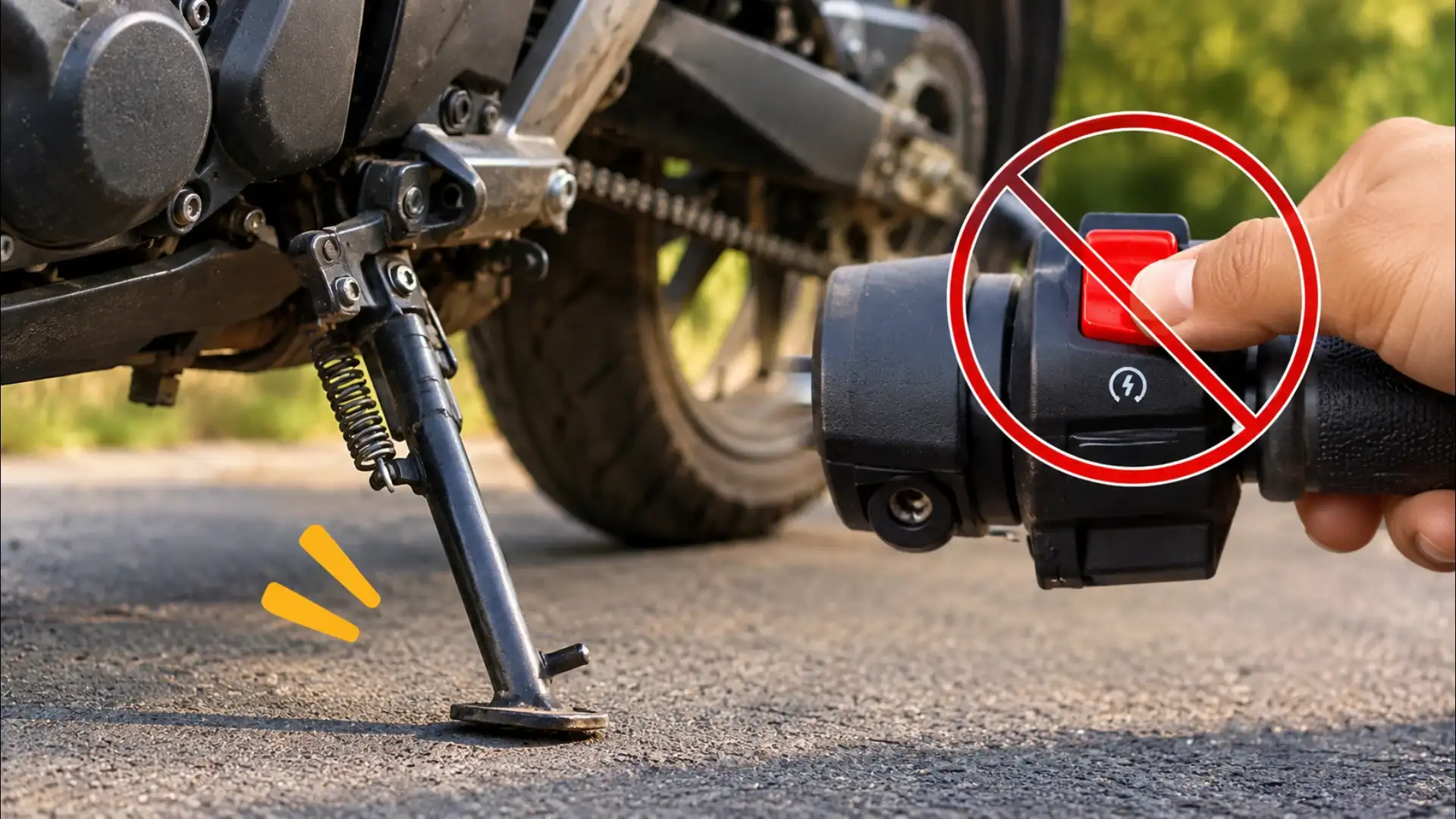
On modern motorcycles, the system operates on logical conditions:
The Problem the System Was Built to Solve
Forgetting to retract the side stand before pulling away is a recipe for an immediate crash. As soon as the bike moves off, whether traveling straight over a bump or leaning into a left-hand turn, the extended steel stand digs into the asphalt. The ground lever forces the rear tire off the pavement, causing the rider to lose control instantly. To prevent these frequent accidents, manufacturers integrated an automatic safety cutoff switch into the side stand mechanism.How the Circuit Works
The cutoff is a small mechanical or magnetic sensor mounted directly at the side stand's pivot point. When the stand is extended, the switch opens the electrical circuit. Depending on the vehicle's wiring, this action breaks the circuit to the starter motor relay, ignition spark, or fuel injection.You may also like
- Hyundai Grand i10 Nios Gets Costlier in India! Prices Hiked by Up to ₹6,000, Check New Rates and Discounts
- India's Top 10 Best-Selling Cars in October 2026: Maruti WagonR Takes No. 1 Spot, Brezza Sales Jump 86%
- Kawasaki Z650RS MY27 Launched in India at ₹7.83 Lakh! Gets New Colour, 649cc Engine and Retro Styling
- BYD Creates Automotive History! Electric Hypercar Hits 503 Kmph, Becomes World's Fastest Production Car
- EV Sales Are Booming in India, But Why Are Car Dealers Struggling to Make Money? Here's the Real Reason
On modern motorcycles, the system operates on logical conditions:
- In Neutral: You can start and idle the engine with the side stand down. This allows riders to warm up the engine while parked safely.
- In Gear: If the stand is down and you pull the clutch to shift into gear, the engine immediately cuts out. To start the bike while already in gear, the side stand must be retracted and the clutch lever pulled in.
Availability Across Motorcycles and Scooters
Side stand cutoff switches are standard equipment on almost all modern motorcycles and commuter scooters.- Motorcycles: Standard on most motorcycles produced since the mid-2000s. If a motorcycle allows you to ride away in gear with the stand extended, the switch has failed or been manually bypassed.
- Scooters: Because modern scooters use automatic (CVT) transmissions meaning they have no neutral gear to idle safely in, side stand cutoffs are standard safety features across almost all modern commuter and premium scooters. Deploying the side stand on an idling scooter cuts the engine immediately to prevent accidental throttle twists while parked.
When the Switch Itself Fails
Because the switch sits low on the frame, it is constantly exposed to water, road grime, and vibration. Failures generally happen in one of two ways:- Fails Open (Stuck "Down"): The system assumes the stand is extended even when raised. The bike will refuse to start or will die as soon as it is clicked into gear, despite the stand being up.
- Fails Closed (Stuck "Up"): The system assumes the stand is retracted at all times, disabling the safety feature entirely.
What Riders Sometimes Do (And Why It Matters)
When a switch fails on the road, riders often bypass it by jumpering the two switch wires together to get home. While effective as an emergency fix, leaving a bypass in place permanently eliminates a vital safety net. It takes only one moment of distraction to ride off with a deployed stand, leading to the exact crash the cutoff system was engineered to prevent.





Loving Newspoint? Download the app now
