
CKYC 2.0 Update: KYC Rules Changing from August 1 - What's New?

Opening a bank account, investing in mutual funds, buying insurance, or applying for a loan usually begins with one important step, Know Your Customer (KYC). Until now, customers had to submit the same documents, such as Aadhaar, PAN, and address proof, every time they approached a new financial institution.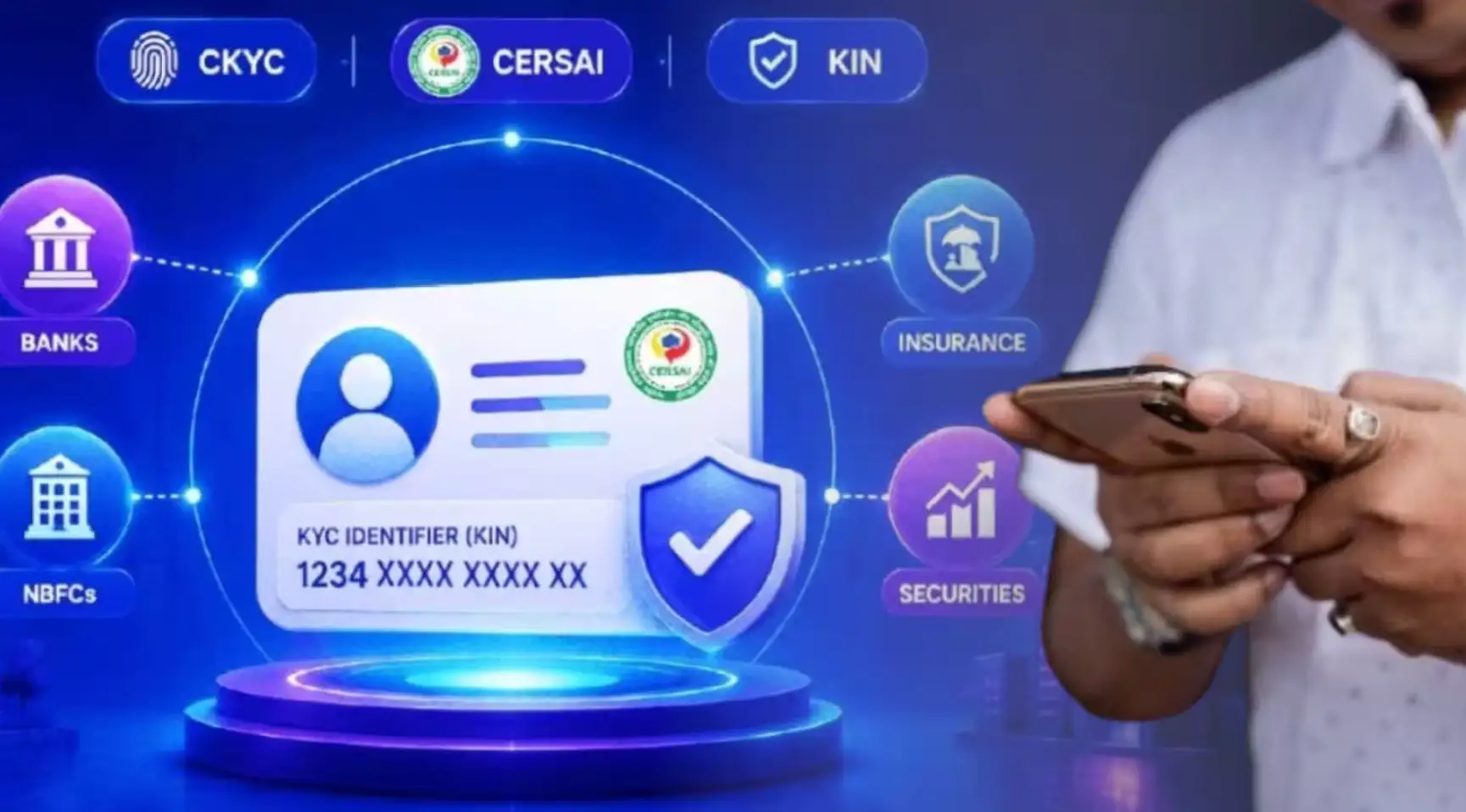
That is about to change. Starting August 1, the government will roll out CKYC 2.0 in phases, introducing a faster, smarter, and more secure digital KYC system. The upgraded platform aims to reduce paperwork, improve security, and make financial services more convenient for millions of customers.
What is CKYC 2.0?
CKYC 2.0 is the upgraded version of the Central KYC Registry , where customers' verified KYC details are stored in a secure digital database. Instead of submitting documents repeatedly, customers can allow banks or financial institutions to access their verified records through the central system after giving consent.
The goal is to create a seamless and paperless KYC experience across India's financial sector.
Why is the New System Being Introduced?
The government wants to simplify the KYC process while making it more secure and transparent. The new platform is designed to:
How Will CKYC 2.0 Work?
When a customer completes CKYC for the first time, they receive a unique 14-digit CKYC Identification Number, which becomes their digital KYC identity.
Whenever they apply for a new financial service:
CKYC 1.0 vs CKYC 2.0
The earlier CKYC system relied heavily on physical documents, scanned copies, and manual updates. This often resulted in duplicate records, delays, and outdated information.
CKYC 2.0 introduces a completely digital framework with advanced technologies such as:
What Are Real-Time APIs?
Real-time APIs allow banks, insurance companies, and other financial institutions to connect instantly with the Central KYC Registry.
This enables immediate verification and record updates, allowing KYC to be completed within seconds instead of days.
What Does ' One Nation One KYC ' Mean?
One of the biggest goals of CKYC 2.0 is the 'One Nation One KYC' initiative.
Under this model, customers only need to complete KYC once. The same verified information can then be used across multiple financial institutions, eliminating the need for repeated verification.
Which Financial Institutions Will Use CKYC 2.0?
The new system will connect various financial sectors, including:
Major Benefits for Customers
CKYC 2.0 is expected to make financial services quicker and more convenient. Key advantages include:
Will Your Existing CKYC Number Change?
No. Customers who have already completed CKYC will continue using their existing records.
If any information requires updating, the concerned financial institution may contact the customer.
Will Existing Bank Accounts Be Affected?
No. Existing bank accounts will continue to function normally.
CKYC 2.0 is only meant to modernise the KYC process. Banks may contact customers only if additional verification or approval is required.
Is Your Data Safe?
The upgraded platform has been designed with strong security measures to protect customer information.
Some of the key security features include:
CKYC 2.0 marks a major step towards a fully digital and customer-friendly KYC ecosystem in India. With features like a unique 14-digit CKYC ID, OTP-based consent, AI-powered verification, real-time data access, and the 'One Nation One KYC' framework, the new system is expected to make banking, investing, insurance, and other financial services faster, safer, and far more convenient for customers across the country.
That is about to change. Starting August 1, the government will roll out CKYC 2.0 in phases, introducing a faster, smarter, and more secure digital KYC system. The upgraded platform aims to reduce paperwork, improve security, and make financial services more convenient for millions of customers.
What is CKYC 2.0?
CKYC 2.0 is the upgraded version of the Central KYC Registry , where customers' verified KYC details are stored in a secure digital database. Instead of submitting documents repeatedly, customers can allow banks or financial institutions to access their verified records through the central system after giving consent.The goal is to create a seamless and paperless KYC experience across India's financial sector.
Why is the New System Being Introduced?
The government wants to simplify the KYC process while making it more secure and transparent. The new platform is designed to: - Reduce repetitive document submissions
- Speed up account opening and financial services
- Improve data accuracy
- Strengthen customer privacy
- Reduce fraud through digital verification
How Will CKYC 2.0 Work?
When a customer completes CKYC for the first time, they receive a unique 14-digit CKYC Identification Number, which becomes their digital KYC identity.Whenever they apply for a new financial service:
- The institution will first request the customer's permission.
- An OTP will be sent for authentication.
- Only after OTP verification and consent can the institution access the customer's verified KYC records.
- There will be no need to submit photocopies or scanned documents again.
CKYC 1.0 vs CKYC 2.0
The earlier CKYC system relied heavily on physical documents, scanned copies, and manual updates. This often resulted in duplicate records, delays, and outdated information. CKYC 2.0 introduces a completely digital framework with advanced technologies such as:
- Artificial Intelligence (AI)
- Real-time API integration
- Automated verification
- Digital record management
- Consent-based authentication
What Are Real-Time APIs?
Real-time APIs allow banks, insurance companies, and other financial institutions to connect instantly with the Central KYC Registry.You may also like
- AI-generated inferences to drive most privacy incidents by 2029: Report
- Over 5.5 crore ITRs filed for AY 2026-27 so far on filing deadline day
- Iran War Escalates: Trump Threatens Retaliation After IRGC Strikes on Jordan, Kuwait
- PM Modi directs all-out efforts to safeguard interests of Indian citizens amid West Asia conflict
- Bombay HC slaps cost of Rs 5,000 each on 4 students who challenged their NEET scores
This enables immediate verification and record updates, allowing KYC to be completed within seconds instead of days.
What Does ' One Nation One KYC ' Mean?
One of the biggest goals of CKYC 2.0 is the 'One Nation One KYC' initiative. Under this model, customers only need to complete KYC once. The same verified information can then be used across multiple financial institutions, eliminating the need for repeated verification.
Which Financial Institutions Will Use CKYC 2.0?
The new system will connect various financial sectors, including: - Banks
- Mutual fund companies
- Insurance providers
- NBFCs
- Other financial service providers
Major Benefits for Customers
CKYC 2.0 is expected to make financial services quicker and more convenient. Key advantages include: - No repeated submission of Aadhaar, PAN, address proof, and photographs.
- Faster opening of bank and demat accounts.
- Quicker investments in mutual funds and insurance purchases.
- Stronger privacy through OTP-based consent.
- Better protection against identity fraud.
- Faster KYC verification in minutes or even seconds.
Will Your Existing CKYC Number Change?
No. Customers who have already completed CKYC will continue using their existing records.If any information requires updating, the concerned financial institution may contact the customer.
Will Existing Bank Accounts Be Affected?
No. Existing bank accounts will continue to function normally. CKYC 2.0 is only meant to modernise the KYC process. Banks may contact customers only if additional verification or approval is required.
Is Your Data Safe?
The upgraded platform has been designed with strong security measures to protect customer information. Some of the key security features include:
- OTP-based access approval
- Digital authentication
- Encrypted data sharing
- Permission-based access control
- Advanced security monitoring
CKYC 2.0 marks a major step towards a fully digital and customer-friendly KYC ecosystem in India. With features like a unique 14-digit CKYC ID, OTP-based consent, AI-powered verification, real-time data access, and the 'One Nation One KYC' framework, the new system is expected to make banking, investing, insurance, and other financial services faster, safer, and far more convenient for customers across the country.






Loving Newspoint? Download the app now
