
Baby Health Insurance: When Does Coverage Begin After Birth? Check Here

Having a baby brings new responsibilities, and health insurance becomes an important part of financial planning. But many parents are unsure about one key question, when does health insurance coverage actually start for a newborn?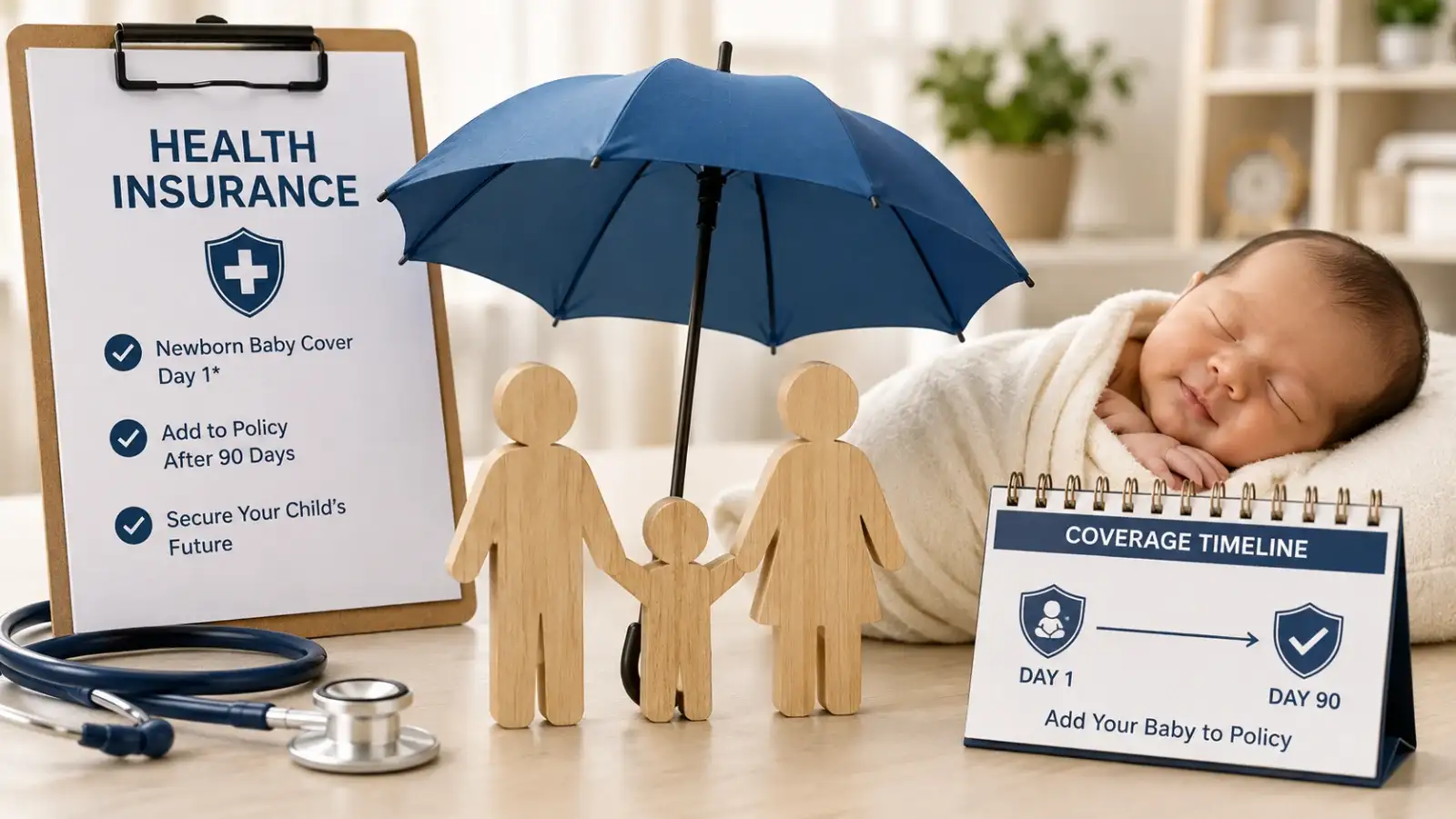
The answer depends entirely on the terms of the policy. While some plans provide coverage from the day of birth, others start it after a waiting period, such as 16 days or 91 days.
However, coverage is not unlimited. The insurer may set specific conditions, sub-limits and timeframes. Parents should therefore check the policy wording rather than assume that every treatment will be covered from day one.
Some health insurance plans allow dependent children to be added only after they complete a specified age, commonly 90 or 91 days. But this is not a universal rule. The eligibility period differs between insurers and policies.
In certain policies, the baby may initially be covered under the maternity benefit for a limited period and then need to be formally added to the family floater.
Parents should check these details in advance, particularly if the baby requires specialised care after birth.
The most important point is that newborn health insurance rules vary from one policy to another. Before assuming that your baby is covered, check the policy documents and contact the insurer to confirm the exact coverage start date, eligible treatments, limits and deadline for adding the child.
The answer depends entirely on the terms of the policy. While some plans provide coverage from the day of birth, others start it after a waiting period, such as 16 days or 91 days.
When Does a Newborn Get Health Insurance Cover?
If your policy includes maternity and newborn benefits, the baby may receive coverage from birth for specified medical expenses. Some plans cover newborn hospitalisation under the maternity benefit for a limited period.However, coverage is not unlimited. The insurer may set specific conditions, sub-limits and timeframes. Parents should therefore check the policy wording rather than assume that every treatment will be covered from day one.
What If There Is No Maternity Cover?
If the policy does not offer maternity or newborn benefits, the baby may not be covered immediately after birth.Some health insurance plans allow dependent children to be added only after they complete a specified age, commonly 90 or 91 days. But this is not a universal rule. The eligibility period differs between insurers and policies.
How Can You Add the Baby to the Policy?
Parents should inform the insurer about the birth as soon as possible. Depending on the policy, the process may involve:- Filling out a child-addition form
- Submitting the required documents
- Paying an additional premium, if applicable
- Getting the policy updated with the child's details
Which Documents May Be Needed?
The insurer may ask for documents such as the baby's birth certificate, hospital discharge summary, child-addition form and existing policy details. A photograph or additional KYC documents may also be required, depending on the insurer.You may also like
- Tata Motors PV Q1 cons profit plunges 80% YoY to Rs 775 cr
- Sensex, Nifty extend losing streak for 3rd session
- US tariff threat on Russian oil: Bill a concern for India, but 'talks have been reassuring'
- India's exports rise 19.63 pc to USD 44.24 bn in Jul; trade deficit widens to $31.98 bn
- Indraprastha Gas Profit Falls 44% To ₹237.9 Crore In Q1 FY27, Revenue Rises 17%
Is the Baby Covered Within the First 90 Days?
There is no single rule for all health insurance policies. A newborn may be covered from the day of birth under some plans, while others may begin coverage from the 16th or 91st day.In certain policies, the baby may initially be covered under the maternity benefit for a limited period and then need to be formally added to the family floater.
Are NICU Expenses Covered?
NICU treatment can be covered if the policy specifically provides newborn hospitalisation benefits. However, the coverage will remain subject to the policy's limits, exclusions and applicable conditions.Parents should check these details in advance, particularly if the baby requires specialised care after birth.
Don't Delay the Policy Update
Once the baby is born, inform the insurer promptly. Some policies specify a deadline, such as 90 days, for notifying the company and adding the newborn.The most important point is that newborn health insurance rules vary from one policy to another. Before assuming that your baby is covered, check the policy documents and contact the insurer to confirm the exact coverage start date, eligible treatments, limits and deadline for adding the child.






Loving Newspoint? Download the app now
