
Railway Budget 2026: Expectations to Drive a Key Growth Engine for Viksit Bharat

The transport and logistics sector is a critical pillar of India’s Viksit Bharat @2047 vision, with Indian Railways serving as its backbone. As the national transporter, the rail network connects remote regions while offering one of the most sustainable and cost-efficient modes of travel and freight movement in the country.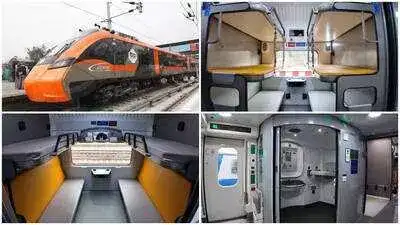
India today operates the fourth-largest railway network in the world and stands as the second-largest freight carrier globally. Recognising its strategic importance, recent Union Budgets have consistently allocated between Rs 2 lakh crore and Rs 2.5 lakh crore to strengthen railway infrastructure.
Heavy Investment, Limited Operational Gains
Despite sustained capital infusion into tracks and rolling stock, operational performance has seen only modest improvement. Average freight train speeds have remained stuck at 20–25 kmph, while mail and express passenger trains continue to run at 50–52 kmph, largely unchanged over the past decade.
At the same time, large-scale public investment has not translated into meaningful private sector participation in tracks, stations, or manufacturing. With expressways and road logistics expanding rapidly, railways must sharpen their value proposition to increase freight market share from below 30% to 45% by 2030.
The Need to Link Spending With Structural Reforms
While continued budgetary support for infrastructure remains vital, capital expenditure alone is not enough. To unlock the full potential of the railways as a growth engine, investments must be closely tied to policy, pricing, and institutional reforms that improve efficiency, competitiveness, and customer experience.
Unlocking Private Investment
Long-term growth of the rail sector cannot depend solely on government funding. Greater private investment is essential to bring in advanced technology, operational efficiency, and innovation. Learning from past PPP experiences, Indian Railways needs investor-friendly models with well-defined risk-sharing frameworks across regulatory, financing, construction, traffic, and operations.
Given the high capital intensity and socio-economic obligations of railway projects, financial viability must also be supported through non-fare revenues, land value capture, and alternative monetisation avenues to improve project returns.
Boosting Rail Manufacturing Capabilities
India’s success in manufacturing modern rolling stock such as Vande Bharat trains, metro coaches, and safety systems like Kavach highlights the strength of domestic capability. This success should be replicated across rolling stock, tracks, signalling, and electrification systems through private-sector-led innovation.
To position India as a global hub for railway components and systems, targeted capacity-linked or production-linked incentives for advanced technologies should be considered in future budgets.
Reforming Tariffs and Commercial Models
The existing fare and freight tariff structure needs closer alignment with industry requirements. Introducing innovative pricing models such as dynamic tariffs, per-train pricing instead of tonnage-based charges, time-tabled freight services, return-load discounts, and multimodal integration can significantly enhance rail’s competitiveness.
Such reforms would help railways tap into high-growth segments like containerised cargo, automobile logistics, parcel services, and e-commerce shipments, which are expanding faster than traditional bulk commodities.
Expanding Dedicated Freight Corridors
The success of Dedicated Freight Corridors (DFCs) demonstrates the potential for faster, more reliable freight movement. Expanding the DFC network, supported by higher-capacity and higher-speed rolling stock, along with modern intermodal freight terminals, can further strengthen rail freight efficiency.
Future corridors should be planned with clear timelines and a balanced mix of public and private investment to ensure timely execution.
Building a Supportive Institutional Framework
Sustainable reform requires the right institutional and regulatory framework. Today, mismatches between rolling stock and infrastructure, underutilised assets, and slow deployment of advanced signalling and safety systems continue to limit efficiency.
The experience gained from achieving near-universal electrification should be leveraged to accelerate the rollout of advanced signalling systems and safety technologies such as Kavach 4.0.
A Transformational Budget Agenda
For Indian Railways to emerge as a strong driver of economic growth, the Union Budget must push a transformational agenda one that promotes capital recycling, attracts private investment, introduces industry-friendly tariffs, and strengthens institutional capacity.
With the right mix of reforms and funding, Indian Railways can evolve into a competitive, innovation-driven system and play a decisive role in realising the vision of Viksit Bharat @2047.
India today operates the fourth-largest railway network in the world and stands as the second-largest freight carrier globally. Recognising its strategic importance, recent Union Budgets have consistently allocated between Rs 2 lakh crore and Rs 2.5 lakh crore to strengthen railway infrastructure.
Heavy Investment, Limited Operational Gains
Despite sustained capital infusion into tracks and rolling stock, operational performance has seen only modest improvement. Average freight train speeds have remained stuck at 20–25 kmph, while mail and express passenger trains continue to run at 50–52 kmph, largely unchanged over the past decade.At the same time, large-scale public investment has not translated into meaningful private sector participation in tracks, stations, or manufacturing. With expressways and road logistics expanding rapidly, railways must sharpen their value proposition to increase freight market share from below 30% to 45% by 2030.
The Need to Link Spending With Structural Reforms
While continued budgetary support for infrastructure remains vital, capital expenditure alone is not enough. To unlock the full potential of the railways as a growth engine, investments must be closely tied to policy, pricing, and institutional reforms that improve efficiency, competitiveness, and customer experience.Unlocking Private Investment
Long-term growth of the rail sector cannot depend solely on government funding. Greater private investment is essential to bring in advanced technology, operational efficiency, and innovation. Learning from past PPP experiences, Indian Railways needs investor-friendly models with well-defined risk-sharing frameworks across regulatory, financing, construction, traffic, and operations. Given the high capital intensity and socio-economic obligations of railway projects, financial viability must also be supported through non-fare revenues, land value capture, and alternative monetisation avenues to improve project returns.
Boosting Rail Manufacturing Capabilities
India’s success in manufacturing modern rolling stock such as Vande Bharat trains, metro coaches, and safety systems like Kavach highlights the strength of domestic capability. This success should be replicated across rolling stock, tracks, signalling, and electrification systems through private-sector-led innovation. To position India as a global hub for railway components and systems, targeted capacity-linked or production-linked incentives for advanced technologies should be considered in future budgets.
Reforming Tariffs and Commercial Models
The existing fare and freight tariff structure needs closer alignment with industry requirements. Introducing innovative pricing models such as dynamic tariffs, per-train pricing instead of tonnage-based charges, time-tabled freight services, return-load discounts, and multimodal integration can significantly enhance rail’s competitiveness. Such reforms would help railways tap into high-growth segments like containerised cargo, automobile logistics, parcel services, and e-commerce shipments, which are expanding faster than traditional bulk commodities.
Expanding Dedicated Freight Corridors
The success of Dedicated Freight Corridors (DFCs) demonstrates the potential for faster, more reliable freight movement. Expanding the DFC network, supported by higher-capacity and higher-speed rolling stock, along with modern intermodal freight terminals, can further strengthen rail freight efficiency. Future corridors should be planned with clear timelines and a balanced mix of public and private investment to ensure timely execution.
Building a Supportive Institutional Framework
Sustainable reform requires the right institutional and regulatory framework. Today, mismatches between rolling stock and infrastructure, underutilised assets, and slow deployment of advanced signalling and safety systems continue to limit efficiency.The experience gained from achieving near-universal electrification should be leveraged to accelerate the rollout of advanced signalling systems and safety technologies such as Kavach 4.0.
A Transformational Budget Agenda
For Indian Railways to emerge as a strong driver of economic growth, the Union Budget must push a transformational agenda one that promotes capital recycling, attracts private investment, introduces industry-friendly tariffs, and strengthens institutional capacity. With the right mix of reforms and funding, Indian Railways can evolve into a competitive, innovation-driven system and play a decisive role in realising the vision of Viksit Bharat @2047.
Next Story