
Daulat Ki Chaat: Why Old Delhi's Milk Foam Dessert Appears Only in Winter

Walk through Chandni Chowk on a cold December morning and you will find a vendor sitting behind a tray of what looks like pale yellow foam dusted with saffron and crushed khoya. He will be gone by noon. By March, he will be gone until the following winter. Daulat ki chaat is not a dish that someone chose to sell seasonally. It is a dish that the season itself makes possible.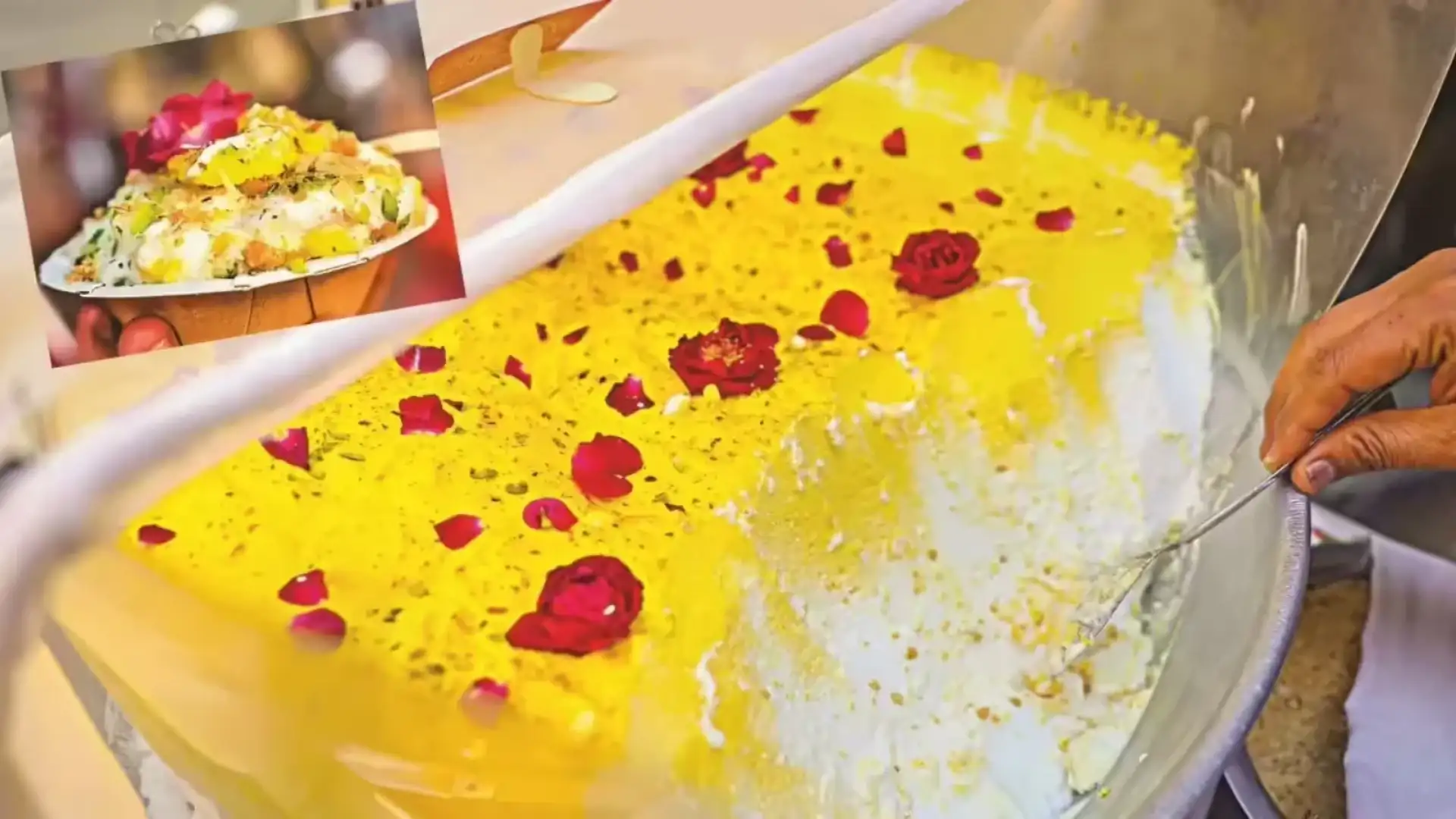
What Daulat Ki Chaat Actually Is
Daulat ki chaat is a dessert made from whole milk that has been churned into a stable foam and set overnight in the open air. The finished product is almost entirely air, a spoonful weighs almost nothing and collapses on the tongue in a few seconds, leaving behind a faint sweetness and the clean taste of milk fat. Vendors top it with a pinch of saffron, finely ground sugar, and shavings of khoya. Some add a thread of malai. The bowl itself is part of the experience: an unglazed clay cup that keeps the foam cool and adds the faintest earthy note.Why Cold Air Is the Only Ingredient That Cannot Be Replaced
The foam holds together because of two things happening at once: fat globules in the milk partially crystallise in low temperatures, and the surface tension of the cold liquid is high enough to trap the air beaten into it. When the temperature rises above roughly ten degrees Celsius, both conditions weaken. The fat softens, the surface tension drops, and the foam collapses within minutes. No refrigerator replicates this, because mechanical cooling lowers the temperature evenly and quickly, while the traditional method uses slow overnight cooling in open air, with gentle dew settling on the milk and adding a small amount of moisture that helps the foam set. Vendors leave their milk out in large flat vessels from late evening, beat it through the night in stages, and bring the finished foam to the market before sunrise, before the day's warmth can undo the night's work.The Making: A Process Measured in Hours, Not Steps
The vendor begins with full-fat milk, often with extra cream added. He heats it, lets it cool to room temperature, and then sets it out in wide, shallow vessels, surface area matters because the foam forms at the top, not through the body of the liquid. Through the night he returns to beat it, sometimes with a hand whisk, sometimes by pouring the milk from a height to fold air into it. By early morning the surface has set into a thick, trembling layer. He skims it into clay cups, dusts it with his toppings, and loads the tray. The window between the foam being ready and the foam being unsellable is a few hours at most. This is why the dessert has never scaled. A cold chain cannot replicate what a cold night does slowly and gently.A Name That Tells You Everything
Daulat in Urdu means wealth, but in the older registers of the language it also carries the sense of fortune, grace, something given rather than earned. The name is not a boast about price, this has always been a street food, not a palace sweet, but a recognition that the foam feels like something the city receives as a gift each winter rather than something anyone makes. Old Delhi vendors also call it malai makhan, and in some lanes it goes by the name nimish, a word that appears in Lucknow for a near-identical preparation made by the same cold-air method. The two cities share a courtly food culture rooted in the Mughal and Nawabi kitchens, and nimish and daulat ki chaat are almost certainly cousins from the same tradition, adapted to the particular cold of two North Indian winters.Where to Find It and What to Expect
The vendors cluster around Chandni Chowk, particularly near the lanes running off the main road toward the old havelis, and in parts of Matia Mahal. Arriving after ten in the morning most days means the better batches are already gone. The experience is brief by design: a few spoonfuls, a few rupees, and then it is over. Regulars treat the first bowl of the season as a small annual event, the way some people mark the first mango or the first rain. The dessert does not travel well, taking it home in a container loses most of what it is. It is one of the few foods in the city that insists on being eaten where it is made, at the hour it is ready, in the cold that created it. That insistence is also why it has survived unchanged for as long as anyone in these lanes can remember.Next Story