
How Kochi Got Its Name and Why the British Called It Cochin

A name is rarely just a name. For Kochi, it is a record of every outsider who arrived by sea, misheard something, wrote it down wrong, and moved on, leaving their version of the word behind like sediment on the harbour floor.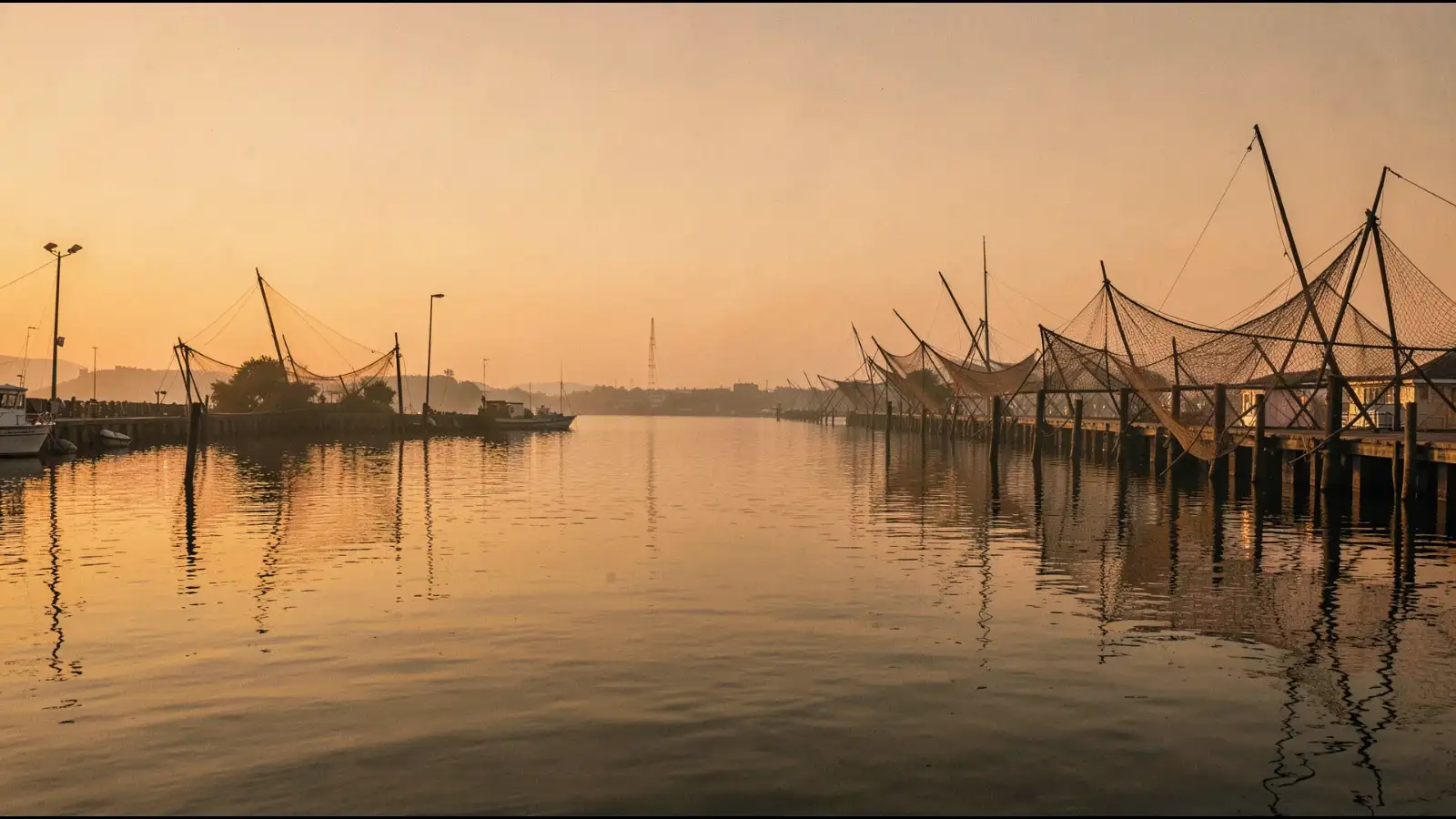
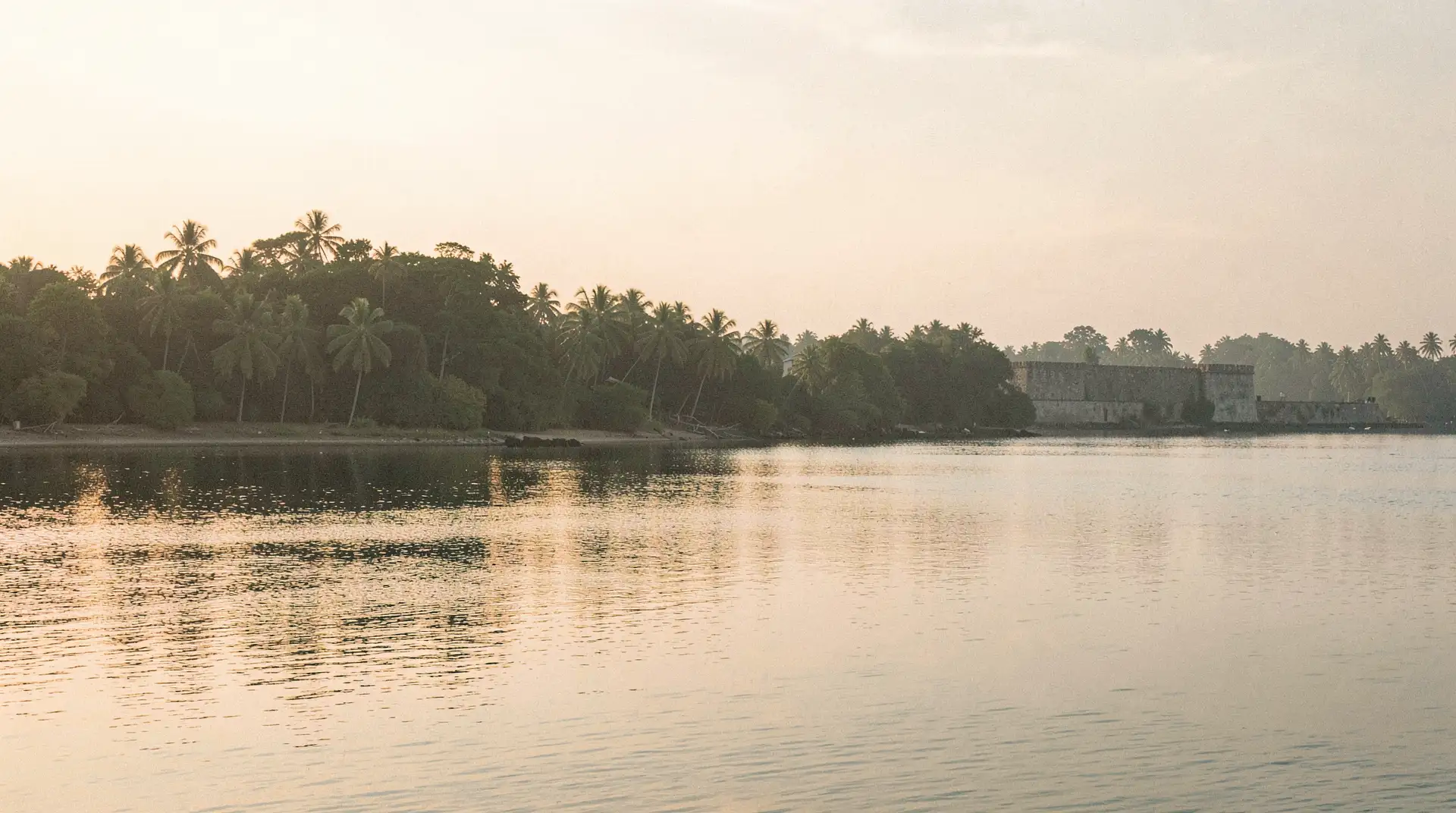
The city's own name, in Malayalam, is Kochi. Linguists and local historians trace it most convincingly to the words ko chi, meaning small sea or small lagoon. The geography makes this persuasive: Kochi sits on a narrow peninsula edged by the backwaters, the Arabian Sea, and the Vembanad Lake. It is, almost literally, a place cupped by small water on every side. A second explanation, less widely accepted, links the name to the Kochi river that once drained into the estuary here. Both versions point to the same landscape.
No Portuguese official sat down and decided to call it something else. The name drifted through transcription, the way all place names drift when they cross a language boundary without a dictionary to catch them. The Dutch, who displaced the Portuguese in 1663, inherited the name from Portuguese maps. The British, who took Cochin from the Dutch in 1795 and later absorbed it fully into their administrative structure, inherited it again. By the time the British were gone, Cochin had been the city's official name in English for nearly three centuries.
The name has not changed at all. The Jewish community of Kochi, one of the oldest Jewish settlements in India, with records going back at least to the twelfth century, called their quarter Jew Town, a name that survives on street signs today. The Paradesi Synagogue, built in 1568, still stands at the end of that lane. Every community that settled here left its name on something: a street, a net, a building, a spice warehouse.
What the two names share is the same sound at their core, that soft, rounded syllable the Ko chi, Cochim, Cochin sequence was always trying to capture. The harbour made the city. The name followed the harbour across every language that ever dropped anchor here.
The city's own name, in Malayalam, is Kochi. Linguists and local historians trace it most convincingly to the words ko chi, meaning small sea or small lagoon. The geography makes this persuasive: Kochi sits on a narrow peninsula edged by the backwaters, the Arabian Sea, and the Vembanad Lake. It is, almost literally, a place cupped by small water on every side. A second explanation, less widely accepted, links the name to the Kochi river that once drained into the estuary here. Both versions point to the same landscape.
The Flood That Made the Harbour
Kochi's rise as a trading port is inseparable from a natural disaster. In 1341, a catastrophic flood, recorded in Kerala chronicles and in accounts passed down through the fishing communities, reshaped the coastline. The Periyar river broke through in a new direction, carving out a deep natural harbour where shallow backwater had been. Calicut, to the north, had been the dominant port of the Malabar Coast. Overnight, Kochi had a harbour that large ships could enter. Traders followed the water.Arab merchants were among the first to establish a permanent presence, drawn by the pepper and cardamom moving through the new port. They had their own rendering of the local name, softened through Arabic phonology. When Vasco da Gama reached the Malabar Coast in 1498, he was following routes that Arab pilots already knew well, and the name he heard aboard those vessels was already a generation removed from the Malayalam original.How Cochin Was Born in a Portuguese Ledger
The Portuguese were the first Europeans to build a permanent structure on Indian soil, and they built it at Kochi. Fort Manuel, later Fort Kochi, went up in 1503. The Portuguese needed to write the city's name in their dispatches, their trade records, and their maps. Malayalam phonology does not map neatly onto Portuguese orthography. The soft, rounded sound of Kochi came out as Cochim in Portuguese documents, and from Cochim it travelled into the cartographic tradition of Europe as Cochin.This is not a story of deliberate renaming.No Portuguese official sat down and decided to call it something else. The name drifted through transcription, the way all place names drift when they cross a language boundary without a dictionary to catch them. The Dutch, who displaced the Portuguese in 1663, inherited the name from Portuguese maps. The British, who took Cochin from the Dutch in 1795 and later absorbed it fully into their administrative structure, inherited it again. By the time the British were gone, Cochin had been the city's official name in English for nearly three centuries.
The Neighbourhood That Kept Its Name
Fort Kochi, the old Portuguese and later British quarter on the peninsula, is worth a separate mention, because it shows how layers of naming can coexist in a single square kilometre. The neighbourhood still carries its colonial-era name in everyday use, even after the city's official renaming. The Chinese fishing nets that line the waterfront there are another layered story: they are called cheena vala in Malayalam, and the tradition of using large cantilevered nets of this design is believed to have arrived with Chinese traders, possibly during the era of Zheng He's voyages in the early fifteenth century. The nets have not changed much.The name has not changed at all. The Jewish community of Kochi, one of the oldest Jewish settlements in India, with records going back at least to the twelfth century, called their quarter Jew Town, a name that survives on street signs today. The Paradesi Synagogue, built in 1568, still stands at the end of that lane. Every community that settled here left its name on something: a street, a net, a building, a spice warehouse.
From Cochin Back to Kochi
After independence, India undertook a systematic project of restoring place names that colonial administration had anglicised or transliterated into unrecognisable forms. The process was gradual and uneven across states. Kerala's renaming of Cochin to Kochi was formalised in 1996, as part of a broader wave of official name restorations across the country, Bombay to Mumbai, Madras to Chennai, Calcutta to Kolkata all happened in the same decade.The argument was straightforward: Kochi was always the name the city's own people used. Cochin was what outsiders wrote down. Restoring Kochi was not the invention of a new name but the recovery of the original one. In practice, both names still circulate. Cochin International Airport kept its name for years after the city's official renaming, partly for continuity in international aviation records. The Indian Navy's base is INS Venduruthy, but the broader naval command in the city is still informally called Cochin Command in some contexts. Language is slower than official orders.What the two names share is the same sound at their core, that soft, rounded syllable the Ko chi, Cochim, Cochin sequence was always trying to capture. The harbour made the city. The name followed the harbour across every language that ever dropped anchor here.